
Leonard Pierce | April 16, 2026
Roman Muradov is the kind of artist who, in our handcuffed culture, has transcended the label of mere cartoonist and is usually referred to as an 'illustrator', if you please. He can, at this point in his career, do pretty much whatever he wants, and what he wants to do is All the Living. It's slight but ambitious, an easy read but with great emotional weight and incredible depth, and, of course, the stellar visual design and execution that we've come to expect from him; it's also one of the best books I've read in this young year.
The protagonist, if you can call her that, of All the Living is a recently deceased young woman who awakens in a curious hell where, before she even gets a chance to settle in, wins – very much against her will – a sort of afterlife lottery that sends her right back to the the life she only recently lost. The problem, from her perspective anyway, is that she didn't much like her life and is no hurry to resume it, especially when it becomes clear that her second chance at mortal existence comes at the cost of being in the company of ghosts, including her own.
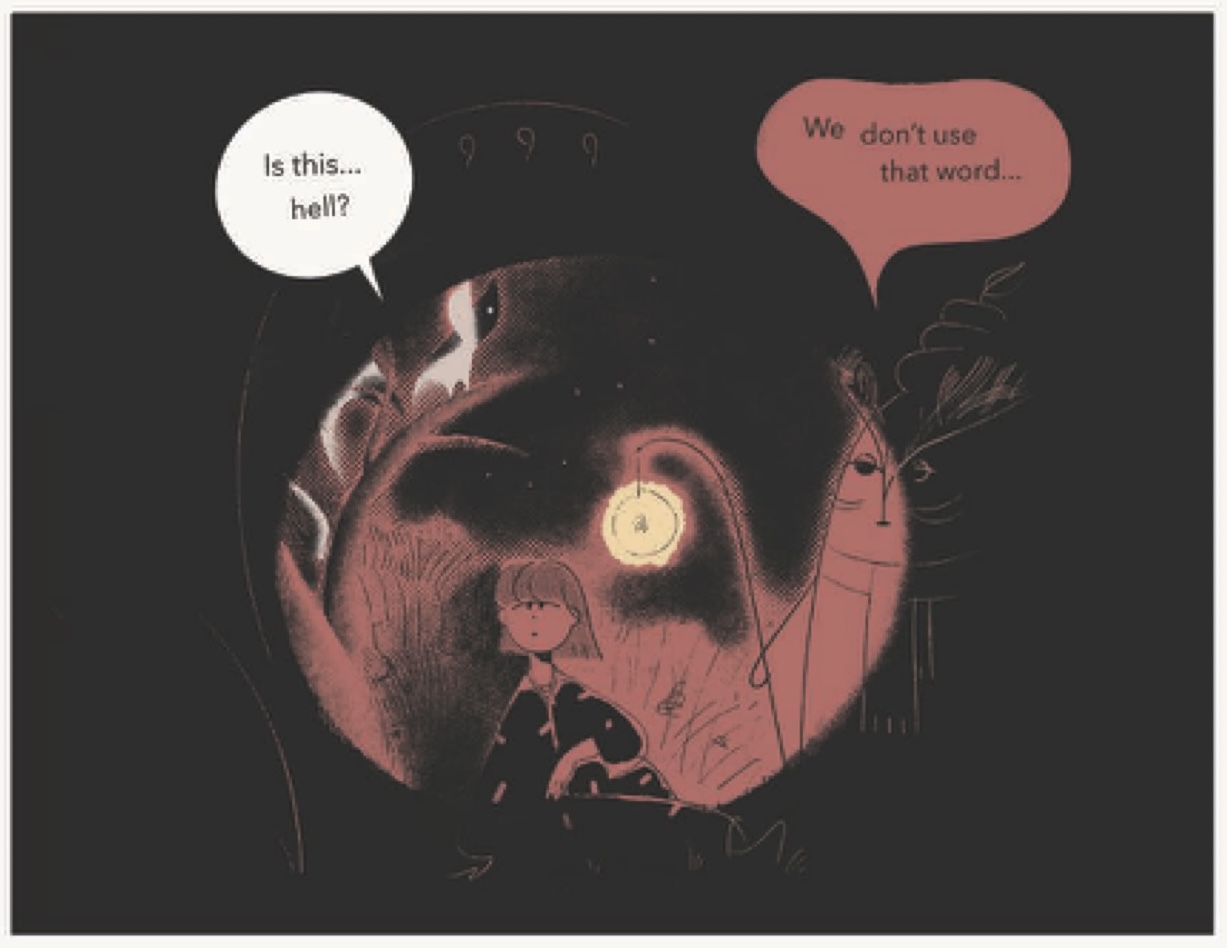
All the Living follows the resumption of an unwanted life with an exquisite tension. While short and tightly written (Muradov translated the book himself from a French-language version that appeared a few years ago), it unfolds into a narrative that is both strikingly simple and surprisingly complex. The pacing, broken up by black panels and increasingly soulless (a word I choose carefully) recitations of a haunted everyday, seems slow, but like Chantal Akerman's masterwork, Jeanne Dielman, it uses boredom and repetition like a weapon, lulling us into a patterns that are disrupted by the funny, the shocking, and the morose.
While the dialogue is simple and the action is easy to follow, Muradov abstracts everything in a skillful way so that every panel contains hidden depth. The woman returns to a washed-out city as lacking in color and interest as her own tiny apartment, which she now must awkwardly share with her own shade. When she begins to encounters others, it doesn't get any easier (it would spoil one of the book's best gags to reveal the circumstances under which one of them died, but trust me, it's worth waiting for). Back in the afterlife, demons acclimate other souls to their fate while pursuing their own curious hobbies in the most obvious comic relief in the book.
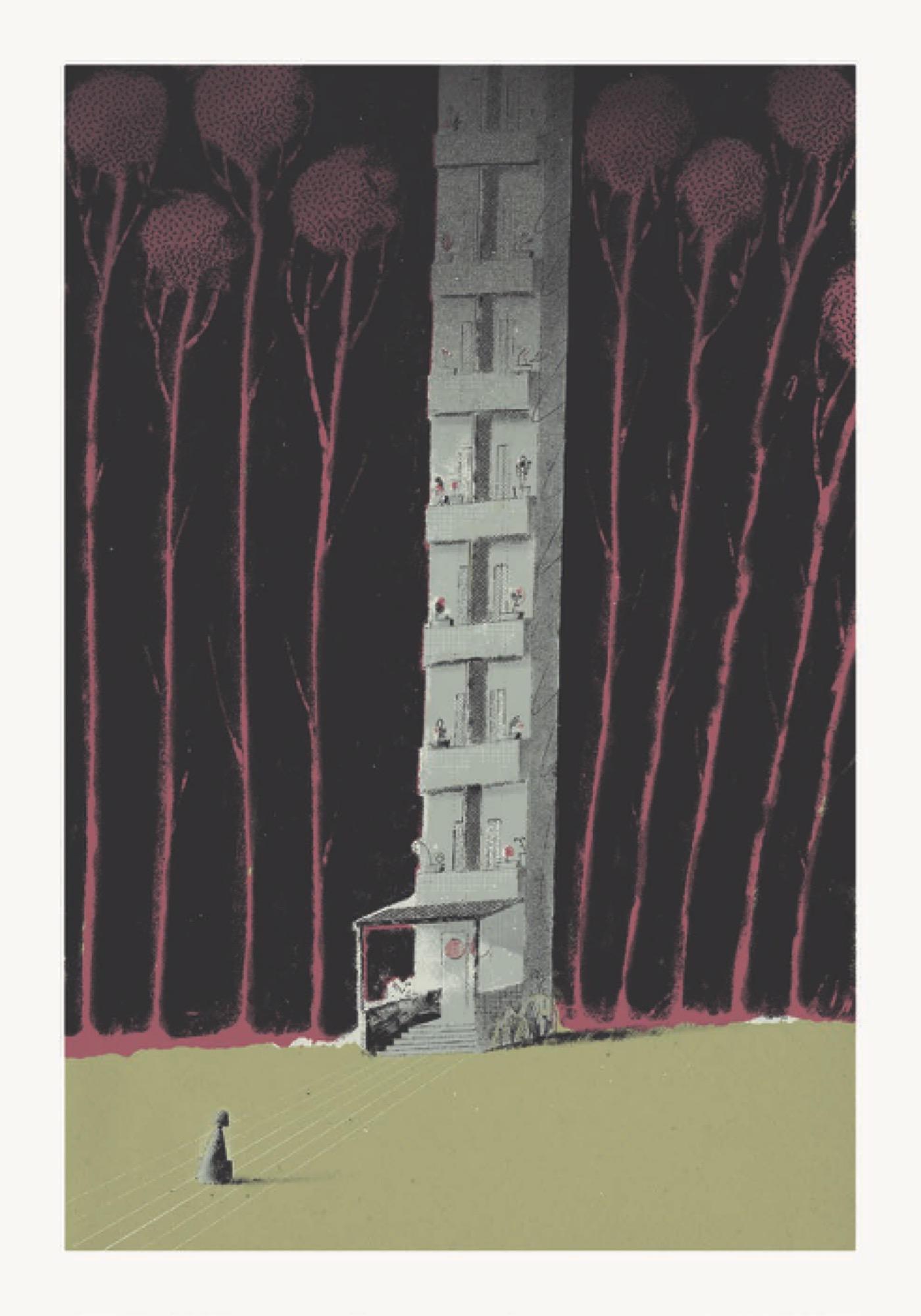 I emphasize “relief” here, because while the book contains a lot of humor of different stripes, its primary tone (visually and narratively) is somewhat alarmingly bleak. Our hero returns to a world she never loved, and has to live with herself and a ghostly abstraction of herself, and the spirit-shadowed world in which she lives doesn't make her happier, more interested, or even more frightened. It's just another chore to deal with. By the time the book reaches its stark conclusion, the black panels seem less like a kind of padding and more like a relief from the relentlessness of the protagonist's own emptiness.
There are a lot of precedents and influences a sharp reader could spot in All the Living, and while you can certainly trace a path to it from Muradov's own previous work, it's an entirely different animal. If it has one obvious parallel, it is to Japanese director Hirokazu Kore-Eda's tremendous 1998 film After Life. In both works, the world beyond death functions through a perplexing bureaucracy, and in both, the shabby nature of both life and death are only mitigated by the possibilities of the living world; but where After Life chooses a sort of whimsical melancholy, All the Living embraces darkness and loneliness. Both present life after death as a bit of a mixed bag, and both are curiously warm and insular, but for all their similarities (and these extend to both artists' works, not just these two mirror-images), they couldn't be more different in terms of emotional register.
Of course, this is a book by Roman Muradov, so as strong and subtle as the story is, it would not be as great a success without his amazing visual sensibilities. The layout is perfectly executed, drawing the eye exactly where it needs to be while leaving plenty of richness on the margins. The art takes a lot of risks, blending thin meandering linework and the overall look of a delicate cut-out animation with a deft blend of finesse and broadness. It deploys precision where it is needed and brings in abstraction when abstraction is more effective, while being careful with well-executed details that matter. The use of color here (and, when necessary, the absence of color) is absolutely perfect, perhaps the best in his storied career. When the story gets too heavy, it is the art that draws you in and prevents you from looking away.
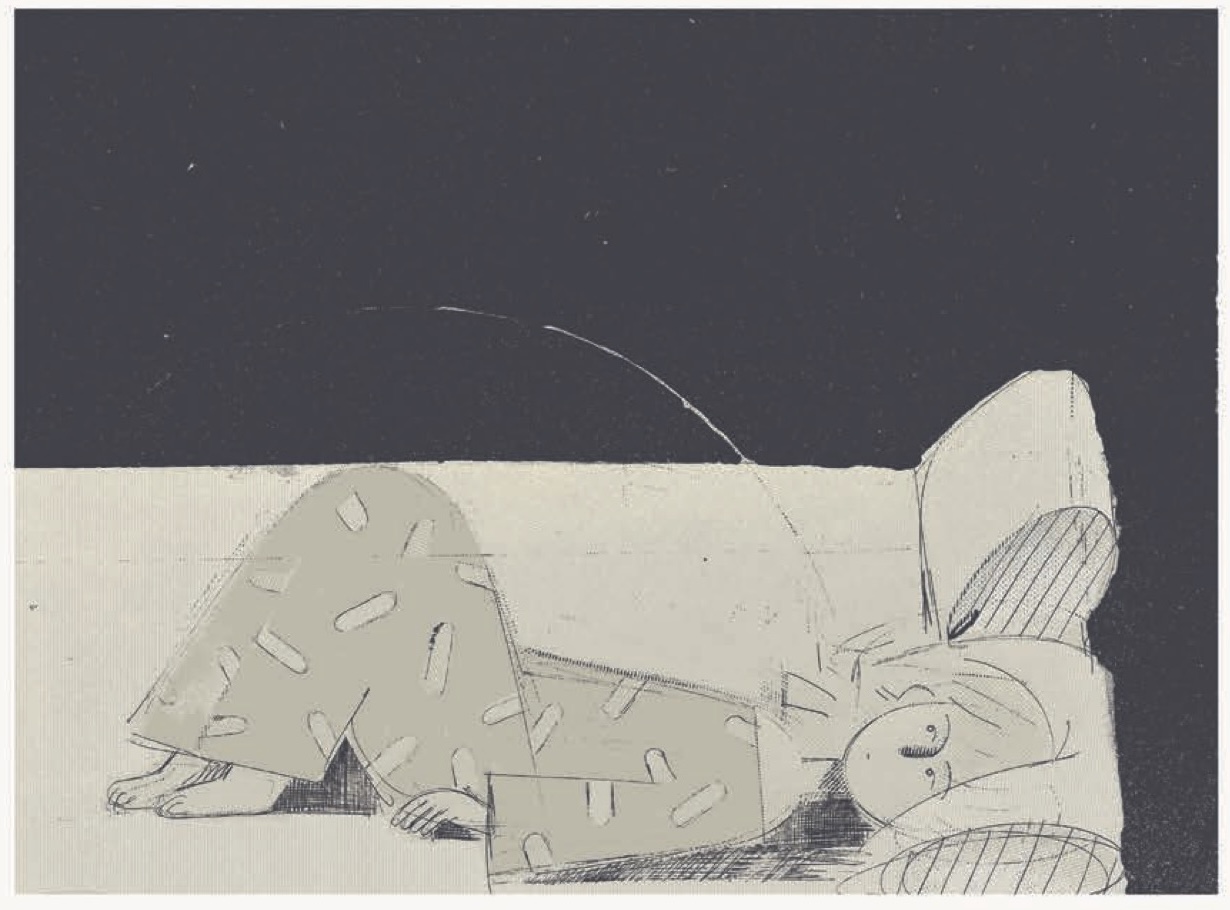
Breathtakingly intimate, moving, and possessed of transcendent power in the most unexpected places, All the Living is a difficult but unmissable read. It has a great deal to say about the way we live now, but it never foregrounds its position or becomes didactic; it casts too difficult a spell to threaten us with a sharp edge. It presents us with the idea of death not as something to be feared or as a mystery to be untangled, but as just another inconvenient reality to be coped with, like so much else in the modern world. Its structure has an organic, loose flow, and its themes rhyme more than they echo, but its ending – gloomy but deeply satisfying – crystallizes it into a remarkably resonant whole.
It's the kind of book you don't know you'll want to read until you do, and then you'll wonder how you got along without it. Perhaps it is my love of Kore-Eda's After Life, to which it seems like such a spiritual double, that makes me esteem it so highly, but if it is somehow dethroned as one of my favorite comics of the year, it will be because it's been a very good year for the medium indeed.













 English (US) ·