
About 13 years ago I started digging into Canadian small press comics history. I had been doing the Inkstuds podcast for a number of years and recently released a collection of interviews through Conundrum Press. I was fascinated by the different pockets of Canadian comics culture. Canada is a big country with very distinct cities and cultures and a whole lot of empty space. Colin Upton had a nice collection of oddball comics he had picked up through years and wanted to know more about some of this work.
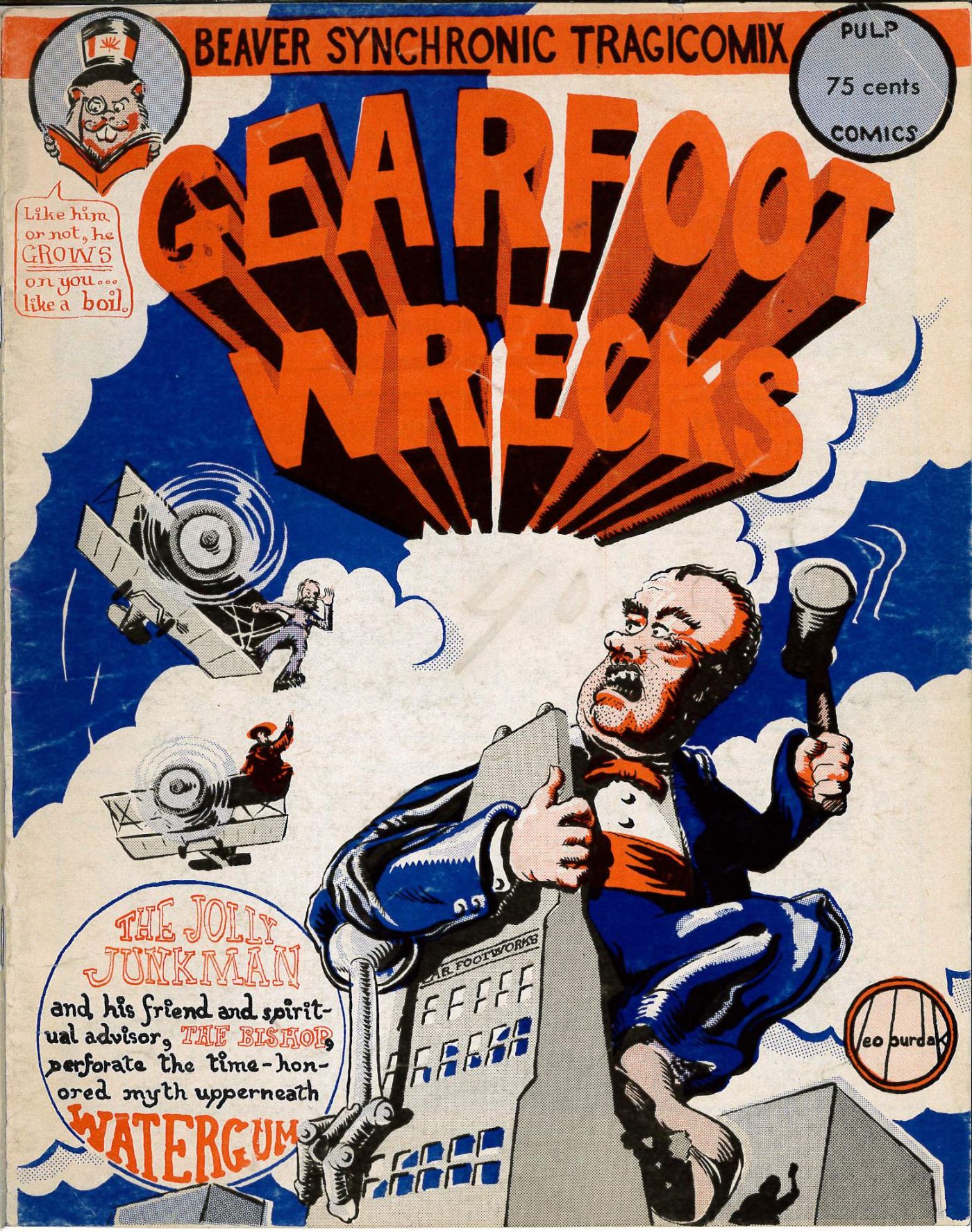 Gearfoot Wrecks Cover
One of the first comics I looked into further was Gearfoot Wrecks. Published in 1973 by Pulp Press (currently publishing as Arsenal Pulp), Gearfoot Wrecks was a strong outlier from other Vancouver-based underground comics. There was a brutality to it that was different to the work of Rand Holmes, George Metzger or Brent Boates. The comic just drips in ink and violent expressionist figures informed by the comics of S. Clay Wilson. I was able to find the creator, Leo Burdak, relatively easily — his number was in the phone book. After chatting with him about a comic he did almost 40 years previously, he agreed to a visit from me and Colin. Leo lived in one of the old co-op buildings in Vancouver’s Granville island area. During the '60s and '70s, the former industrial land was known for its warehouse art studios. Leo and his wife Leslie were heavily active in the Vancouver co-op movement and lived in their residence for their remaining years, with Leo passing in 2021 and Leslie passing in 2023.
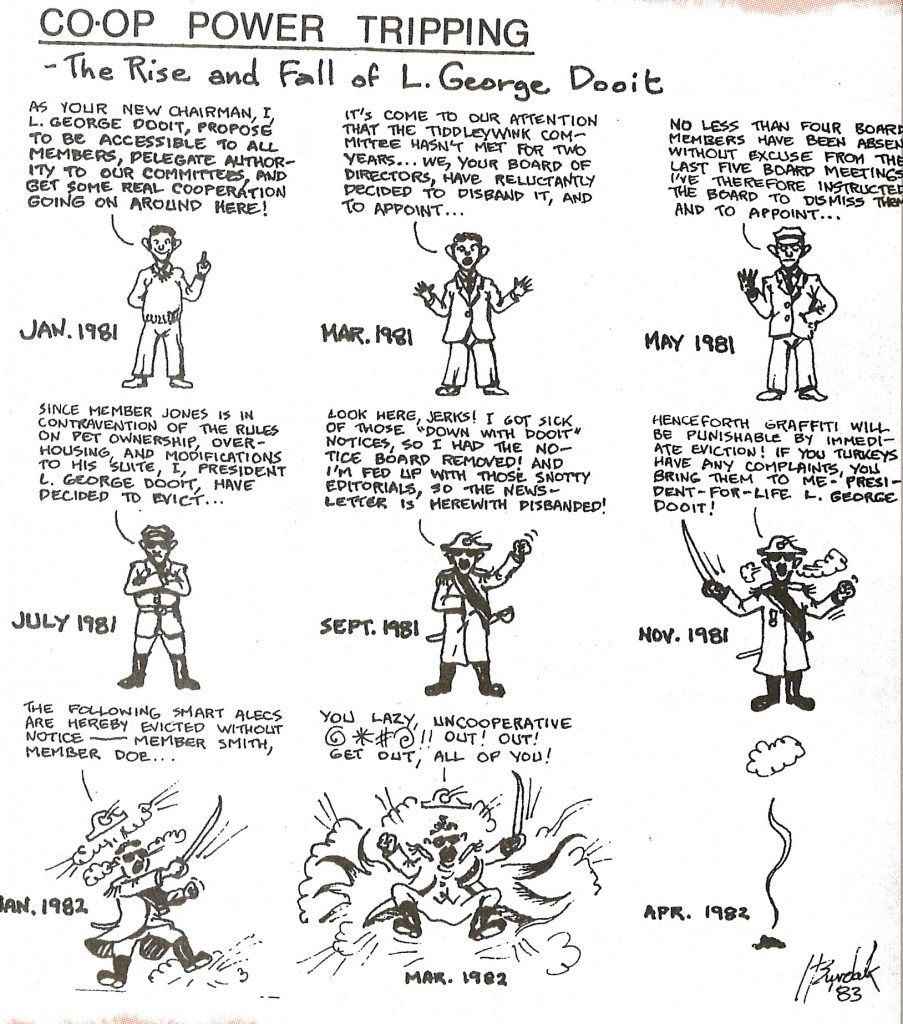
Colin and I had a great visit in 2012, with Leo entertaining us with stories of the Vancouver Socialist movement throughout the '70s and '80s, his own interest in art and his passing phase in comics. Leo’s other main work was published in a large National Lampoon comics collection. Written by Ted Mann, A Ferry Tail, is a hyper-violent short story of a psychotic baby that pulls a shuriken out of his diaper and attacks his own mother. The comic was printed quite small in the collection and is almost unreadable at that size. I’m not sure if it’s because Leo drew at the wrong dimensions or the Lampoon wasn’t excited for that level of violence.
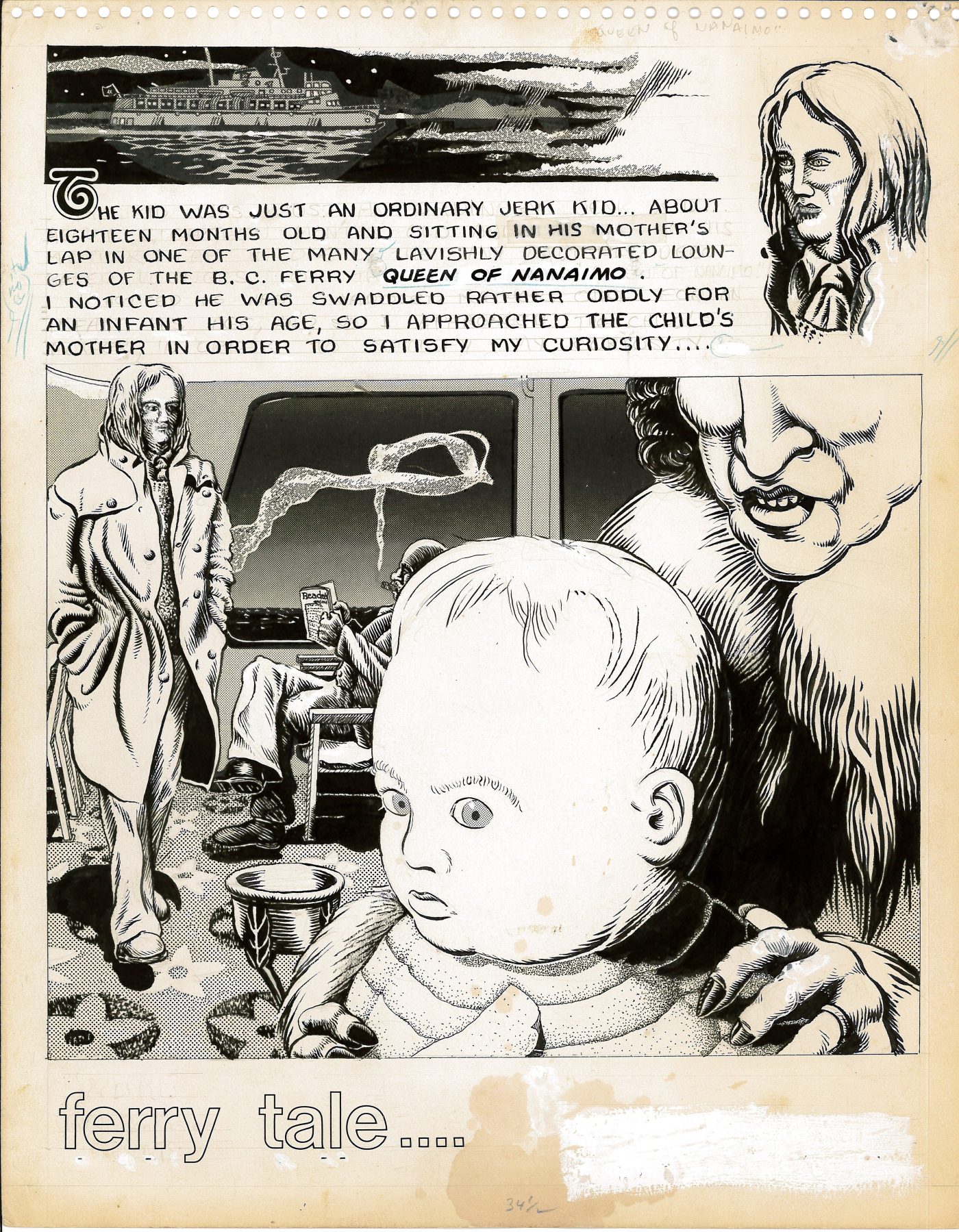 Ferry Tale page 1 - Written by Ted Mann
Beyond those two published works, Leo had a pretty strong stack of unpublished comics. He thankfully let me borrow the original art to scan, in hopes I could find a publisher interested. I wasn’t able to find anyone to take on the project and it all sat in the back of my mind for the following 10 years. Leo was kind enough to let me can all of his pages and post them on my old neglected Canadian Comics Archive. Last summer, my interest in Canadian undergrounds peaked again, and I successfully pitched an anthology collection to Conundrum Press. I have been spending the last year digging into the wide range of one of the more obscure corners of Canadian comic history. Supported by researchers Brian Campbell and Victor Marsillo, my eyes really opened up to just how much there is out there, and seemingly the deeper I dig, the more I find. I am looking forward to sharing more of my research in Canadian comics history.
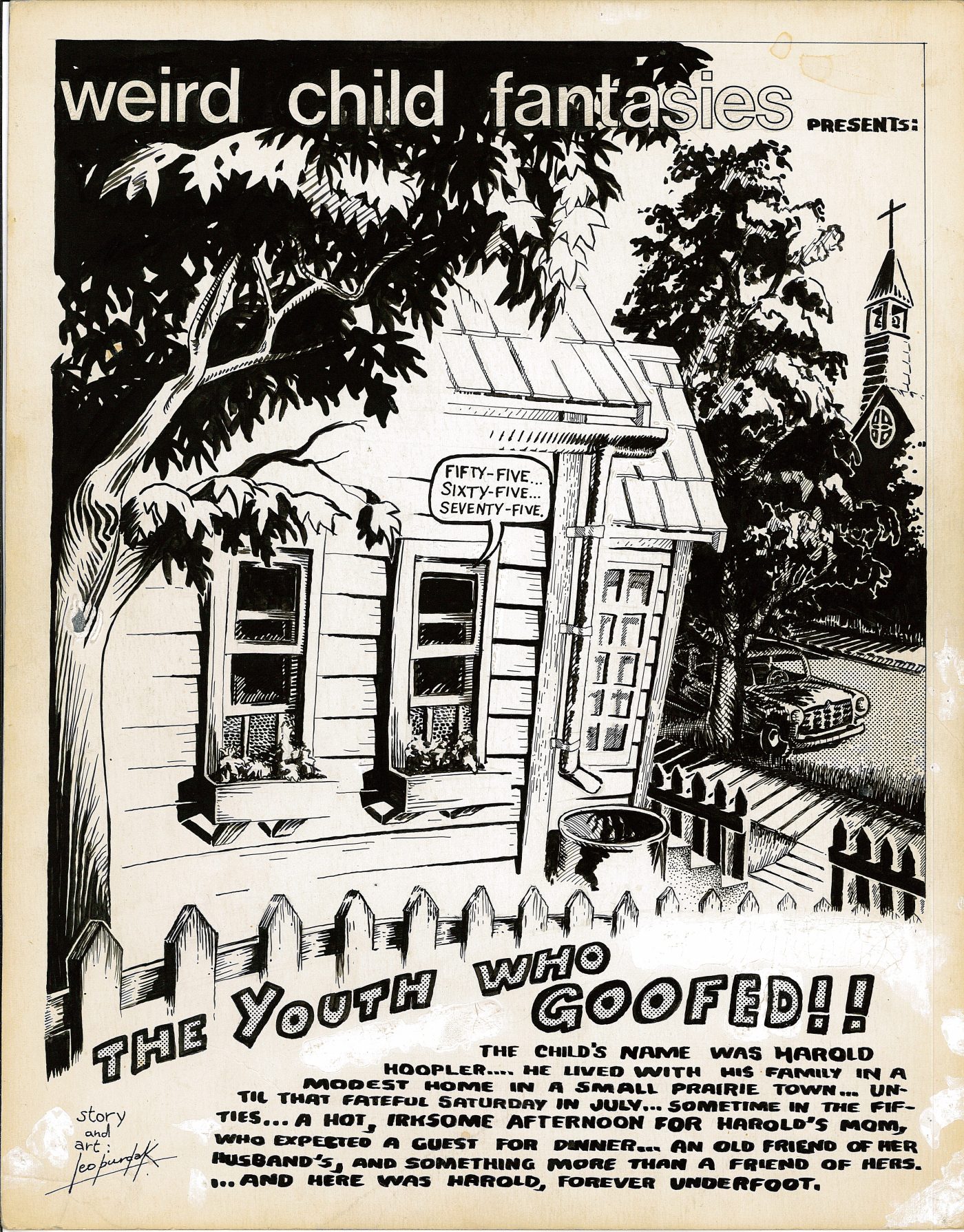 First page of Weird Child Fantasies - The Youth Who Goofed!! Originally published as a small run of mini comics. By Leo Burdak
I am happy to share this interview with Leo for others to learn more about this fascinating man and his storied history. I am in the midst of conducting interviews with Canadian creators from across the country.
A little about Leo: he was born in the small northern town of Dawson Creek in rural British Columbia. His parents were Czech immigrants that were politically active in their homeland. As an active member of the paramilitary wing of the German Social Democratic Workers’ Party, they were forced to flee after the Munich agreement in 1938 when Nazi Germany took possession of Czechoslovakia. They eventually settled in northern BC, founding the small town of Tomslake. Leo would eventually move to Vancouver to go to the University of British Columbia. His father’s democratic socialist values and community involvement likely instilled important values that are present in Leo’s work and activism.
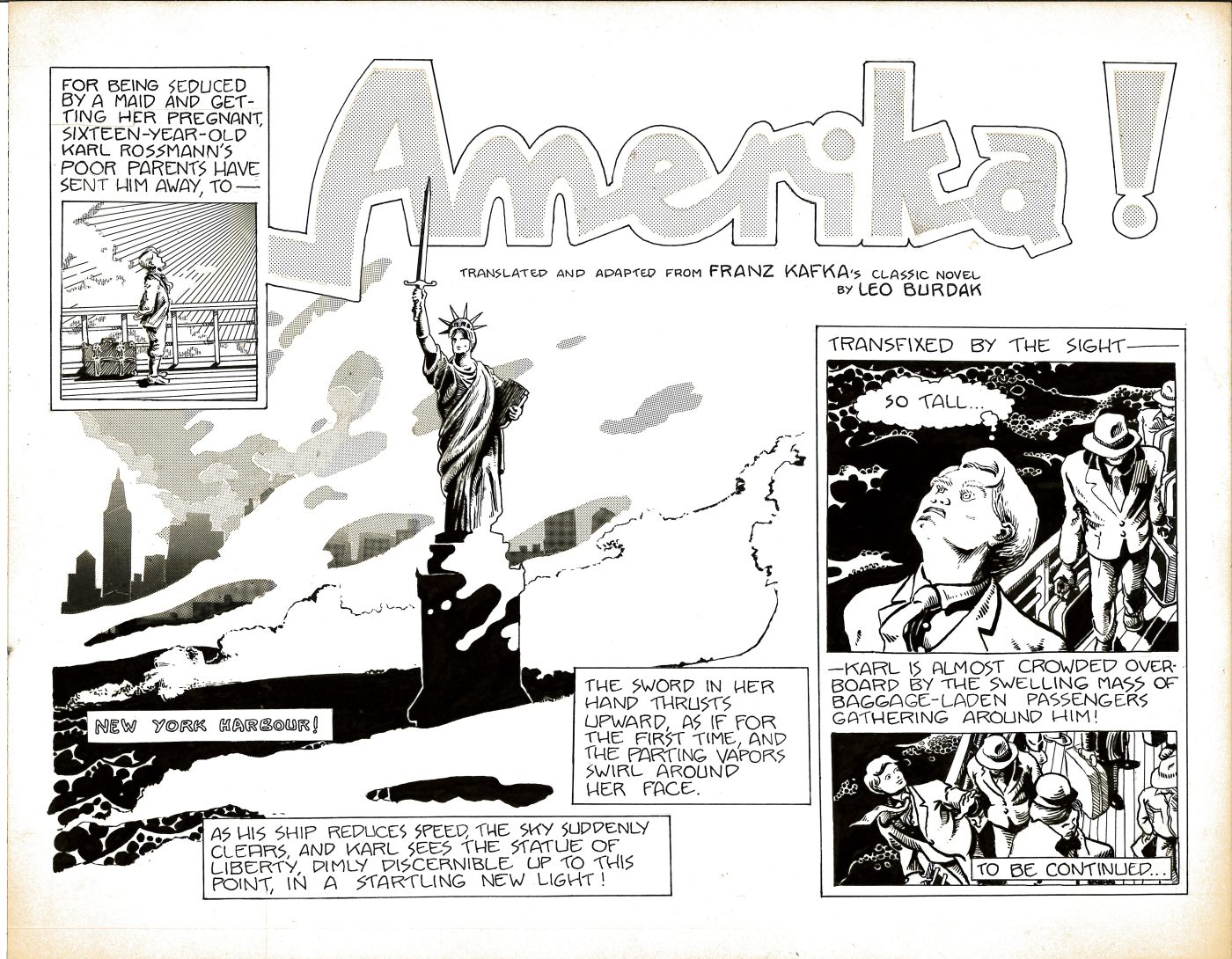 Unpublished page by Leo Burdak
ROBIN MCCONNELL: Colin [Upton]showed me Gearfoot Wrecks and I thought this is crazy, where did it come from? So I found Leo in the phone book and a couple of weeks later here we are. Leo has pulled out lots of comics, zines, original artwork, different ephemera. As we were emailing you mentioned you knew Colin.
COLIN UPTON: That’s right. When did Gearfoot Wrecks come out?
LEO BURDAK: 1973.
UPTON: I was about 13-14 when I came across a copy sitting on a coffee table in the Burnaby Art Gallery.
Ya, I sold them a few copies.
UPTON: It was very mysterious to me because I had not seen too many underground comics, and this was a very strange comic. I couldn’t understand why Nixon was on the cover because it was a Canadian comic.
Gearfoot was Nixon. I’m not sure what that was about. When I started it I had no idea how it would end. I had this image of the American president as an artifice, a thing that is standing up on mechanical legs, on false pretenses. At that time there were already cracks in the shell. Nixon resigned in '74. I was a little early with it. However, as far as doing the comic was concerned, I did one page then what am I going to do for the next, and then I did something else. That was how I started out doing comics. Later on, it got so you’d need a script. You’d need to plot what was going to be on each page.
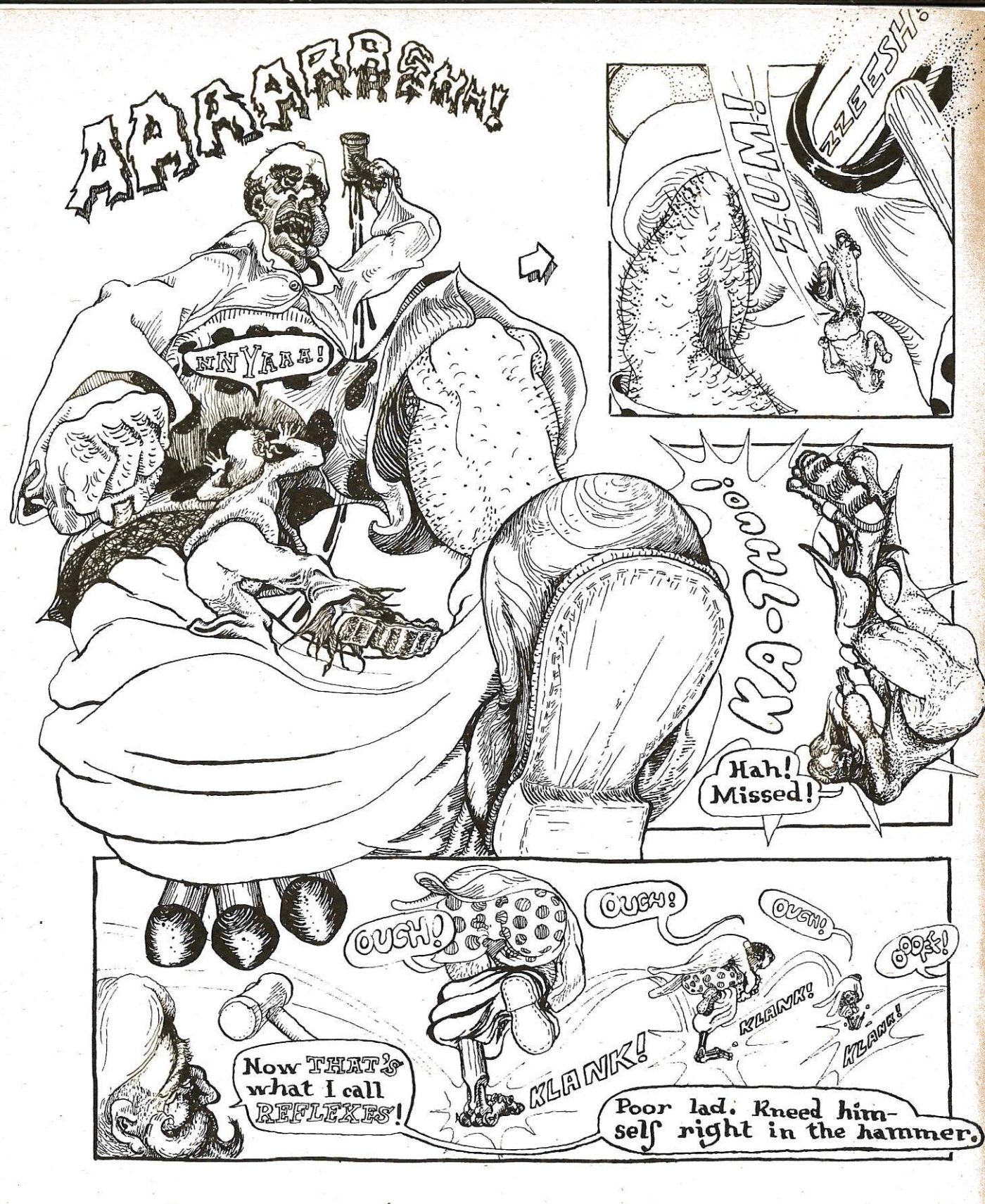 Interior page from Gearfoot Wrecks by Leo Burdak
UPTON: Was that your idea or the publishers?
No. This was done to a script.
UPTON: This is Blatman and Rubin by Tetlo and Birdman?
Well Tetlo is the writer and my last name is Burdak , so Birdman..
Are you from Vancouver originally?
I’m from Dawson Creek.
When did you move to Vancouver?
The first time was early '60s to go to UBC.
UPTON: What were you taking'?
Honors English. Elizabethan literature. I was the only one who recognized what Churchill was saying on the Olympics closing night the other night: “Be not affeared the Isle is filled with noises.” It’s Shakespeare from The Tempest, Act 3 scene 2. Caliban. There is some Brecht. You have a national hero and you give him the speech of a monster. More about comic books.
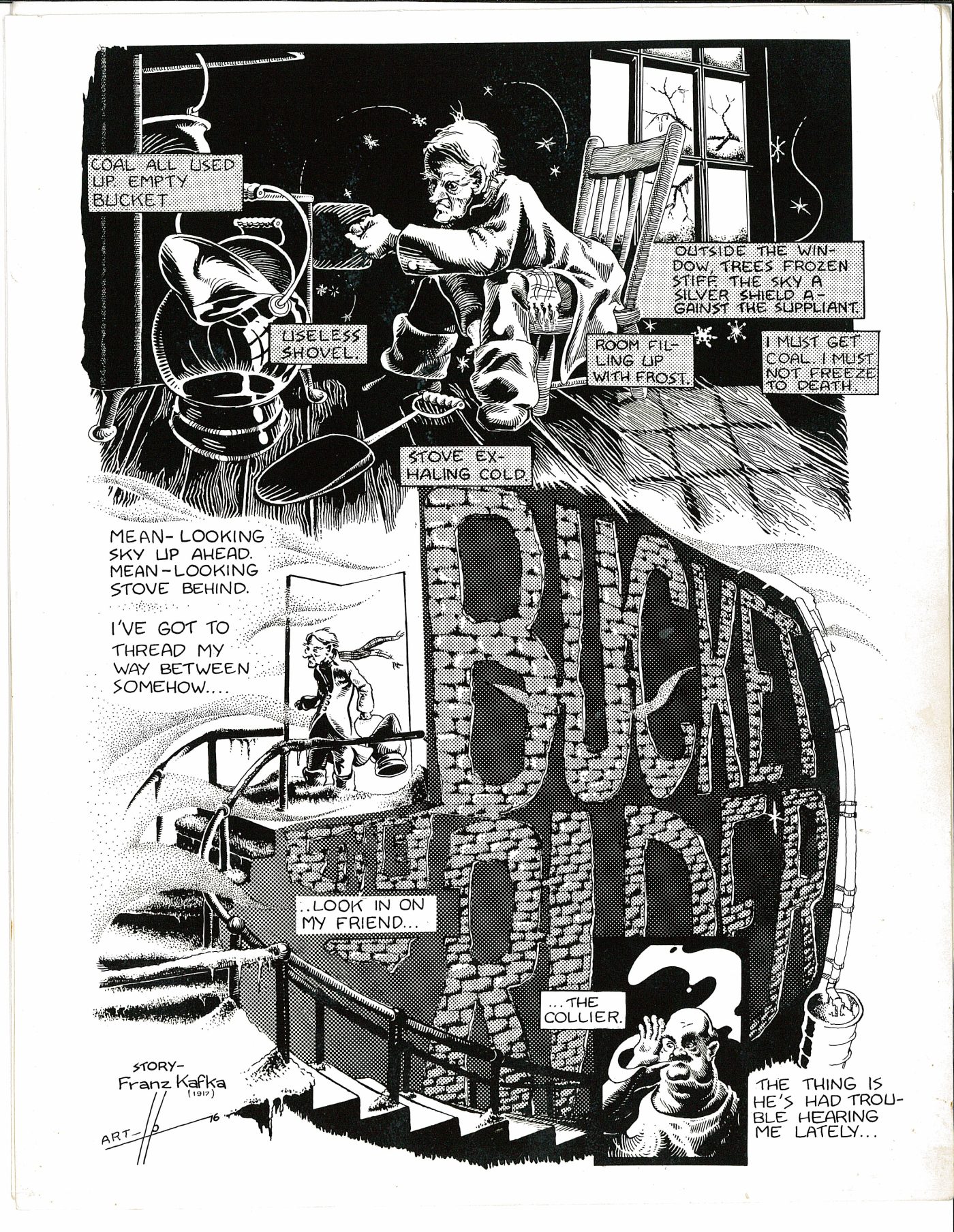 Unpublished page by Leo Burdak
When did you start drawing?
About 4 or 5. My Dad drew and was a bit of a caricaturist and cartoonist. We were living in Tom’s Lake which was a settlement of Sudeten German refugees who came just before the war. And Dad was in Dawson Creek building the Alaskan highway all by himself, at least to hear him tell it. He used to draw little pictures to illustrate his various adventures. It was an adventuresome time. That was 1942-43.
Did you keep drawing throughout your life?
I actually did some comics when I was a small kid. The drawing faded and the music came on, then the drawing came back. Then it was writing. After my comic book phase was editing technical documents.
UPTON: When you were young were there many comics available?
Oh sure, Dawson Creek, sure. We got Captain Marvel and Superman and Plastic Man. I used to like Captain Marvel quite a bit. I thought it was a dirty shame when they ran Captain Marvel off.
You had mentioned earlier reading EC comics and Basil Wolverton. Were you reading those at the time in the '50s?
Oh ya. Reading the early editions of Mad, and some other Mad-like magazines which were sharply satiric to begin with. Kurtzman quit and started Help and all the great artists appeared in Kurtzman’s Help. I still have a collection of those. I spent more on comics than I ever made from them.
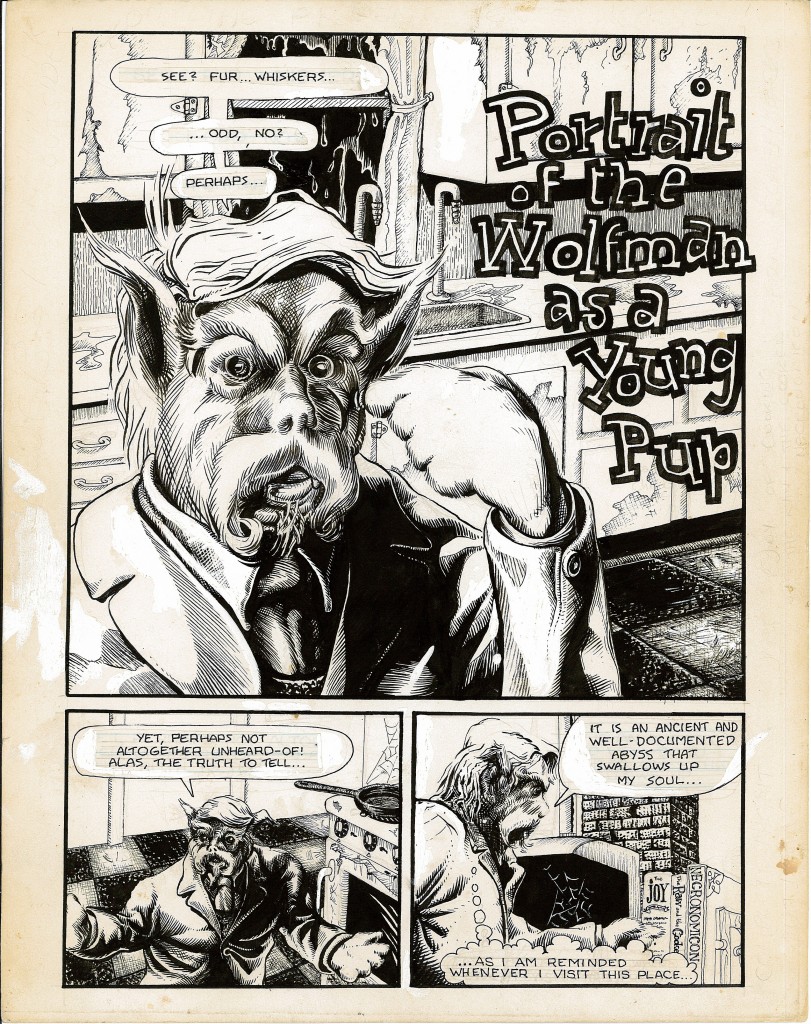 First page of Portrait of the Wolfman as a Young Pup. Originally published as a small run of mini comics. By Leo Burdak.
I’m curious. I know America in the '50s [had] the backlash to the EC horror comics.
Ya, the Crime comics. Tales from the Crypt. Evil comics. My mother had a bee in her bonnet about those for a while. There were all kinds of legends in Dawson Creek about how bad the teenagers were down in the city, which made me curious to get down here. But she calmed down after a while. My Dad was interested in the stuff. Although the English spoken in my parental household was marginal. Superman came as a comic strip in the Free Press weekly. We originally thought Superman was a waiter, or some sort of manservant, otherwise why would they dress him in this silly outfit. Back in Northwestern Czechoslovakia where my parents were originally from they had all sorts of resorts like Banff. They had waiters who dressed like that. Dad reading it assumed it was Supper Man and he was a waiter in some fancy resort.
UPTON: What about when the waiter began picking up cars and planes?
Well, some of the waiters were pretty capable too.
So you moved to Vancouver at 18-19. How long a drive?
750 miles. It was a long days drive but usually two days.
What was Vancouver like then as a young man?
How was it different from now? Didn’t see much of it living on 10th Ave and going to UBC. Got downtown every once in awhile. Granville Street was marvelous. Same collection of theaters, pawnshops and beer gardens. Never got around town much. I interrupted my education after second year to go back up to work for the local newspaper. Did a weekly editorial cartoon. That got awfully cold in the winter so I head back to Vancouver to finish UBC. Did a lot of theatre tours with an outfit called Holiday Theatre. Used to perform Shakespeare in High Schools. Did several shoestring tours, all the sets and costumes. Bare subsistence. I did that for several years. Then did another tour in Alberta. Had been married for a year or so and went on tour together. We got ourselves a GMC Handivan and went across the country to Toronto. This was in the late '60s. I did summer-stock in Saskatoon then I got a year contract at the Toronto Workshop. Fairly radical theatre establishment run by a mean drunk named George Luskam. The wife was a medical lab technical who got a well paying job in Toronto. Stayed there for eight months and had a lot in the bank at the end of it. Cashed it in and drove across the eastern part of the country. Squandered all our earnings and came back here.
That was about the time we moved to the West End and moved atop the Hippocampus Deli on Denman. It was a penthouse on top of a kosher deli. It was basically a shack, not attached. One plumbing pipe coming up in the bathroom and no heating. We got that for $75 a month so we were in fat city.
UPTON: People would probably pay $7,000 a month for a place like that now.
Living in Downtown! In the heart of the West End. And a penthouse. That’s where I started into the comic drawing business.
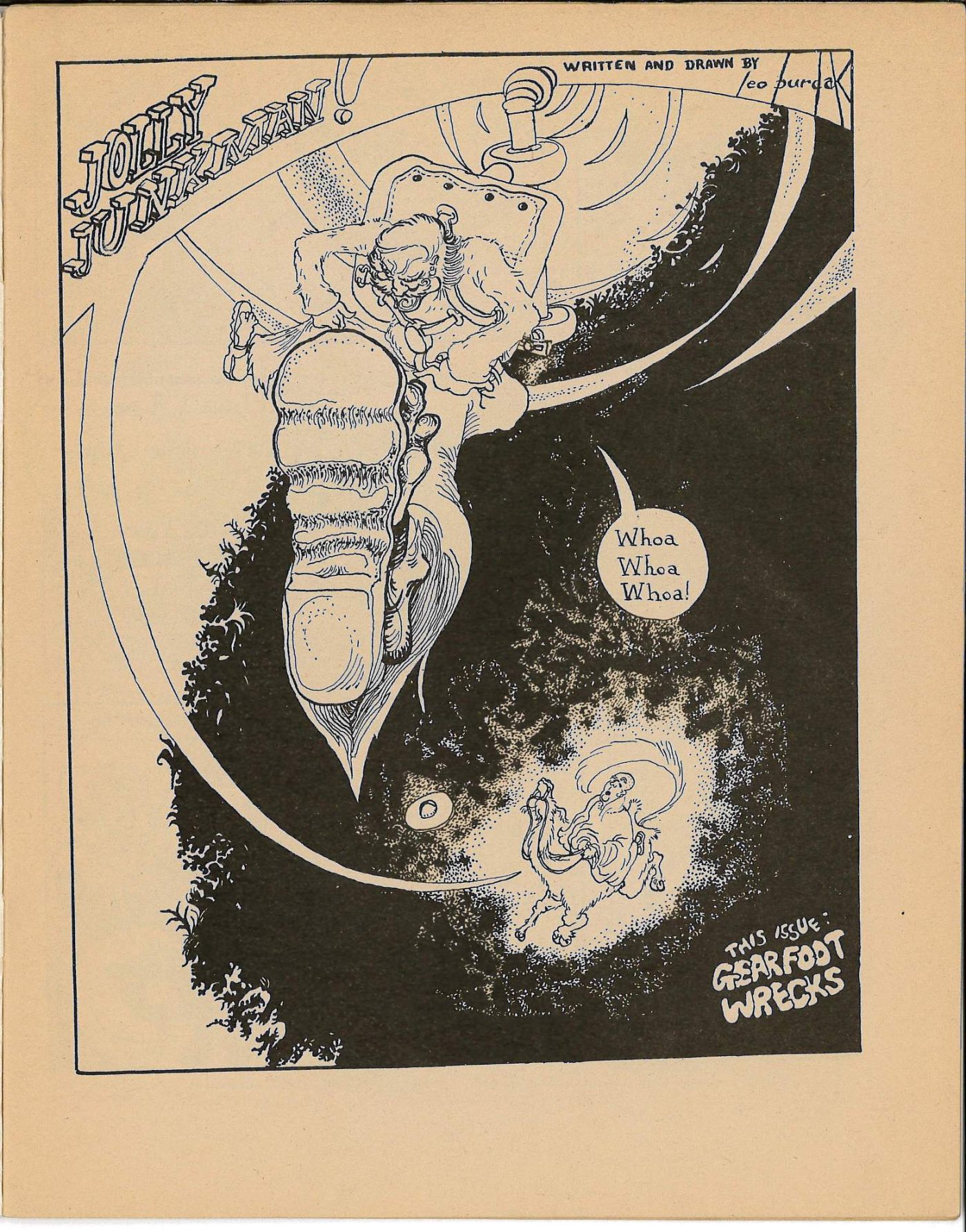 Interior page from Gearfoot Wrecks. By Leo Burdak.
What was it that made you want to start?
There was a bit of a transition into it. The Jolly Junkman was a character I invented in a strip that I did for a writing course that I took, sponsored by the UI (unemployment insurance) people. They were trying to take unsuccessful writers and train them for a new media. Well the instructor said, "The main thing is you need to learn to make money. You gotta know what people want." I started doing a comic strip sending up this idea. And I passed it around to other students and got the odd giggle.
UPTON: Were you familiar at all with underground comix?
Oh ya. I was reading the [Georgia] Straight. It was something ugly in those days. Fabulous Furry Freak Brothers. In the '60s I was reading Kurtzman’s Help and a lot of the artists got their start there. R. Crumb’s Fritz the Cat. Gilbert Sheldon’s Wonder Warthog turned up there. Terry Gilliam was an art director. John Cleese actually performed in a fumetti. He makes love to a Barbie doll. From that writing course doing the Jolly Junkman cartoon progressed to actually playing the Jolly Junkman on a kid’s TV show called Drop In [1970-74]. I was the token drop out on Drop In. On the CBC. Coast to coast.
So when did you do the comics?
1973-1976. Very clearly defined career. Gearfoot came out in '73 and Ferry Tale came out in the Very Large Book of Comical Funnies (National Lampoon) in 1976.
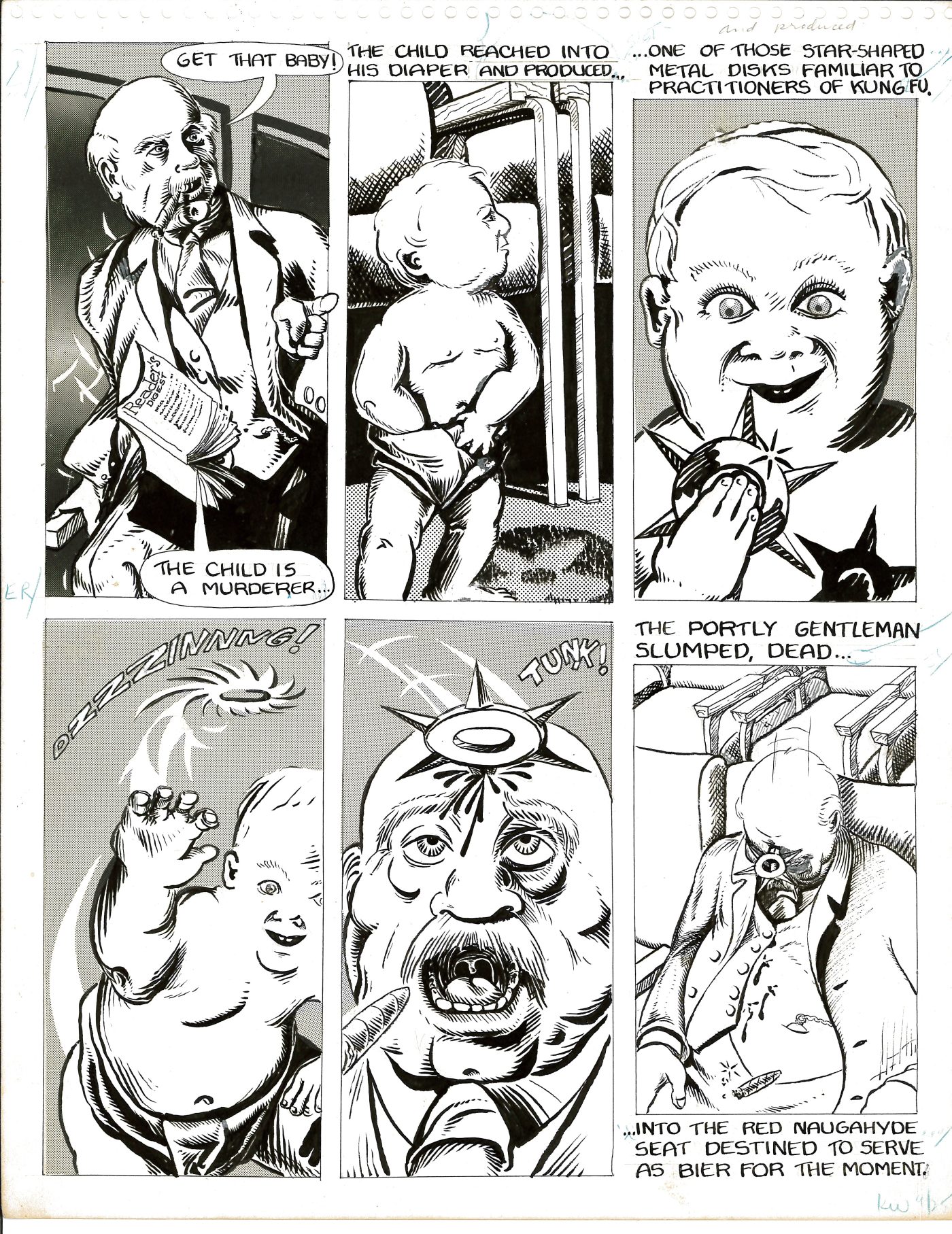 Page from Ferry Tail. Written by Ted Mann with art by Leo Burdak
UPTON: That’s not the one on the BC Ferry is it?
Yes. It was the best thing Ted Mann ever wrote that I ran. We did several episodes of that, only one of which ever came out in the Straight.
UPTON: Why is it laid out in such a peculiar way?
Because my pages in those days covered the whole page. And as a result did not fit the usual comic format. They ran two pages per page.
Were you in contact with Michel Cochette?
No. After a while my wife said my husband draws dirty comic books. The National Lampoon book was reprinted in 1979 and I never got a royalty on that.
UPTON: So when you started doing these comics were you aware of a larger community of comic artists in Vancouver?
I knew very few people. I associated more with showbiz types. Musicians.
Did you keep drawing after you drew those comics? Did you do sketchbooks?
Oh ya. Continuously. Not as deeply into it. 1979-80 I was doing cartoons on the letters page in The Westender. They started out being commentaries on West Coast lifestyle but quickly degenerated into politics. And at Pulp Press I was occasionally contributing a cartoon or a drawing.
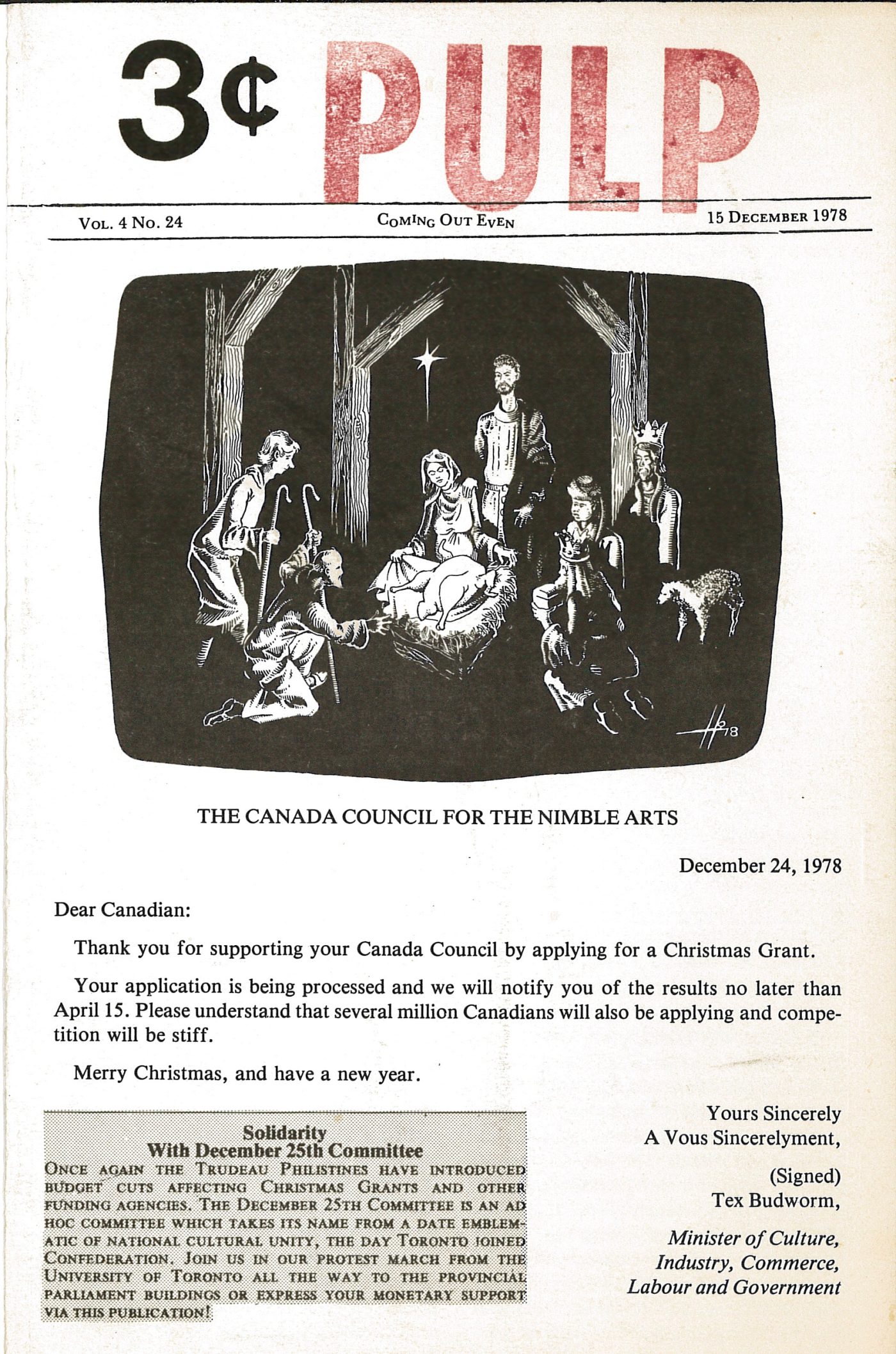 Cover of 3 cent Pulp with illustration by Leo Burdak.
So 3-cent Pulp. Who was that? They published Gearfoot.
The Osbourne brothers. Stephen and Tom Osbourne. I think Steve may still be teaching at SFU but we lost touch. Pulp Press is no longer around. It was a money losing proposition. In spite of the excellent body of material.
Me contacting you out of the blue to discuss your comics, has there been any thoughts about them retrospectively?
Ya, I can see fairly well why I couldn’t sell it. I never influenced the history of things very much.
How many copies of Gearfoot Wrecks did they print?
I think it was 2,500. I got at least half of them and flogged them wherever I could. That was how I was paid. Working for the Georgia Straight was similar, except a lot of the time I wasn’t paid. I ended up illustrating industrial arts textbooks. Doing training programs for workers. I did a bibliography of pipeline construction socio-economic impact assessments. Fossil fuels are obsolete.
UPTON: You obviously have some political passions. Have you ever thought of turning those into comics?
I haven’t thought of turning anything into comics for a long time. My hands aren’t as good as they used to be. I have arthritis. I can still think and write.
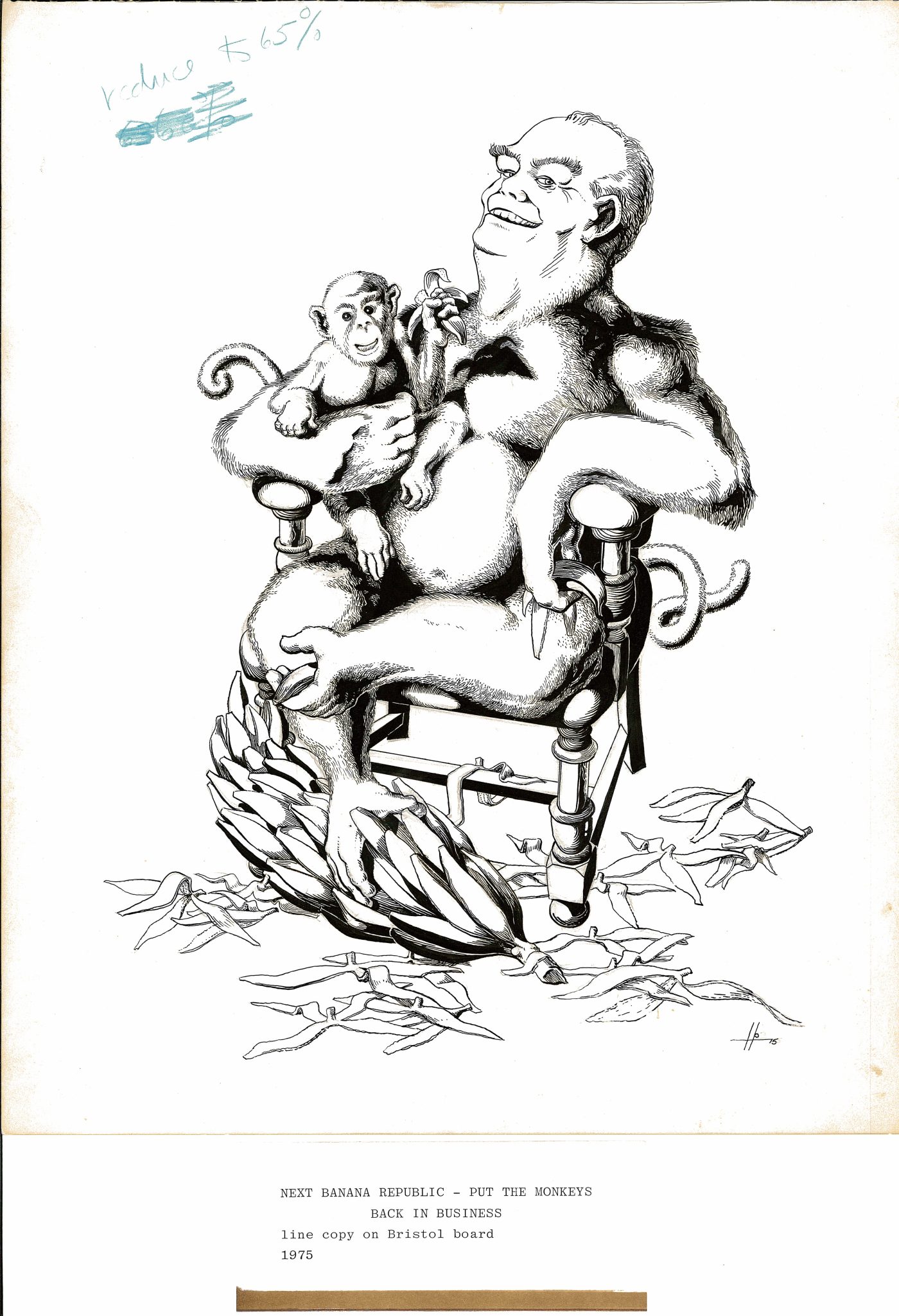 Editorial cartoon by Leo Burdak. Likely done for Vancouver based alternative newspaper or magazine in early to mid 70s.








 English (US) ·