
Alex Dueben | April 6, 2026
Kasia Babis had already been making comics for years when she gained a larger international audience as she began contributing to celebrated political comics anthology, The Nib, with a series of comics that were personal, political, a deep dive into Polish politics, and relevant memes that continue to circulate today. She illustrated nonfiction graphic novels like Re: Constitutions: Connecting Citizens with the Rules of the Game and Dictatorship: It’s Easier Than You Think! and her most recent book Breadcrumbs: Coming of Age in Post-Soviet Poland came out last year. To talk about the book and many of the issues it raised, I asked cartoonist and activist Seth Tobocman, best known as one of the co-founders and co-editors of World War 3 Illustrated, and for his many books including War in the Neighborhood and You Don't Have to Fuck People Over to Survive, to join the interview.
In a conversation that suffered from some technical issues, the two talked about activism and art, writing about real people and real events, and depicting the work of protest.
-Alex Deuben
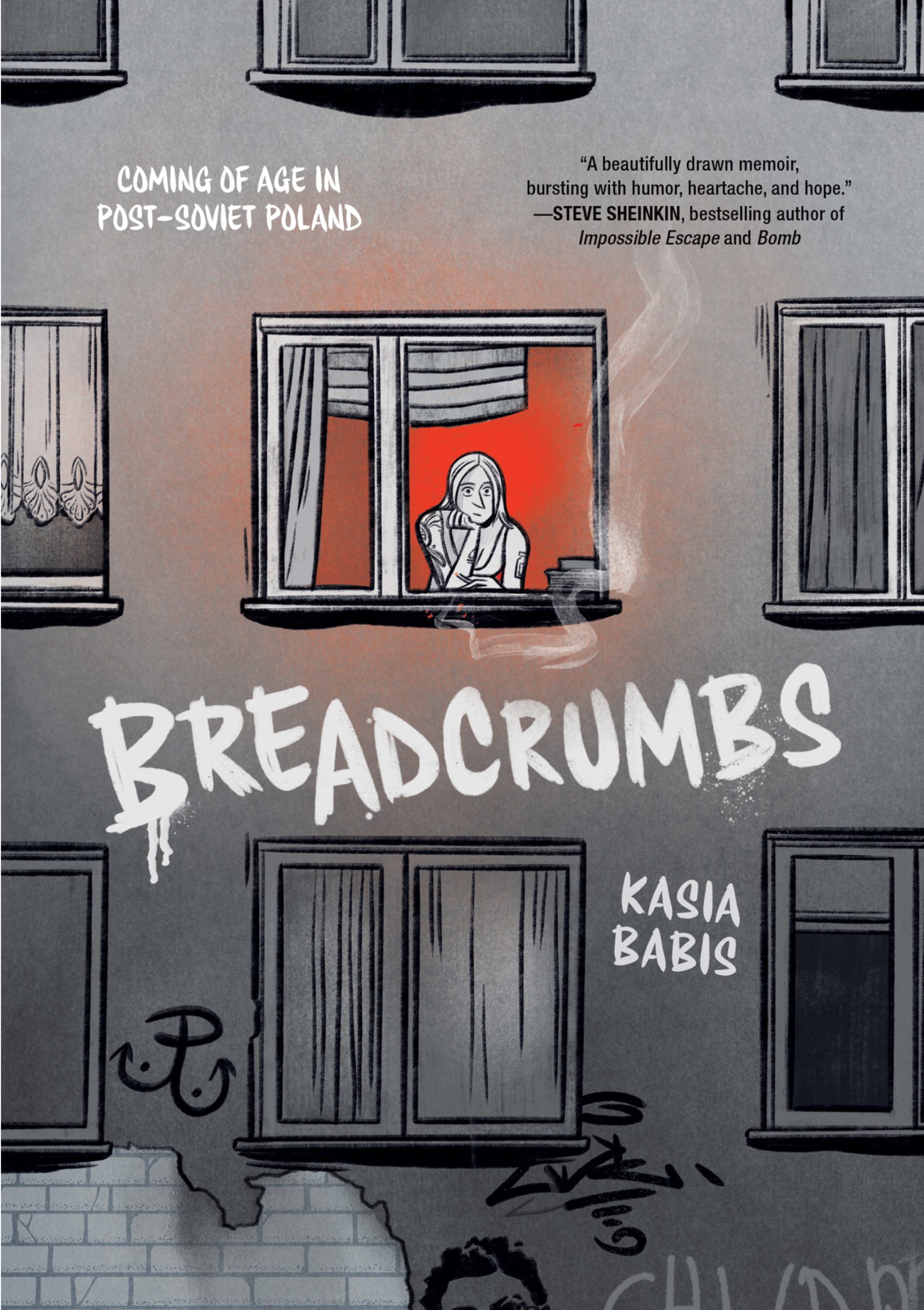 Breadcrumbs: Coming of Age in Post-Soviet Poland (23rd St, 2025) by Kasia Babis
ALEX DEUBEN: Kasia, I first encountered your work when you were making comics for The Nib and I was curious about Breadcrumbs and where it started because this is a coming of age story, but it's also about coming of age when politics is not optional.
KASIA BABIS: I think it makes a full circle back to The Nib, actually, because the editors of The Nib found my comics online when I was still making short comic strips, anecdotes and funny little stories from my life. Sometimes there were political themes, because politics is not separate from our lives, especially when you are surrounded by people from different minorities, people that struggle economically. These topics that we call politics are just part of your life. They cause you very real problems every day. That's how I ended up in The Nib. That opened the doors for me for the US comic marketplace. I was seen by the First Second editors, and by my agent, Farley Chase. That led to Breadcrumbs and I think Breadcrumbs kind of combines these two genres that I was making before. Slice of life with some heavier political themes.
Seth, when Kasia is talking about politics and ordinary life and how those two things intersect, does that relate to how you think, how you grew up?
SETH TOBOCMAN: The role of politics and art has, of course, been something people debated a great deal in the US context, all the way going back to the end of World War II, there was a real attempt to keep people from doing art about politics. When I went to art school, art was not supposed to be about politics. Comics were not art. Illustration was not art. Anything with narrative content was not art. So that was one element. But the other element was that I grew up with underground comics. I grew up with Neal Adams and Denny O’Neil’s relevant comics.
I grew up with the anti-Vietnam War movement going on when I was a kid, when I came to New York, [I saw] the gay rights movement, the AIDS crisis, the squatters movement, all of that. So it definitely seemed to me that politics was something that would be part of art and part of my comics. I feel that politics is part of life, and art is supposed to deal with our lives. The earliest art seems to be depictions related to hunting animals. That was how people made their living and that was the art they made. Our lives are going to be determined very much by our political situation in the modern world, so that is relevant subject material. It's not the only thing to do art about, but it's certainly something you should do art about because it's a part of our lives and because art does have subject material.
Being an activist, and in the middle of things, the work that one makes, the work that's needed, is different than being able to take a step back and look back and craft something longer, more narrative. Something like Breadcrumbs, something like many of the books you've made, Seth.
KB: I didn’t even make this connection until my agent pointed it out. At first I wanted to make a comic that was about Poland and [Polish] political themes, I didn’t think about it as an autobiography at all. Farley suggested that based on what he knew of my life that I could combine those. First of all, because readers like stories that they can relate to, and autobiographies are a great device for that. I also realized that everything that I want to talk about, I want to talk about because it was a part of my life. So I may as well just talk about what happened in my life, and not just about abstract situations that are inspired by what I've been through, and that I observed in my country.
ST: Reading Breadcrumbs really brought me back to the reason we do this type of story. I was really affected by it. Showing a very complex and nuanced explanation in terms of the real experience of being involved in social movements. It's very similar, to my mind, to what I tried to do with War in the Neighborhood, which was a book I did after having been involved in political activism in the Lower East Side of New York for a decade.
My earlier work is a lot more like a political cartoon or a political poster. War in the Neighborhood is a lot more autobiographical and it describes the contradictions of people trying to make social change, but also having to deal with their own concerns. A lot of the things I saw in Breadcrumbs were very familiar. The depiction of the young man who was canceled for inappropriate behavior during his partner's abortion was very familiar to me. I've had to talk to a lot of young guys who were in that position over the years. The most extreme things people were saying about him were exaggerated and untrue, but at the same time, he didn't get into that situation by being a nice person. I think you really brought that out with a lot of nuance. It felt very real to me and very familiar. It's a situation we've all had to deal with. The next generation of people can look at that and maybe it will help them do better work in their own lives based on our experience. I think that it was a really valuable book in that sense.
KB: Thank you so much. That means so much to me that you are saying that with all your experience that you can relate to that and that this resonates with you. It tells me that I did at least a good job on that part. I was so afraid of that nuance. There's just not much room for it in my political activism and in my community, because we are all so highly emotional. For a good reason. Because everything that's happening around us is so outrageous, we are filled with this righteous rage all the time. It's hard to stop sometimes. I don't even think we should necessarily stop, because it's very important to point out problematic behavior. Not even problematic, but point out abusive behavior. But on the other hand, we all are assholes sometimes. Maybe not all of us, but the world is full of assholes. We need to have a plan to somehow still find room for them to improve and not to antagonize them to get even worse.
We believe in reconciliation, in social change, so we need to leave room for us, our own community, to also change. That's a hard boundary to establish. When is someone just not a very good person and when does an abuser start? Are we going to ostracize people for being just, I don't know, bad boyfriends? Do we need to somehow find room for that and compromise? I'm really trying not to pretend I have all the answers. It's what I was struggling with in my activism.
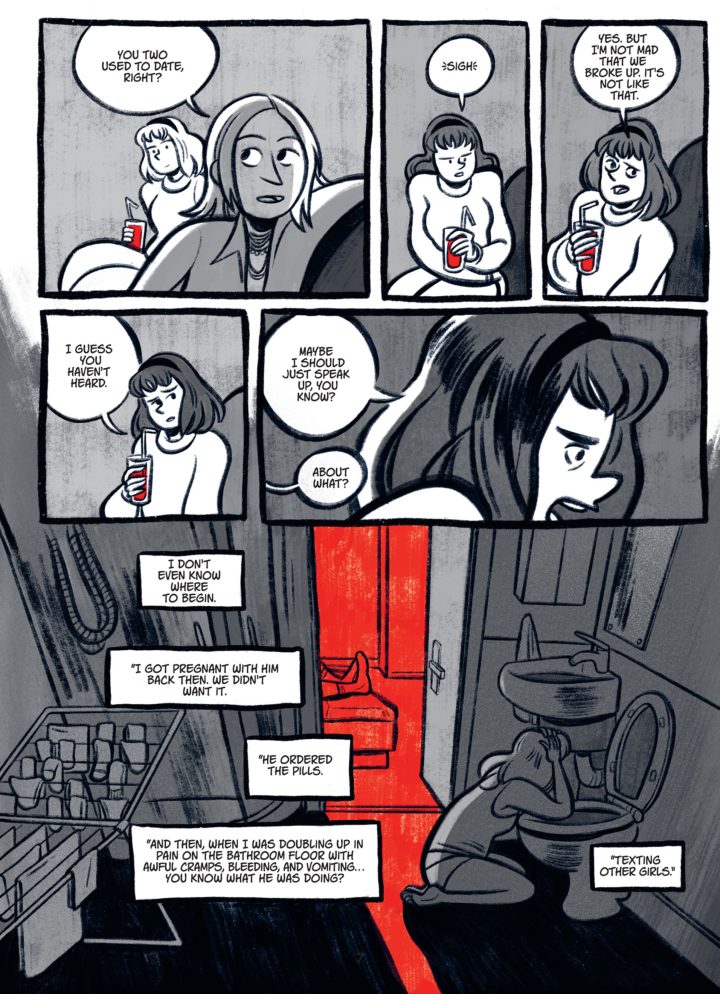 interior page from Breadcrumbs: Coming of Age in Post-Soviet Poland (23rd St, 2025) by Kasia Babis
ST: It reminds me very much of a passage from Dostoevsky's The House of the Dead, his book about being imprisoned in Siberia. There's this passage that’s stuck with me for years. There’s a dialogue between a prisoner and a guard who become friends. The prisoner is telling his life story. The prisoner is this pathetic character who was trying to avoid being drafted, so he married a woman he was not particularly interested in. Then to get out of the marriage, he murders the woman, and then he gets caught.
They're discussing this, and at the end of the discussion, you can tell that the guard has done the same thing, but gotten away with it. He doesn't say it explicitly, but you can tell by the way he's responding sympathetically to this guy that he's basically done something similar, and that this behavior is far more universal than anyone wants to admit. The sequences with the abusive guy at the end of the book really reminded me of that passage from Dostoevsky, and I thought it was a really important thing to have there. I really appreciate the fact that you did that.
KB: Thank you so much.
ST: It's brave, because I'm sure those are real people, or they’re close enough to them that somebody will recognize themselves, and so you took a risk in doing that. I appreciate that.
KB: It’s always a risk, right? I wanted to ask you for your experience about writing about real people and real events. Where do you put the line? How much do you consult with people that you depict, or maybe that you're inspired by? Where is that ethical boundary?
ST: Well, there's a legal boundary.
KB: Of course.
ST: You have to fictionalize, or people will have a legal basis to say that they've been slandered, right? So you fictionalize, you change names. I’ve found that it's very complicated. A funny story. My friend Mike Shanker, who was the basis of one of the central characters in War in the Neighborhood, said to me, Seth, you showed me shooting heroin in this comic strip. I DID NOT SHOOT HEROIN! I SNORTED HEROIN!”, so I changed it to him snorting heroin.
KB: [laughs] Oh, you did.
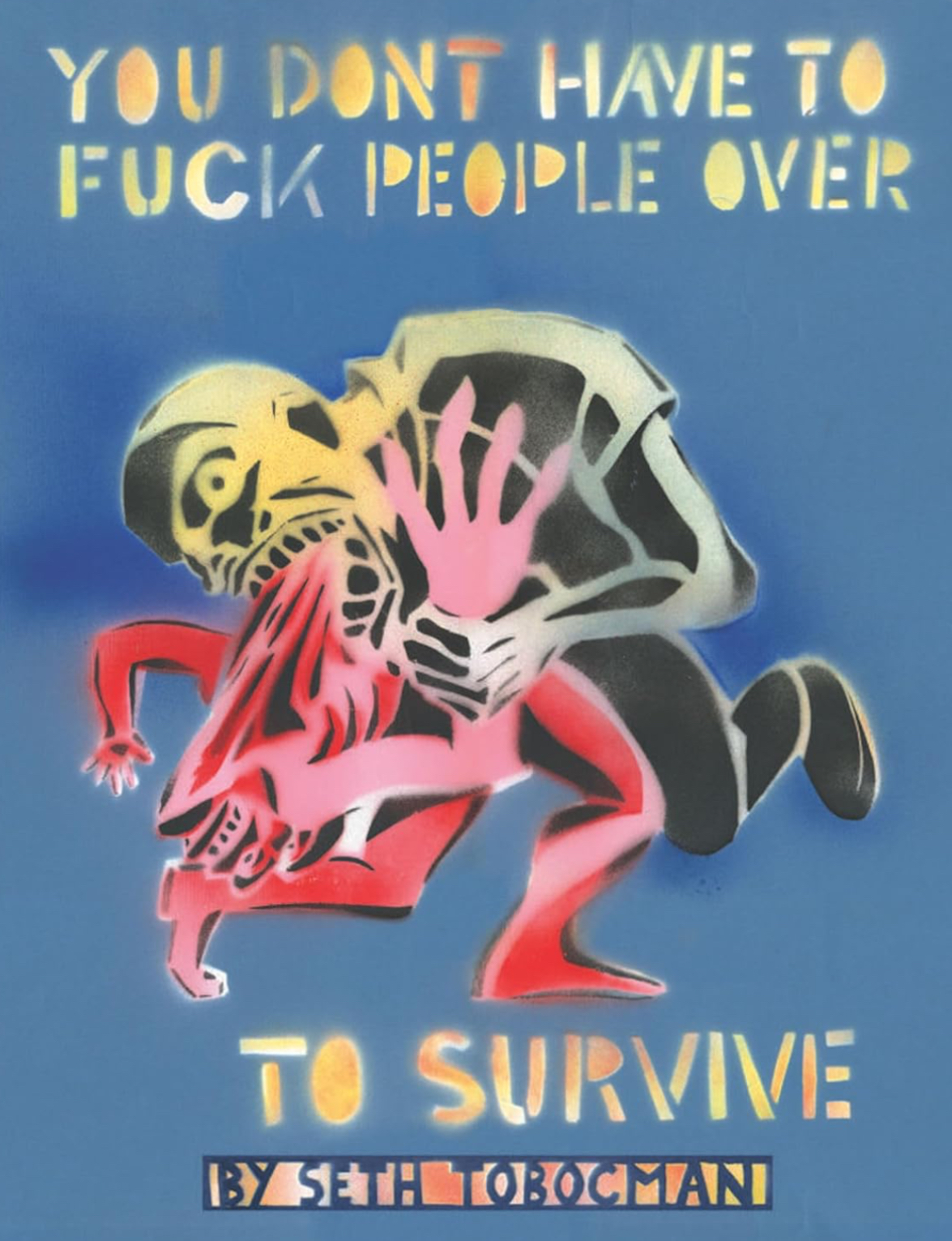 You Don't Have To Fuck People Over to Survive by Seth Tobocman
ST: I mean, I wasn't with him when he shot heroin. So I don't know. Actually, some of his friends said, Mike lied, he shot. But the point here is that Mike really didn't care. I was showing him doing very problematic things and he was comfortable with himself. He didn't mind people seeing that. He could handle that, because that's the type of person he was. There were other people who I said nothing bad about at all and they became completely emotional and upset and angry that they were portrayed, essentially. They had lost control of their own image, and they'd lost control of their own identity. I had one person say, the way you drew me doesn't look anything like me. You made me look ugly. I said, okay, I'll change the name. No, then you're denying that I was there. What can I say?
KB: You can’t win.
ST: It depends on how insecure a person is and how comfortable they are being seen. I think everybody I know who's done reality-based comics has come up against this. Harvey Pekar came up against this. I'm sure Artie came up against this. Everybody who does reality-based comics, you find out that some people are comfortable being seen and some people aren't, and it has almost nothing to do with what you said about them.
KB: That's so true.
Kasia, you said originally this was more a book about politics and less about you. I think it’s a very valuable book and you touch on many things and one of them is conspiracy theories and how that really reshaped Polish politics. In ways that in retrospect, many of us should have been paying attention to. There are a lot of events that you managed to cover very succinctly.
KB: Oh yes. Not only the events themselves, but the memes around it and the social mood around certain events. It's so hard to explain to an outsider sometimes. It's like your own or private joke with your group of friends. Translating culture is always a challenge. I'm very lucky that this book was released in the US first. I see so many parallels between US politics and Polish politics and history and people, really. I'm a little bit obsessed with American culture. Of course I grew up with it because of the cultural imperialism of the United States, so I soaked it in. At first, I, like everybody, wanted to be there. It's like the main character of all the countries. Then I started seeing more through the facade. Also, the image of the United States started shifting on the global scale. I really wanted to underline those parallels between Polish and American politics, because I think a lot of the same stuff is happening.
I wanted to show a perspective of a capitalist country that just became a capitalist state. We tend to treat it almost like a law of nature. Capitalism and the economic system that surrounds us. I don't remember communism, because I was born right before it fell, but I still have more comparison to what was bad, but what was also maybe better in some cases, and obviously, some flaws of the system now. Maybe that realization that the state of the things now, it's not just how things are. History didn't necessarily end when the communists failed. There is still some places to improve when we start to notice what's wrong with the system we have now.
To circle back to politics in art: comics, like editorial cartoons, [have been] very close to politics from the beginning. I think it's especially true in Poland, when comics and satire was often used to fight the communist regime. Now I think people kind of get a little bit defensive when it's used against the current system, because they immediately jump to, you don't like what's what's going on now? You can go back to what was before and it was so bad. I think we can improve somehow. Even though we acknowledge that communism was bad, still, there's something to improve with capitalism as well. And there's a lot. It's very hard to not get people in this defensive position. I think it's what I struggled the most with in my daily work as a cartoonist.
ST: That’s a very familiar way of thinking to me. I grew up with parents who had lived through the Great Depression, and World War Two, and anti-Semitism. They would always say, what are you kids complaining about? Everything is so much better for you. Why don't you just like everything around you? You have no idea how bad things can be. That's a really familiar line to me for my generation.
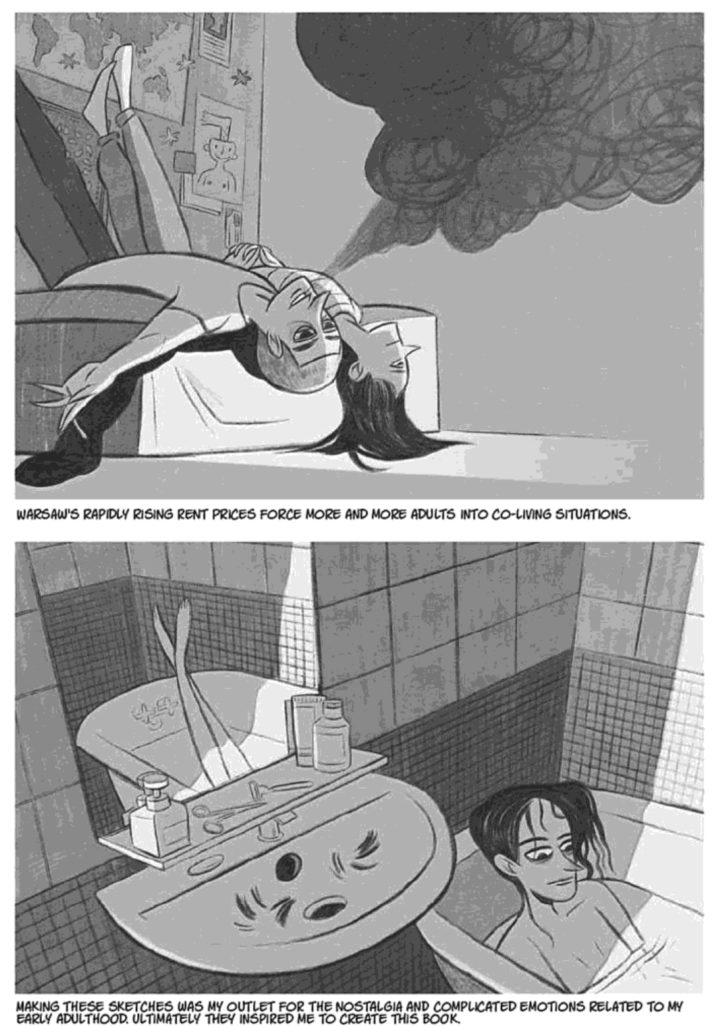 interior page from Breadcrumbs: Coming of Age in Post-Soviet Poland (23rd St, 2025) by Kasia Babis
One thread running through both of your work is politics as a practice. As something more than knowing who you’re voting for. Of protest and politics as being a part of one’s life.
ST: It was possible when I was growing up to get literature about politics and history, but it was very hard to find any literature that would explain the actual process by which people participate in politics, and what actually happens when you do it. There weren't a lot of really good and honest and clear narratives about how this worked. It was important to me to record that, and to show people not just a problem, but what do people actually do about it?
KB:It’s an important tool that people sometimes forget exists. I also don't blame them when sometimes the helplessness is so defeating. As I depicted in Breadcrumbs, when you have the biggest protests since ’89 in the whole country, tens of thousands of people in the streets, in all the major cities and towns. Maybe the ruling party even changes in the next election, but the decisions, the law that caused it all, doesn't change at all. I don't think I mentioned it at the end of the comic book, but nothing really changed when it comes to the abortion laws in Poland. Nothing.
The protests that I depicted in the comic book, this was a very formative thing for my generation. It was the first political activity for many young people in Poland. We felt really united and powerful. Many politicians raised to power on those slogans of necessary change, ending the barbarism and women's health, and then nothing. Nothing changed.
ST: Did you know that at the time you wrote the book or is that more recent development?
KB: Right when I finished the book. There was the big election and people mobilized. I finished writing right after that, so I didn’t know how this will go, but I had my predictions that were not so optimistic, because of the patterns that are very similar to US patterns. Where you have conservatives and liberals and they change seats often, but the changes that happen are in very minuscule spheres of life. There are things that are established that no political power can truly be against because there are some other powers behind them that truly control them. It's not a surprise that young people get desensitized and nihilistic after experiencing that.
ST: You prefigure that in the narrative and that you show that the problem is not just the ruling party, but it's in the culture of all the characters and all their lives. While you didn't say that the laws didn't change, you definitely made it clear that more than a set of laws and a set of legislators was the problem. I think in that sense, the book does prefigure that.
KB: Yes. I didn't have my hopes up back then, unfortunately.
ST: I would hope that you're glad right now that you didn't end with a big cheerleading session where you predict that everything would be okay.
KB: [laughs] I don't think it would be an option. I mean, I was only 30 years old, but I've seen that cycle now going over the years, and it always turns out the same. I didn't have it in me, that hope and cheer that you mentioned. I didn't have it in me at all. So it was not a risk for me to end the book on that note.
What are the two of you each working on now? What are you, what are you working on and also thinking about?
KB: Thank you so much for asking because right now I am drawing thumbnails for an upcoming comic book that will be released I think in 2026. It’s a children's book about a fantasy land when people fly on giant winged cats. It's a little bit more cheerful and innocent than my previous book. No abortions, no fetuses in jars hidden in the refrigerator, but there are some politics. Actually it's kind of about the feudal systems and trying to abolish the monarchy and about social change. There's this very funny group of maybe activists, kind of a Robin Hood party that tries to change the system, but it's not as easy as it may seem. Even the peasants are kind of opposed to the idea of social change. Like, what do you mean I can rule my own land and not just be an asset for the higher Lords? I can become a Lord myself one day. I want to be rich and I don't want to pay taxes. So there's some political themes throughout the book, but it’s mostly a fun adventure for kids and maybe younger adults.
There will also be one more book for, I don't know if it’s for First Second, or 23rd St, their group for more adult audiences. It will be a comic book for young adults about debating and how to debate and why it is important to learn.
ST: We need that in the United States! We really don't know how to debate here.
KB: Yes, I'm really glad that that's coming out too. I'm also a streamer now, so I'm kind of retiring from comic books for a while after I finish those.
ST: You’re retiring from comic books?
KB: For a while, at least.
ST: I think that that would be a loss to all of us. I want to see the next one myself.
KB: Okay, I’ll consider it then.
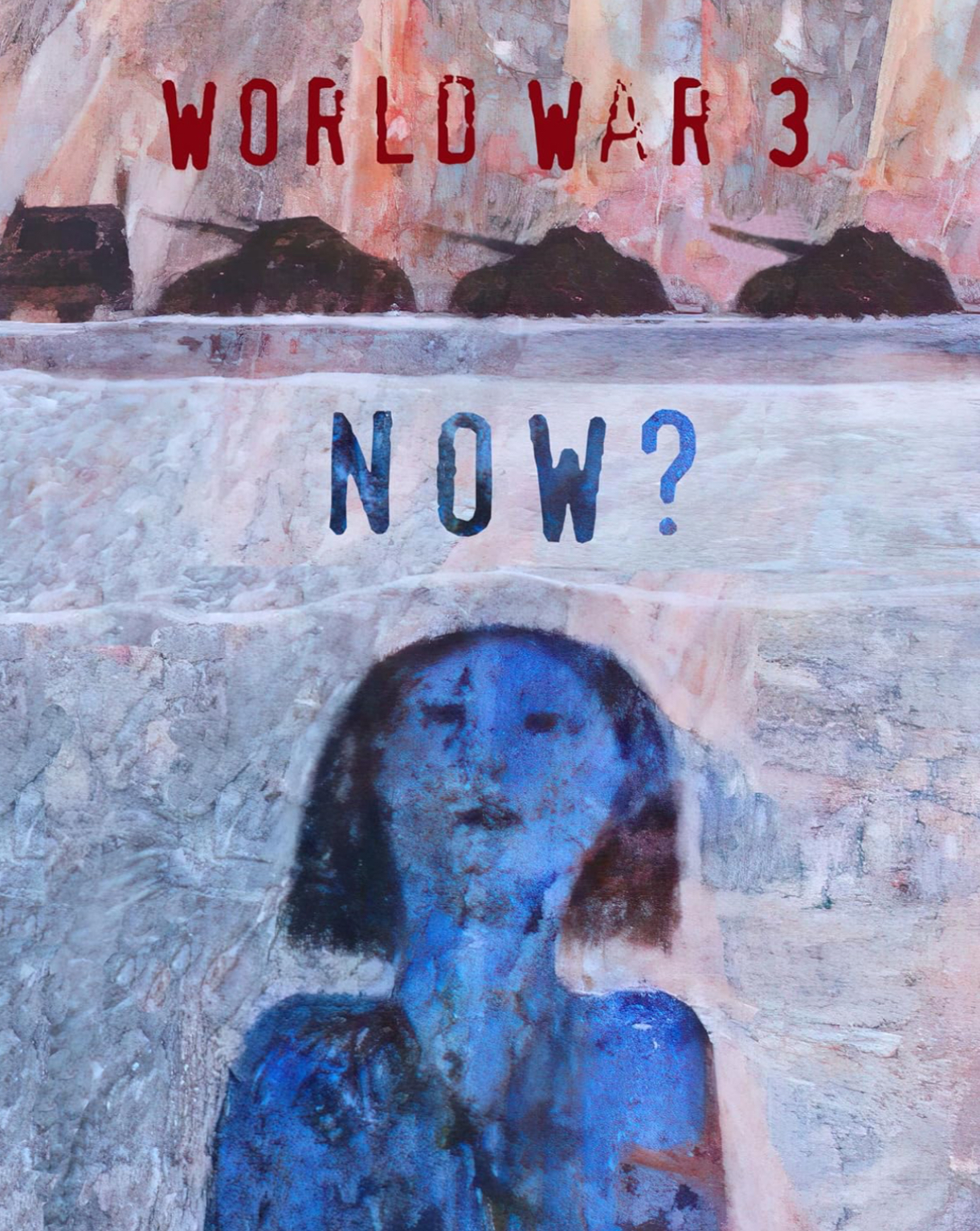 World War 3 Now? edited by by Seth Tobocman, Susan Simensky Bietila, Nicole Schulman and Jordan Worley
ST: We just came out with the new issue of World War 3 Illustrated, which focused on the Israel-Palestine conflict. It features a lot of Palestinian artists. About half the material is by artists in Palestine. One or two of them are in Gaza, most of them in the West Bank, talking about their experience of the current war. That came out a few months ago and I'm very happy with that issue. It's actually selling pretty well, which kind of shocked everyone. You know, it’s supposed to be a poison pill to ever deal with this issue, but actually we're doing quite well with it.
The cover is by Mohammad Sabaaneh, who's a Palestinian artist who we've known for a number of years and who is one of the editors on this issue. The title comes from a song by Victor Jara. This is a cartoon by Larimar Lora based on that song, The Right to Live in Peace. We've got a whole variety of different artists, some Palestinian, some American, some from other parts of the Middle East reflecting on that situation. We’re reprinting an interview with Naji Al-Ali that we reprinted in the 1980s after he'd been assassinated. He's one of the most well-recognized Palestinian artists. We got permission from Naji's son to use a lot of material that we didn't publish before. Mohammad Sabaaneh gave us an analysis of the symbols in Ali’s pieces and includes a lot of things that we wouldn’t, as Americans, have understood about these cartoons.
We also have a piece illustrated by Danijel Žeželj and written by Ukrainian poet Volodymr Bilyk, explaining the interesting fact that the drones being shot down in Ukraine actually contain components manufactured in the United States. So that actually the United States is building weapons for both sides of the war. That’s what we just published.
What I'm working on myself is a graphic novel about my parents. About their end of life process, and detailing some of the political contradictions within our family. My father was a nuclear physicist. We had several relatives in the communist party, but my father was politically quite conservative. It goes over this internal debate within our family, and talks about Jewish community in the United States and how it developed over time. That's one of the main things. I've been working on it for a number of years.
The other thing I'm working on, that's the most controversial thing I'm doing, and nobody seems to want to publish this, an interview with Stanley Cohen, who's a good friend of mine. He is the attorney for Hamas in the United States. He's a Jewish attorney, represents Hamas, and gives the Hamas side of the story. Everybody basically sees this thing and they turn green. I may have to publish it myself eventually. Right after October 7th, I said, I've got to ask Stanley what's going on. I spent some time interviewing him. It's an interesting point of view. Most people will disagree with it. That's okay. It’s to find out what people think.
KB: Wow. Well, definitely, even if you don't find a brave enough publisher, please publish it yourself. I really want to read that.
Have the two of you encountered a lot of censorship in your careers? I say this aware that, Seth, you started World War 3 as a way to publish a certain kind of work.
ST: I think when you are talking about what we usually deal with in the US, ‘censorship’ is not the right word. Because that implies that the government is banning your work. Or throwing you in jail for your work. Or shooting you, like they shot Naji-Al-Ali. What we deal with here is a little more complex. We have a privately owned media that promotes certain things and does not want other things. There have always been things that the larger companies would not publish, so we had to start our own magazine. I can remember showing the script to War In The Neighborhood to an editor at DC Vertigo and being told to “rewrite it from the point of view of an undercover cop”. So the solution is to publish it yourself or with a much smaller company. It’s not the end of the world. You just make less money.
KB: The only instance I can recall was when I was drawing a comic commissioned by the Polish government. It was created to mark the 100th anniversary of Polish women gaining the right to vote. In one panel I depicted a series of female figures important to Polish history, and I included Rosa Luxemburg. I was asked to replace her with someone else because of her associations with communism. This was an intervention in my work that was clearly politically motivated, but at the same time I accept that when working on commission, I have to adapt to the requirements of the client. I don’t recall any other examples of actual censorship that affected me directly. Although I do remember local politicians trying to ban an exhibition by my friend, the illustrator Katarzyna Witerscheim, because it depicted same-sex couples wearing traditional Silesian folk costumes.
I don’t want to end this conversation by asking something like, what’s bringing you hope. I hate that question and that phrasing. But I am curious what is giving you strength and inspiration, whether community, art, whatever it is that’s helping you now.
ST: I’m very inspired by the work of artists all over the world who are picking up on the device of alternative comics and using it to talk about their situation. Comic artists in Egypt or Palestine or Kashmir or parts of Africa, or even some places in Eastern Europe. Places where the comics industry has been small or non-existent until recently. People who have a lot to say and can say it through comics. When I see the work of these artists I realize that the best comics have not been drawn yet.
KB: Nothing motivates me or lifts my spirits more than meeting readers in person. They are usually young people from very different backgrounds—often queer, neurodivergent, or at risk of various forms of social exclusion. Their gratitude and support, expressed face to face, always moves me to tears. The honesty with which they tell me how my work helps them find their place in the world and feel less lost or alone is a force that recharges my creative batteries endlessly.








 English (US) ·