
Andrew Farago | April 9, 2026
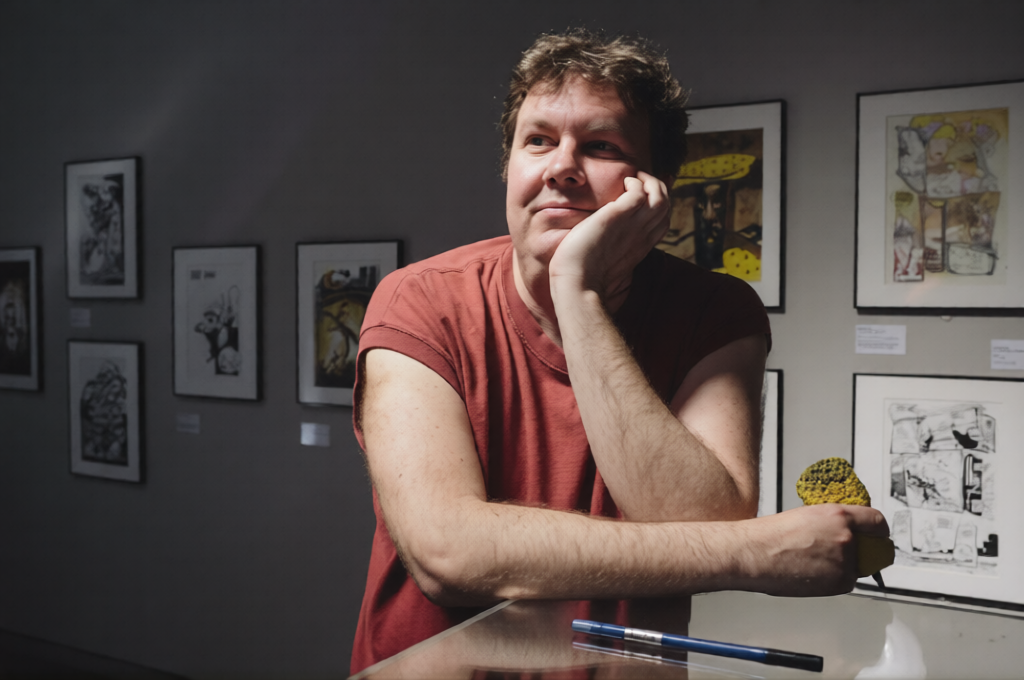 Photograph by Stephen Lam from the archives of the Cartoon Art Museum.
Author’s note: With the exception of the the opening quotation from the 2013 art book Worlds of Sam Kieth, all of Sam Kieth’s comments come from a November 2012 interview conducted by Andrew Farago in preparation for Kieth’s 2013 retrospective, Samplings and Dabblings, at San Francisco’s Cartoon Art Museum.
“We all have one thing in common: we escape into all this fantasy stuff in order to get to a better place inside ourselves.” — Sam Kieth
Visionary cartoonist, author and visual artist Sam Kieth passed away on Sunday, March 15, after a seven-year battle with Lewy Body Dementia, a progressive neurodegenerative disease. He is survived by his mother, Sammie Robertson, his loving wife of 43 years, Kathy Frye Kieth, and an incredible, idiosyncratic body of work that made him one of the most enduring — and inexplicable — success stories to come out of mainstream comic books in the 1990s.
Samuel Coleman Kieth grew up in Rio Linda and in and around Sacramento, California. He was a shy, artistic kid whose parents divorced when he was eight years old. His father, Samuel E. Kieth, was a frustrated artist himself. Although he remained in Northern California after the divorce, he was an infrequent presence in Kieth’s life, and his absence and emotional distance inspired the name and personality of antagonist Mr. Gone in Kieth’s comic book series The Maxx. “My dad was a painter,” Kieth recalled. “When I was a kid, he was trying to break into painting and fine art. He could do still lifes and portraits, but he also liked to paint abstracts. There was one book in his studio that had contemporary paintings, and I was young enough that I didn’t know the names of the postmodern artists at the time. It was one of my earliest memories. Even before comics.”
He discovered comics soon enough, however, and became a dedicated student when it came to his favorites. “He was a rabid fan of certain artists,” said Scott Dunbier of his longtime friend. “The top five artists that he loved, we talked about a lot: Frank Frazetta, Bernie Wrightson, Vaughn Bodē, Jeffrey Catherine Jones, Robert Crumb, and Arthur Suydam. He loved Arthur Suydam's work, especially his Mudwog comics in Heavy Metal. He loved the portfolio that Arthur did. He loved Crumb. Sam looks almost like a cross between Frazetta and Crumb to me a lot of the time. It's kind of funny how he could make those styles work and integrate them so beautifully.”
Kieth was raised by his mother, Sammie, who was devoted to her only child. “His mom is fantastic, and she was his biggest advocate. She nurtured the art in Sam,” said Kieth’s cousin, Dave Feiss, a successful animator four years Kieth’s senior, who grew up alongside him and was very close to him and his Aunt Sammie. “Art was Sam’s destiny. He was always doing his drawing, doing comics. By the time he was 18 or 19, he also was starting to get commissions to do some underground comics not long after. I admired his non-mainstream thought process, his writing, his thoughts … it was an extension of us being kids.”
While Kieth enjoyed his art and spending time with his family, school proved difficult for him. He struggled with dyslexia and dropped out of high school during his senior year. “Sam didn't even finish high school. That was not an important thing for him,” Feiss said. “He would write stories, he would dictate them to his mom, she'd write them out. On his own. He didn't have a therapist that taught him how to figure out which way the numbers are going, which way the letters are. He had his own system. So his entire life, he was not a great speller, but a great storyteller. And it didn't stop him from writing, too. He'd just write and it would be, like, incorrectly spelled.
“And a lot of times he would ask me questions, you know, like, ‘Hey, how do you spell this?’ One time, when we were sharing a studio ... this was before the Internet, we were side by side, and I was on the phone or I was doing something where I couldn't talk at that moment,” Feiss laughed. “And he had a question, and all of a sudden I realized he'd called information, 411. Asked them how to spell a word. And they told him. He was always practical like that.”
Longtime friend and colleague Kelley Jones met Kieth when they were both teenagers, and they bonded over their mutual love of art and comics. “The first thing he said was, ‘I know my stuff is weird, but you might like it because your stuff is, too,” Jones wrote on social media. “I instantly loved his work and him. Sam was as different as his art. Utterly unique. Sam was a shy person who could speak his mind. He had solid opinions yet they were so grounded and well thought out.”
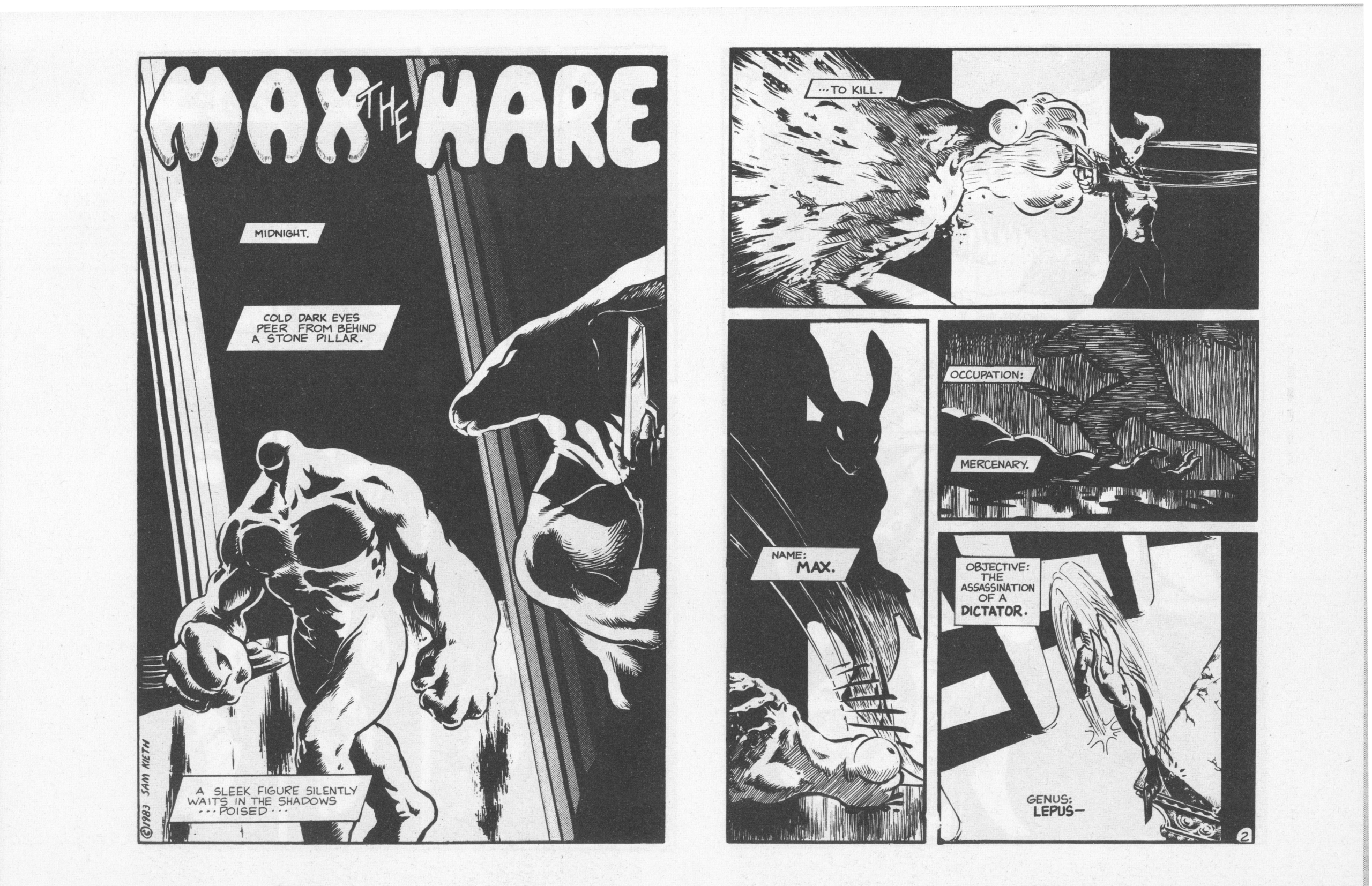 Early work by Kieth, from the "From the Vaults" section in I Before E #2, published by Fantagraphics in March 1992.
Barely out of his teens, Kieth had built up a reputation as a top fan artist and had compiled a solid portfolio and landed him his first professional assignment in 1983. “For a brief period, in addition to attempting to write and draw the fledgling black-and-white Grendel series, I also served as the ersatz editor for indy publisher Comico’s new-talent anthology, Primer,” said comic book creator Matt Wagner. “For the fifth issue of that series, I accepted a submission that featured what turned out to be a proto-version of the character for which the creator would later become justly famous. Max The Hare eventually morphed into The Maxx, Sam’s most famous character.
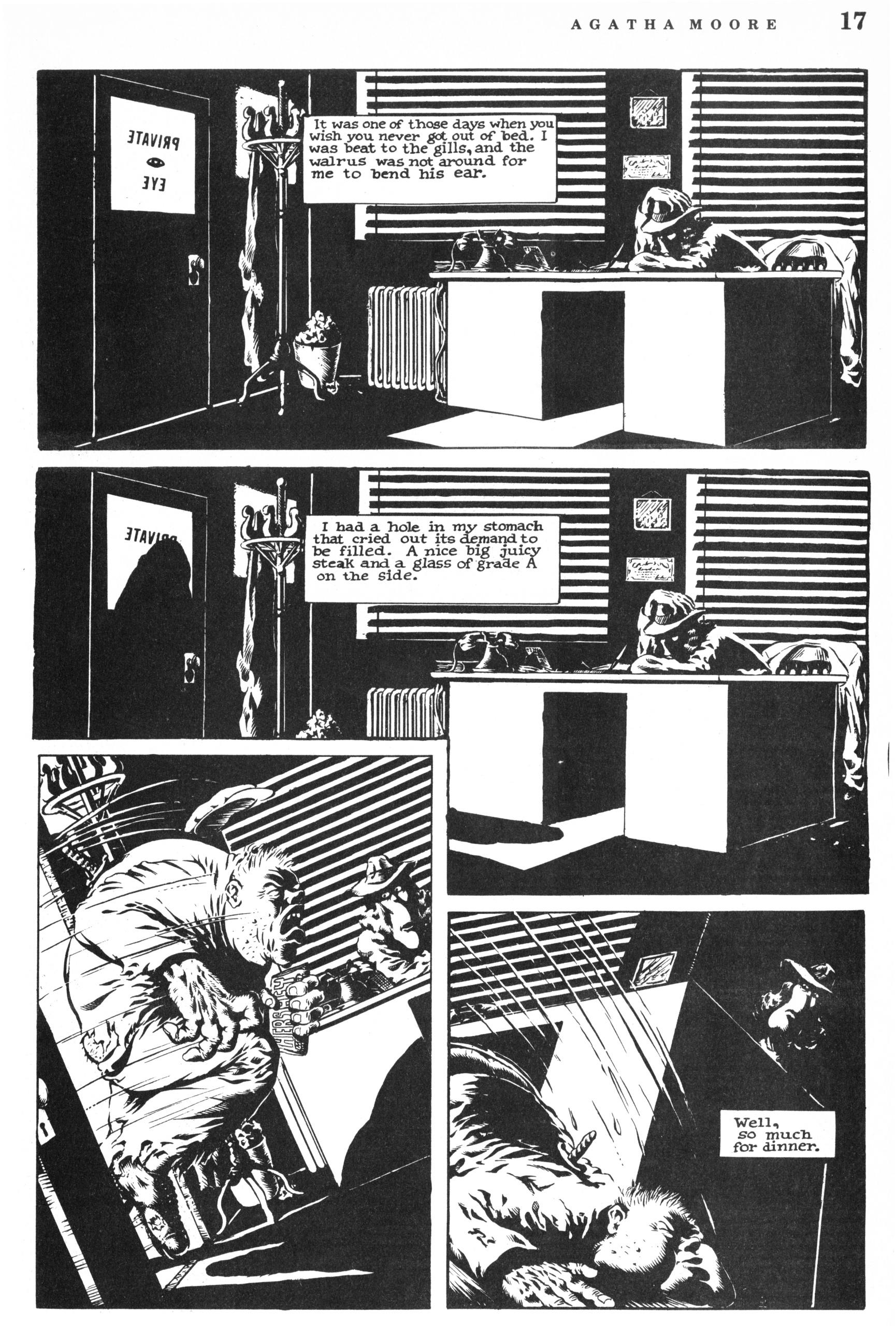 From "Agatha Moore: The Great American Murder Bar," story by John F. Holland, in I Before E #1, August 1991.
“What drew me to Sam’s work was its organic quality and his reliance on inking with a brush as opposed to the more mechanical pen-style that was popular at the time. Sam’s work never lost that lush organic rendering, combined with a bold sense of exaggeration that also defied most industry norms. Skip ahead a few years and I was now enmeshed in handling all the art and writing chores for my first color series, Mage. As I gradually became more and more involved with the hand-rendered coloring process, I realized that I couldn’t juggle writing, pencilling, inking and coloring a regular title without falling way behind schedule, and since I didn’t want to sacrifice the other three roles, I started looking around for a possible inker for Mage and my mind returned to Sam’s lovely line quality. As I said, his organic approach to his craft.
“I reached out to Sam and, luckily, he was looking for a gig. I produced a sample page of unconnected panels featuring most of the main characters from Mage and, as expected, Sam really knocked the tryout outta the park. Once he came on board as the regular inker, Mage really hit its stride and earned a handful of industry award nominations. More than a decade passed before I again returned to the Mage narrative and by that point, Sam had catapulted to his own level of fame and success with an ever-expanding portfolio of incredible art.”
That portfolio made a strong impression on his fellow artists, too. “I met Sam when we were all working for Comico,” said Mark Wheatley on Facebook. “I was working on Jonny Quest with Marc Hempel and Sam was inking Mage for Matt Wagner. We would all get together for parties at Matt’s place in Philly. Sam would ramble on about wild ideas, and I would attempt to understand how he intended to actually turn those ideas into viable projects. It was a challenge. He was better at just drawing the comics than explaining them. But we had fun.”
Joining in the fun was Diana Schutz, who had just begun her career as a comic book editor. “Sam Kieth and I joined Matt Wagner’s Mage together: with issue #6, published in March 1985. This was Sam’s first ongoing comics gig — and mine, too. Sam was one of the few inkers Matt has ever suffered throughout his lengthy career, and theirs was a relatively short, though fruitful association. As Matt’s editor, and soon-to-be sister-in-law, my own relationship with Matt would last quite a lot longer.
“As would my relationship with Sam … though, obviously, not long enough, as I’m sitting here today mourning his loss. I can’t remember when we last talked, and what I do remember is the Sam I first met those four decades ago: that skinny, nervous kid who still looked like a high- school student. The kind who gets beat up a lot,” she said. “Sam was so anxious — about everything — that he could sometimes test an editor’s patience, and his need for reassurance was pretty dogged. Or maybe puppy-like, since we bonded just the same, commiserating over our often-misspelled surnames. Sam would eventually go so far as to release a collection of shorts that he titled I Before E — to little avail, it seems, as half the tributes written in the wake of his death continue to misspell Kieth. But Sam was just as endearing as he was anxious, because he was also funny and perceptive and kind.”
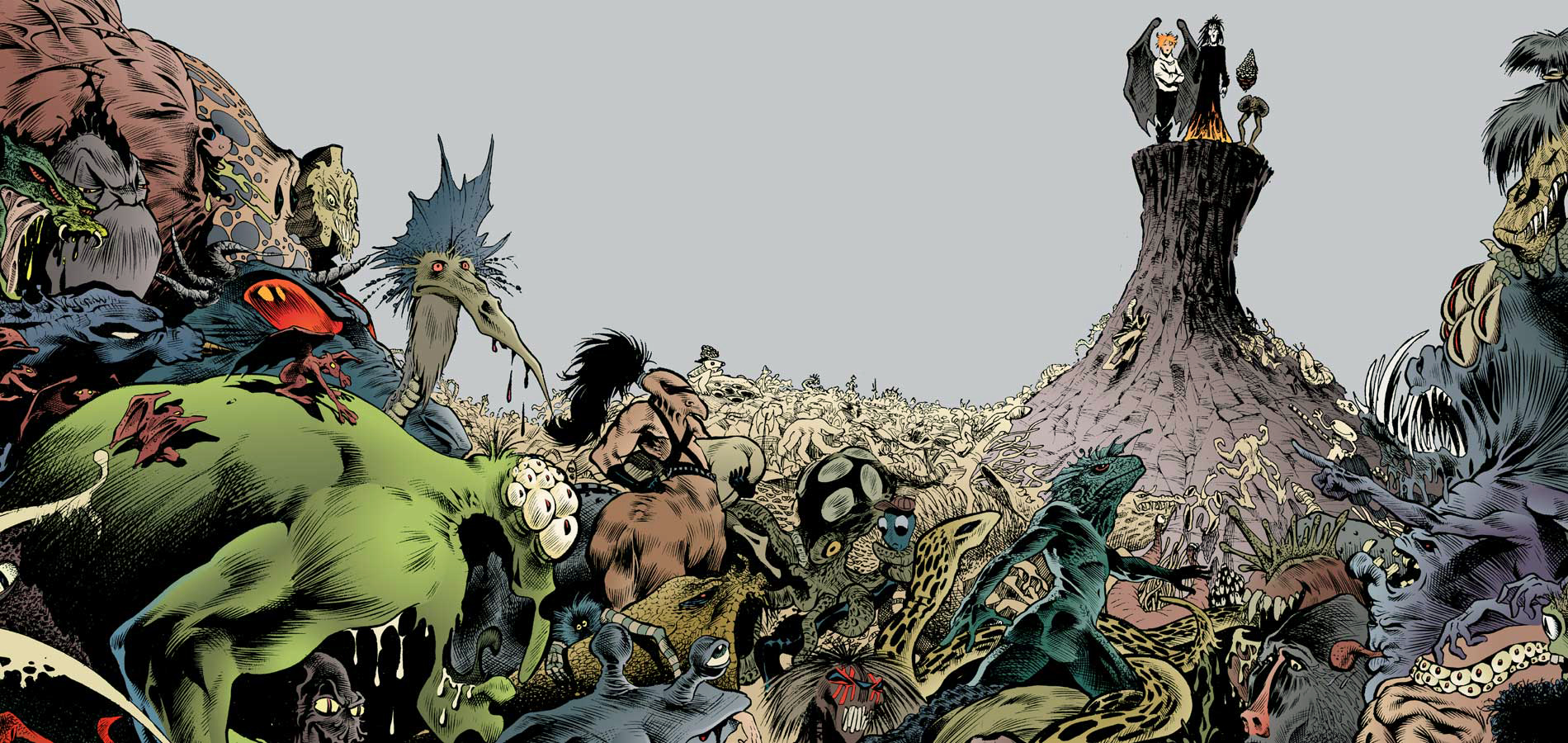 Panel from Sandman no. 3, written by Neil Gaiman with art by Sam Kieth and Mike Dringenberg
A guy in a dark robe
Bolstered by his success on Mage, Kieth, now married to Kathy Frye, decided the time was right to break into the mainstream comics industry. “I found out who [DC editor] Karen Berger was. I didn’t really care about her books, I just wanted a job. I used to bug her all the time and find excuses to call her. I sent her a black-and-white book I did called Wandering Stars. Fantagraphics published one issue of it before it was canceled.
“I'd call up editors — you could still get away with cold-calling back then, if you had the balls. I’d phone up Karen, and I’d pretend I'd misdialed: ‘Oh, is that you, Karen? Well, as long as I have you on the line, has Steve Bissette died or quit yet? Need anyone to take over drawing Swamp Thing?’ She'd be, ‘ahh … no.’ After about the third time, she said, ‘you’re just calling me to ask for work, aren’t you?’ I was pretty transparent.”
His persistence paid off, and after making a good impression on his first few stories for DC, Berger tapped Kieth as the artist for a new monthly comic by an up-and-coming British writer named Neil Gaiman. “But you have to remember, Neil Gaiman wasn't Neil Gaiman yet,” Kieth said. “There were two books at the time that Karen mentioned to me. One was J.M. DeMatteis writing Dr. Fate. I’d heard of J.M. DeMatteis, and I said, ‘Great! I’ll take it.’ She said, ‘No, I’m not offering you that. I already have Shawn McManus drawing that. I’m going to give you a book with a relatively unknown writer from England.’ Because they were all from England, right? Especially in Karen’s clique. And she goes, ‘It’s the Sandman. Have you heard of the Sandman?’
‘No.’
‘Well, he’s a character from DC, with a big, yellow and red helmet, but it’s not that Sandman.’
‘Okay, So it’s not a character that I don’t even know about, so what's this character?’
‘It’s a guy in a black robe.’
‘That sounds pretty fucking exciting. A guy in a dark robe.”
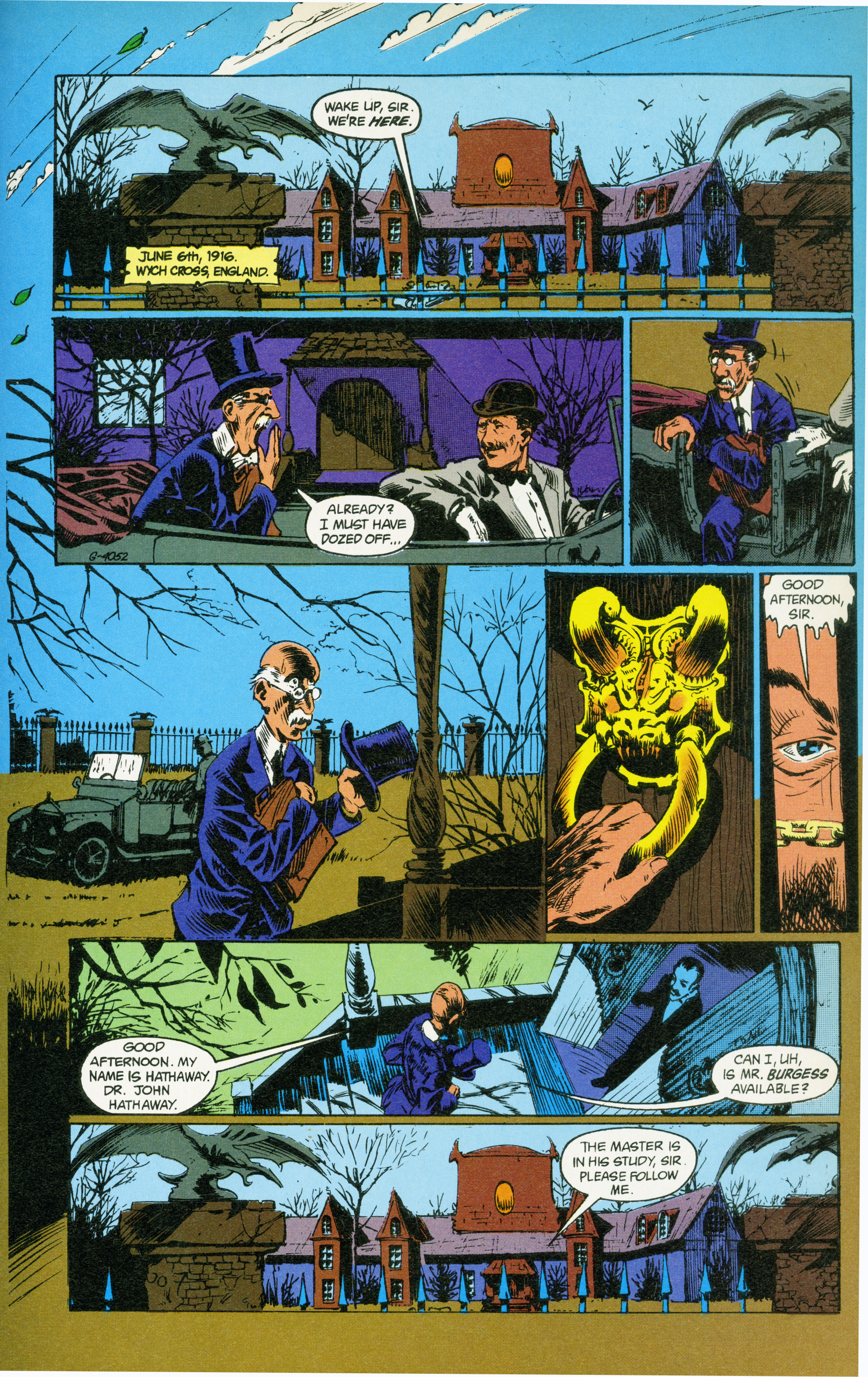 Page from Sandman No. 1.
Berger remembers Kieth being a bit more diplomatic during that initial conversation, although the self-deprecating artist did make the assumption that Berger’s first choice to illustrate the series must have dropped out unexpectedly. “What I do remember is that when I called him from London to offer him the series, he didn’t believe that it was me,” Berger said. “It was a pretty funny conversation as far as I can recall. I was meeting with Neil Gaiman and I’m pretty sure that Neil got on the phone, too. I wish I could remember which work of Sam’s that I’d seen previously — it was 1987, and he hadn’t done that much as a penciler, so it was mostly inking work as I can tell from checking his credits now. But whatever it was, his art certainly impressed me enough to offer him the series!
“What I liked most about Sam’s art was his wild and inventive panel layout design, and his incredible attention to detail. He brought a palpable sense of horror, mystery and otherworldliness to those inaugural issues of Sandman. His vision of Hell was insane as were the terrifying demons and other monstrous creatures.”
Schutz wasn’t surprised when Kieth landed the Sandman assignment. “Even then, he was already really talented. He didn’t stay an inker for too long,” she recalled. “In fact, sometime in 1988, Sam called to ask me about a penciling job that he’d been offered at DC, and did I know anything about ‘this Gaiman guy’? Well, I did, having met Neil the year previous, so I encouraged Sam to go for it. And though he would last only five issues on The Sandman, they proved to be five very lucrative issues — and for years to come.”
Years after that five-issue tenure on Sandman, Kieth claimed that he wasn’t the right artist for the book, and that he felt like “Jimi Hendrix in The Beatles” as he tried to adapt his style to match the style and sensibilities of Berger, Gaiman and DC Comics. “Aside from the book itself, for me it was interesting to watch Neil unfold it as a story, even if I wasn’t up to the right level of illustration for it at the time. I’d try to talk Karen into firing me, or not firing me, every other issue. I wanted to ink it, but I wasn’t ready to ink it. I asked Mike Dringenberg to pencil it so I could ink instead, and he said, ‘Great!’ But I knew I had to sink or swim in learning to pencil, and … I kept trying to make it look the way they wanted it to look, and by the time I got what Neil/Karen wanted, I was really unhappy with my part in it.
“Matt Wagner was like a college course, and working with Neil and Karen was like a Master's class in storytelling. But I couldn't see it at the time.”
Sandman became one of DC’s most celebrated titles and a cornerstone of its mature readers imprint, Vertigo. Kieth’s early issues established the look and tone of the series and the design of its protagonist, Morpheus. Looking back later, Kieth felt that his departure helped Sandman. “It did seem to work out better with rotating artists, and from what I’ve heard others tell me, it seems like a loose collection of short stories, or story arcs, and they’re just grouped together in a larger work called Sandman. I guess I started a trend.”
Although his departure from DC had a negative impact on his checking account, it was necessary for Kieth’s mental health and his creative growth, said Wheatley. “One San Diego Con party, Sam spent a lot of time telling me how [DC] was trying to turn him into a Bill Sienkiewicz clone. And that just was not who Sam was. The next day, Sam found me at my artist alley table and worried about what he should do. I asked him if he had pushed back on his editors. And he had. They had a good artist inking him, but the two of them had very different styles. The inker was essentially transforming Sam’s work into his own. And the editors were all for it. I pointed out that Sam sounded very unhappy. He seemed surprised to realize that he was unhappy. ‘What should I do about it, Mark?,’ he asked me. I told him he had to figure that out for himself.
“About an hour later he came back to the table and told me, “I just quit Sandman!” He looked stunned. ‘Now what am I going to do?’ Well, he went on to become a very creative and unique voice in comics. And he seemed to be much happier.”
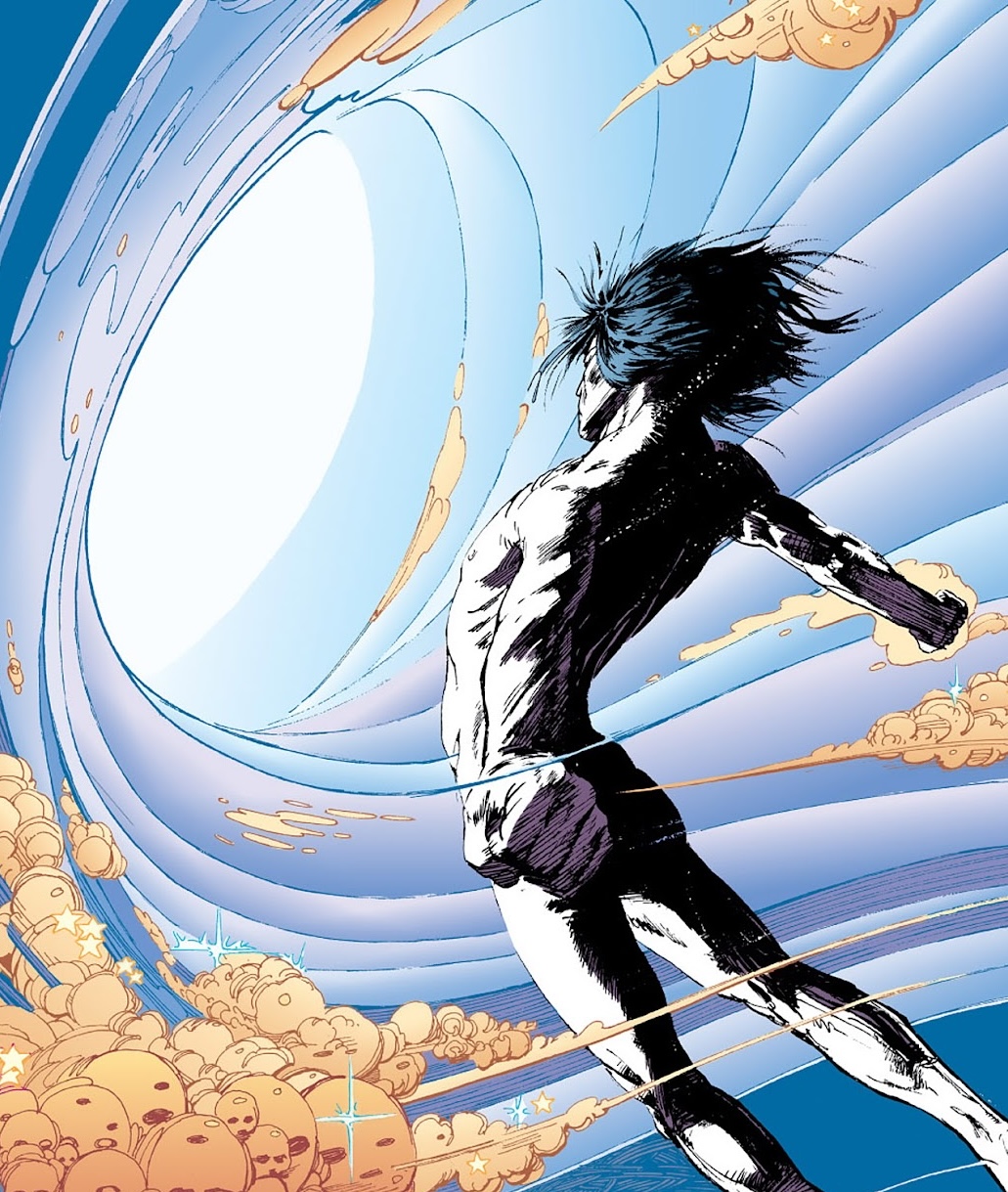 Art from Sandman No. 1.
When Kieth left the series, inker Mike Dringenberg was tapped to replace him, and the two remained good friends after fate had thrown them together on Sandman. “To an artist, creativity isn't an act of magic; we're often dissatisfied with our work, seeing only mistakes where others seem to find miracles,” Dringenberg said. “This even applied to Michelangelo, and he was one of the greatest artists who ever lived. He once wrote a poem about how much he hated the Sistine Chapel; he tried to destroy the Pieta Bandini rather than finish it, and made bonfires of his drawings. Sam certainly felt that impulse. He never felt his work was good enough, and now, sadly. I'll never have another opportunity to tell him otherwise.”
Fortunately for Kieth, he had a strong support network of friends and family in Northern California who helped him through this transitional period in his career. His dance card filled up soon enough, as he found himself working on an Aliens tie-in comic, Earth War, for Dark Horse, under the guidance of editor Schutz, a series that proved to be the perfect showcase for Kieth’s expressive artwork, which could careen wildly from realism to cartoony abstraction from one panel to the next. “When I began work at the early incarnation of Dark Horse Comics, only four years old in 1990, Sam was one of the very first artists I hired,” Schutz recalled. “To pencil and ink the four-issue Aliens: Earth War, whose inventive layouts and unusual textures already hinted at what would soon become Sam’s signature series, The Maxx.”
Kelley Jones credits a single conversation between them during this era as a turning point in both their artistic careers:
“[It] began as the frustration in our early years in comics of simply trying to show what we had in our heads and have it be on paper and surviving through editorial and inkers. What then happened was the talk changed to inking. That penciling maybe shouldn't be so tight and maybe we should trust drawing with the ink. We both felt that our own inking was fine in a standard way but unfulfilling to that vision of what we wanted in our work and the vision that was in our heads. The inking we did was clean, mechanical and functional yet didn't have the range. It didn't have life.
“Sam and I agreed that black was a color that all comics sprang from and that was the only color we could control. But we didn't feel we were getting all we could out of it. We talked about how our mistakes became more interesting than our achieved goals. The disappointment of seeing the cool thing we wanted but it was unintended when it should have been the desired outcome. A smudge or a spill or a line that didn't match but its very discordancy just looked right. I said that I kept a brush that had begun to split because it gave a better effect when inking water and such, but it was useless in rendering anymore, and that only happened because I used it by accident thinking it was a new brush. Sam had said that he had an old brush he used for filling in blacks that made dry brushing effects better than a new one.
“The idea came to start trimming and cutting brushes for specific tasks. Make them a little harder to control and give a more random application. The idea of rendering and feathering we thought needed to be more organic and not some even and regimented. not applied helter-skelter but really thinking how best a random line would work making even an exaggerated figure or face be more realistic but still be eccentric. Using White-Out not to correct but to enhance and add more intensity. Sometimes inking to set the drawing up to use White-Out. The inks would not just give shape and lighting but textures that could accentuate those shapes and make the light more powerful even after it was colored and printed on newsprint.
“We felt we had found a way to give distortion like feedback on a guitar in music. The cracks and pops of an old record gave atmosphere however intangibly. Controlled mistakes were the goal, and crisp composition was the attempt to get there. All of this made us more aggressive in our approach, and gave much more life to our pages.”
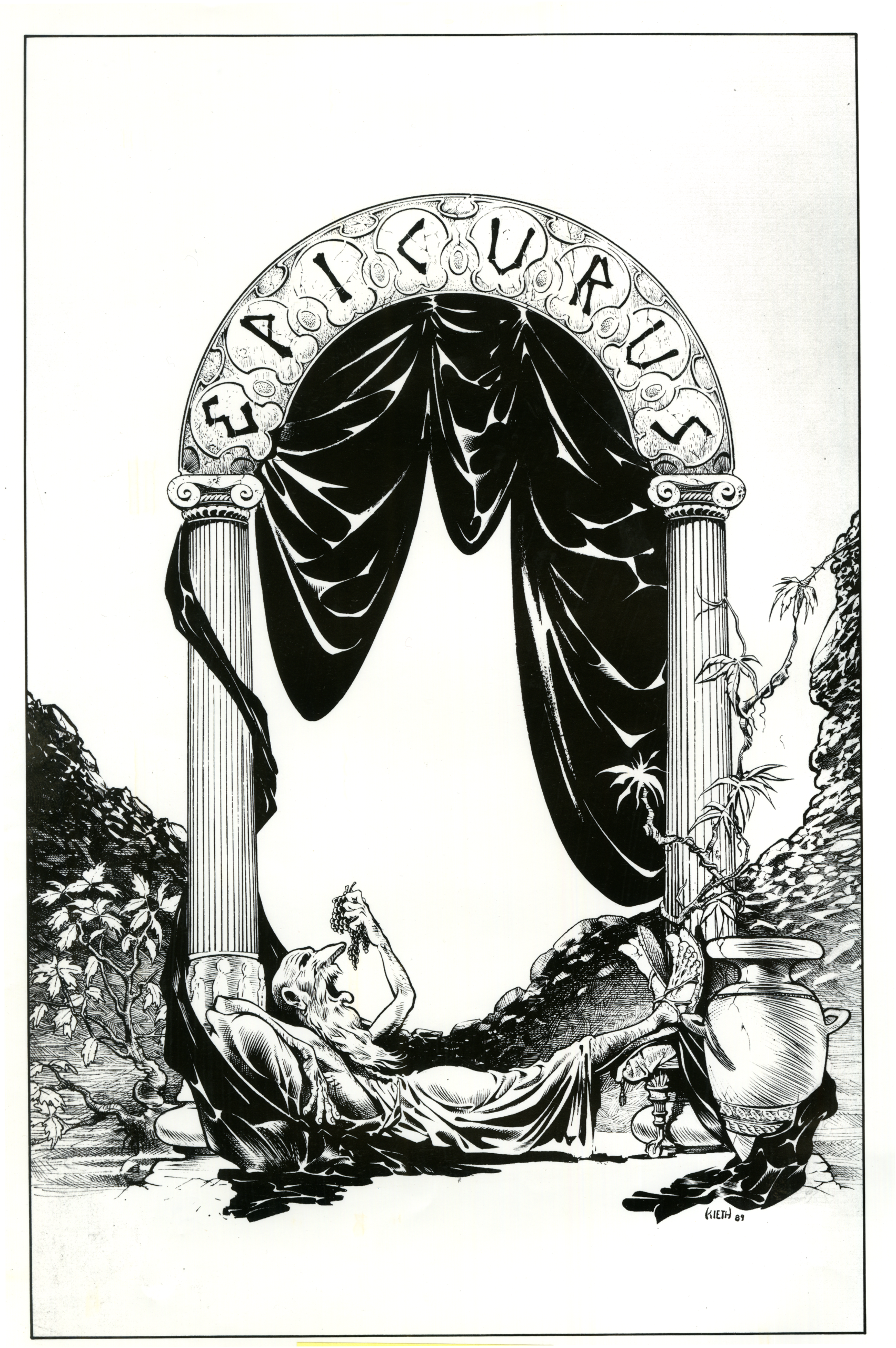 Artwork from Epicurus the Sage, by William Messner-Loebs and Sam Kieth.
Kieth brought that new approach to a collaboration with indie cartoonist William Messner-Loebs on Epicurus The Sage, a humorous take on history and mythology in which the Greek philosopher traveled the ancient world with Plato, Aristotle and Alexander the Great. “Bill was somebody else that had a big influence on me,” said Kieth. “Not exactly like a benefactor, but he was a little ahead of me in the writer/artist thing. He’d done an amazing book called Journey before I’d gotten in. He was a great friend and supporter.
“I did Epicurus to prove I could draw after Sandman. In some ways, Sandman was me waving my arms, stuck in the middle of the ocean, trying to get noticed. I never knew how well it was selling until I quit. It actually started out as a popular book. All I knew was that there were six unsold copies at my local comic shop,” he laughed. “Not that it was a motivator, but I thought that, as bad as my work was on it, odds were I wouldn't get any more attention for whatever else I worked on next. If I was going to be known as more than just another artist on Sandman, I had to do something else to re-invent myself.
“After Sandman, there were a lot of jobs that felt like I was trying to apologize for my previous art style. I wanted to both pencil and ink a book, and draw in my own style. Epicurus was my chance … and was about me making lots of insecure tiny little anal lines, and being afraid to make relaxed flowing brush lines. I’d take a C-curve, and I’d use it to approximate brush lines, which I’d do with a pen. Crazy. It looked really oily and over-labored. At that time, I was trying to throw a bunch of detail in there to cover up that I didn’t know what I was doing. That continued through my Marvel covers and only stopped with The Maxx. Detail gets a lot of fan attention, but all my fellow artists could see through all that detail crap. In terms of skill, tons of detail was a trap. But a few comics professionals noticed Epicurus and respected it for what it was. A lot of that was because of Bill Loebs’s wonderful script too.”
“So I did Epicurus, and … nothing. Crap sales. Some good reviews, but almost no one read it. No attention. I now had respect, but no sales. Crickets chirping. Nobody really noticed or cared. A friend of mine said, ‘if you did Epicurus, but with a popular character like Wolvie, maybe you’d get some attention for a change.’ Makes me seem pretty superficial, doesn’t it?”
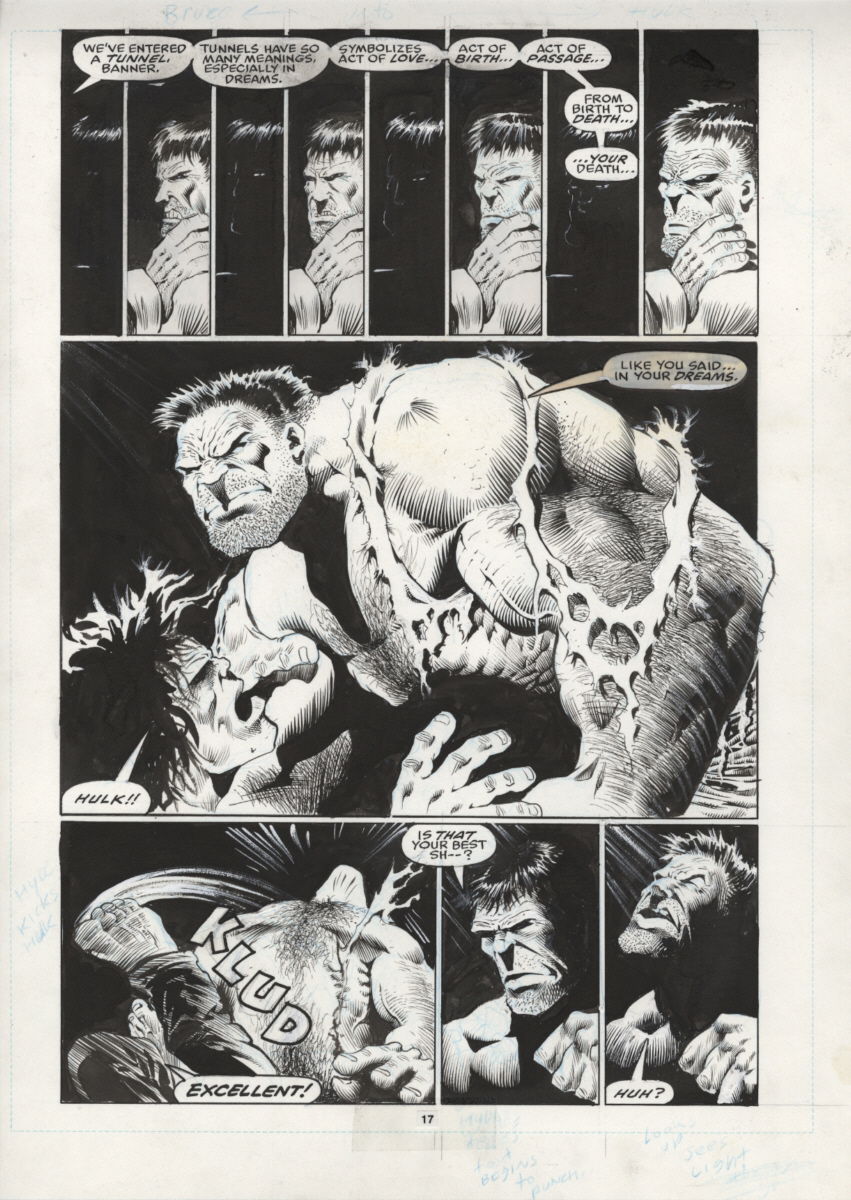 Page from Hulk 368.
Snikt!
Kieth’s Aliens comics caught the attention of several Marvel Comics editors, including Bobbie Chase, who tapped him as penciler–with Jones as inker, for an early 1990 issue of The Incredible Hulk depicting a tense, psychological conflict between Hulk and longtime Marvel villain Mister Hyde. The cover copy described it as “an off-beat eerie tale,” and the Kieth-and-Jones-illustrated tale became an instant classic with fans and is considered to be one of the best standalone issues of writer Peter David’s decade-long run on The Incredible Hulk. “What I remember is that Sam sent me all of these beautiful sketches of the Hulk, and they were magical,” Chase said. “Alive with movement and energy, in that very specific Sam way. It was such a pleasure to work with him. And he was such a nice guy, too. I don't know if he loved the Hulk, or if he just knew his style would be perfect for the character.”
Other Marvel editors took notice of Kieth after that story. “Obviously Sam was a huge talent,” said Terry Kavanagh, who oversaw Kieth’s first ongoing title at Marvel. “I was editing Marvel Comics Presents at the time, which, as much fun as it was, it almost killed me. It was 32 pages of new material every two weeks.
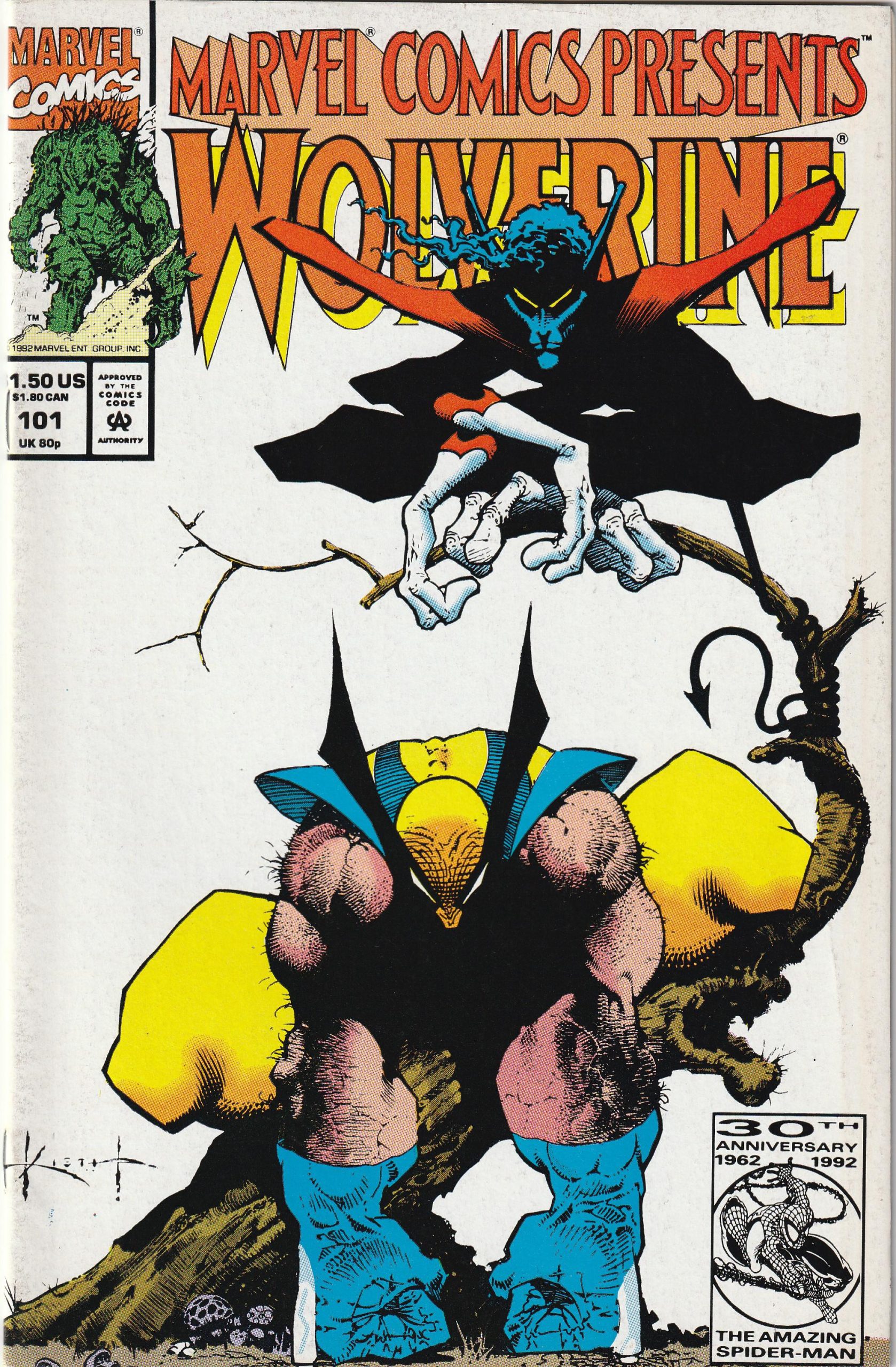 “At that point, I had been given a mandate by the editor-in-chief to use Wolverine as the lead feature in every issue. That was not the way the book originally launched, but I'd been given that mandate. Right around that time, I saw an inventory story, a Hulk story in Bobbie Chase's office that was done by Sam and I loved it.
“And I was anxious to find something for him to do. In the meantime, I commissioned a story from Peter David to follow right after [Barry Windsor-Smith’s Wolverine story] Weapon X, or shortly after. Todd McFarlane was on board to draw that but something personal came up with Todd. He showed up at my door one day, all very professional. Todd's always been very professional. He showed up at my door and just said, ‘I'm not going to be able to do the project. I'm sorry.’
“So that was my opportunity to hire Sam. It was a little nerve-racking since I didn't know what his work speed was, his reliability, et cetera. Turned out he had a great work ethic and that never was a problem, but I sent him the first eight-page chapter and [it's] Wolverine deer hunting in the woods, where he tracks and just touches the deer, but doesn't kill them.
“And Sam's just supposed to pencil. I was going to look at them and then figure out if it's going to be another inker or himself. Then all eight pages showed up completely penciled and inked and Wolverine was stark naked throughout the entire eight pages, full frontal and rear view.
“And I called up Sam and I said, ‘Sam, this is very nice. And Wolverine has a lot to be proud of. But it's comic books, and we can't print this.’
“And he said to me, which was true, ‘At no point in the plot did it say that Wolverine was not naked.’ And he's absolutely right,” Kavanagh chuckled. “And I said, ‘Well, it's true. I acknowledge that, that fatal flaw in the plot, Sam, but it also didn't say he wasn't wearing a bowling ball on his head and you had the good sense not to put a bowling ball on his head.’ He's like, ‘Okay, fine. Send it back to me. I'll fix it.’
“And I get the pages back from him. I'm going to say a week later, and he's added all this foliage in front of Wolverine's crotch. And then for all of the rear nude shots, he just added more hair to Wolverine's butt to cover it up. So I had to call him again and say, um, ‘That's not going to cut it. I'm really sorry. That's not going to cut it.’ And he's like, ‘Fine. I guess.’ He just thought I was a prude. I sent it back to him and he added foliage for all the rear shots.
“So that was my first working experience with Sam.”
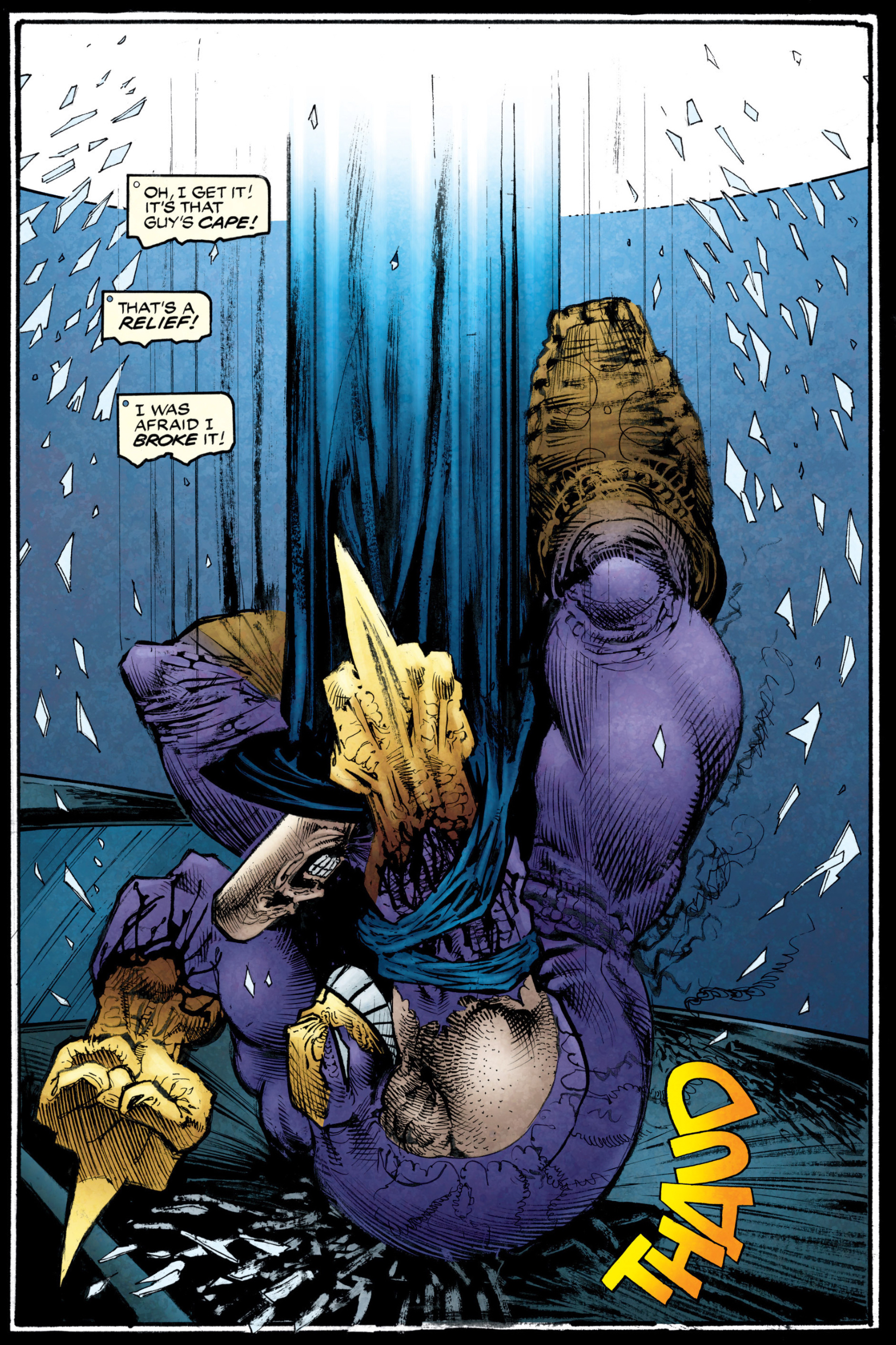 From The Maxx.
To The Maxx
As with Sandman, Kieth downplayed his own artistic talent as the reason for the success of his Marvel Comics Presents serial, which, admittedly, was written by fan-favorite Peter David and featured Wolverine, the most popular character in the most popular comic book series of the decade, and immediately followed Barry Windsor-Smith’s hit Weapon X serial, which raised the profile of Marvel Comics Presents considerably. That summer, sales of Marvel’s X-Men titles exploded, with X-Force #1 by Rob Liefeld and Fabian Nicieza and X-Men #1 by Jim Lee and Chris Claremont selling millions of copies and boosting the sales of all Marvel Comics, but especially the X-Men tie-ins and spinoffs.
The timing couldn’t have been better for Kieth’s career, as he went from quirky indie cartoonist to Wizard Magazine poster boy practically overnight. He became the regular cover artist for Marvel Comics Presents and would draw the entirety of the anthology title’s landmark 100th issue featuring Wolverine and Ghost Rider, plus a six-issue story pairing Wolverine with Venom, all under the editorial auspices of Kavanagh. “Sam's covers were so great at that point, I decided I was going to use him for every issue. That was smooth sailing, generally speaking," he said.
“Except for one time, when he sent in a cover where Wolverine was impaled on a tree branch from behind. The tree branch went directly up his ass and came directly out of his crotch, so that it was just a giant piece of wood in front of Wolverine's crotch.
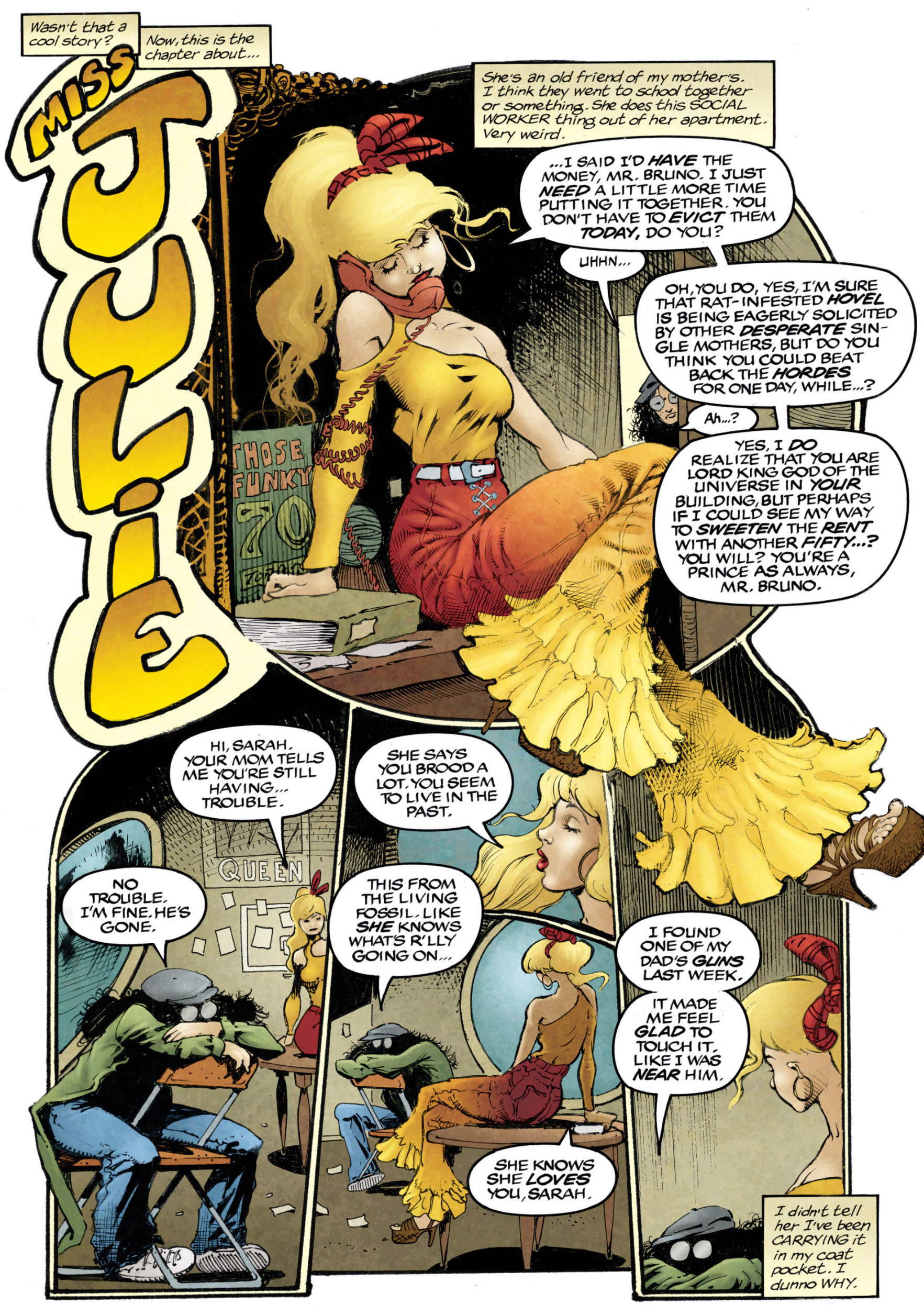 From The Maxx.
“I called Sam up and I said, ‘Sam, I appreciate the creativity, but we can't use this cover.’ He said, ‘why?’ And he accused me of seeing something that wasn't there. And I'm like, ‘Sam, every editorial office here at Marvel has already Xeroxed this and has it hung up on their walls. I'm not the only one seeing this. Trust me.’ It made the rounds at the office very quickly. It was just clearly what it was. So I was not able to use that cover. ...
“Sam lived up to his potential every step of the way. His Wolverine wasn't your normal looking Wolverine, but it was so stylized that it caught on. And he just took it further and further the more covers he did. And then when he started doing both the front and back covers for Marvel Comics Presents, including the Ghost Rider side, he even brought a new look to Ghost Rider, like you would see him just completely as a skeleton with the jacket on. He was incredibly creative and he had a great work ethic.
“I don't remember ever really having to chase him down for deadlines. I'm sure it happened once or twice, but I don't remember that ever really being an issue with him. And I was thrilled to be working with him on a regular basis.”
Kieth’s distinctive style, combined with some of Marvel’s most extreme anti-hero characters of the early ‘90s, resonated with comics fandom during a peak era for readership and sales. In addition to hype and publicity from trade publications like Wizard Magazine, Marvel seemed thrilled to have a superstar artist on their titles following the mass exodus of the creators who left Marvel’s best-selling books to form Image Comics in 1992.
Kieth, who had never expected to make a career out of drawing other people’s characters, was certainly paying attention to Image and its success in establishing a successful line of creator-owned comics, and he was very receptive when Image co-founder Jim Lee called him to discuss the possibility of joining the publisher’s second wave of creators in 1993. “Back in the early 90s — when Image was trying to pull creators into the fold — l reached out to Sam Kieth who was not just a big name coming off his sensational run on Marvel Comics Presents, but a friend who also loved talking about the psychological underpinnings of our favorite characters,” said Lee in an Instagram post. “My pitch to Sam back then was simple: come do whatever you want. Total creative freedom. Own it all. Take it wherever you want-or nowhere at all.
To hedge his bets, Kieth pitched a series called The Maxx, which looked and felt enough like a superhero story that he felt it would fit in alongside the existing Image Comics lineup: “Almost. If you squint your eyes, in a hazy room, possibly … somehow … sorta superhero-y.” Drawing inspiration from his 1983 Comico Primer story featuring his character Max the Hare, Heavy Metal, fantasy comics he read as a teenager, and feminist texts, he crafted a bold, surreal not-quite-superhero comic.
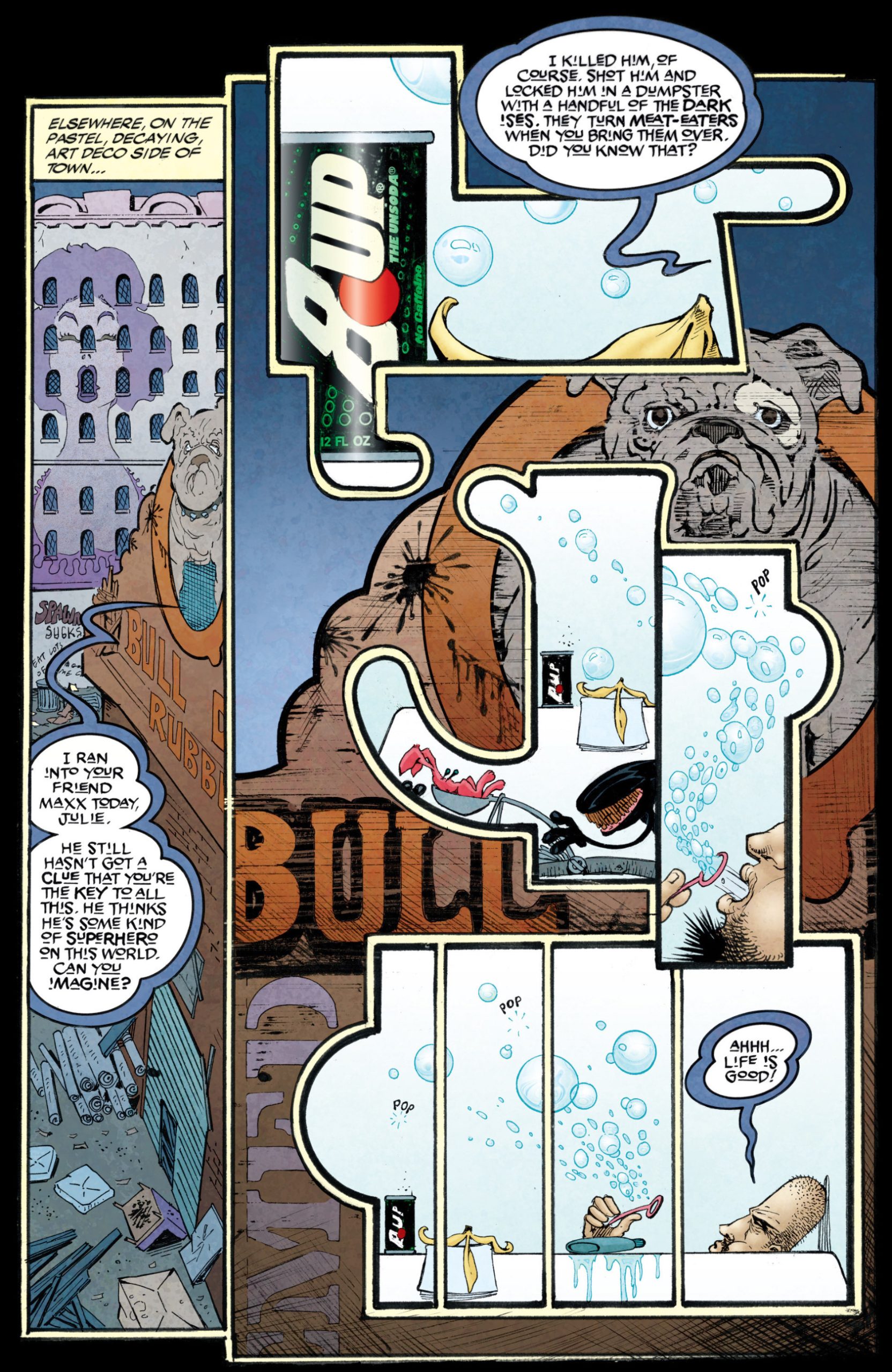 From The Maxx.
The first story arc was adapted into a 13-episode animated series in 1995, and its opening narration, read by the villainous Mr. Gone, provided as clear an explanation for the series as Kieth could muster:
Most of us inhabit at least two worlds: the real world, where we are at the mercy of circumstance; and the world within, the unconscious, a safe place we where can escape. The Maxx shifts between these worlds against his will. Here, homeless, he lives in a box in an alley. The only one who really cares for him is Julie Winters, a freelance social worker. But in Pangaea, the other world, he rules the Outback and is the protector of Julie, his Jungle Queen. There, he cares for her. But he always ends up back in the real world.
The character debuted in a single-issue anthology book called Darker Image in spring 1993 alongside Bloodwulf, from Image co-founder Rob Liefeld, and Deathblow, from Lee. Darker Image was given a cover feature in Wizard in late 1992, and The Maxx received the same treatment in spring 1993, building hype and anticipation for Kieth’s Image debut.
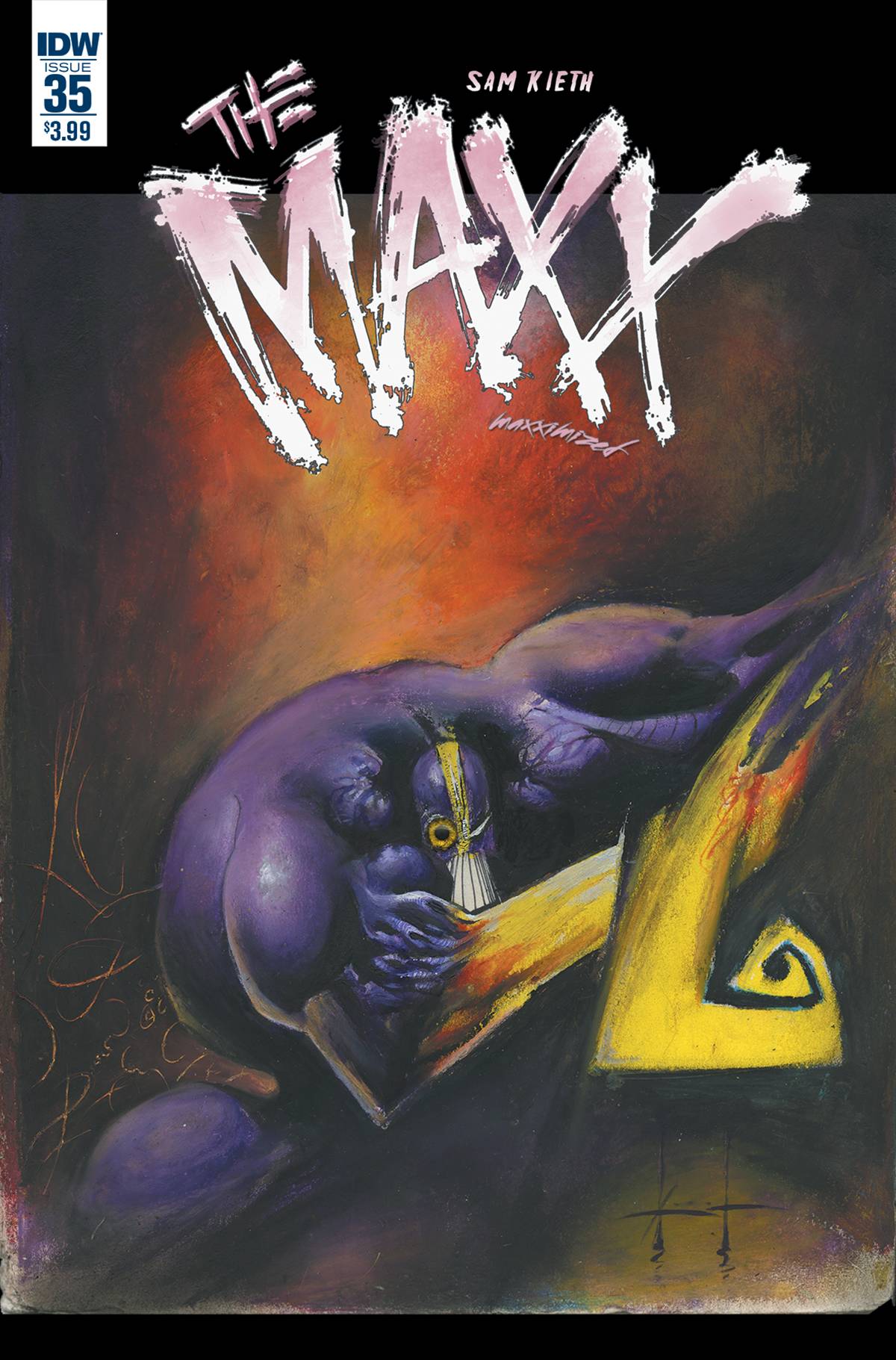
Darker Image sold over a million copies, and when Kieth followed up that story with the first issue of The Maxx ongoing series, it sold even better, becoming the best-selling Image debut to date.
The self-deprecating artist once again felt that although his talent and hard work had gotten him this shot at the big time, his success ultimately came from being in the right place at exactly the right time. “In a way, the worst thing that happened with Image is you had this feeling that — and a lot of us second-wave Image guys felt this — you had a feeling that you weren't the cause of it," he said. "You knew it was market manipulation that everyone got sucked into: fans, retailers, publishers, all of us. Shared delusion.
 “Whoever happened to be standing next to Jim Lee or Todd McFarlane in those five minutes, right? Those first-wave guys were actually selling books. I was just standing next to those guys. It took me many years of thinking that I was expected to live up to the sales of The Maxx again, and realizing that I could do it, but then feeling like crap when I didn’t. And realizing that you could spend the rest of your life being stuck there, and having all future art compared to The Maxx, and fans remembering The Maxx, and people having their projections about it.”
On occasion, Kieth would admit that maybe The Maxx had struck a chord with fans because it was different, weird, out of the ordinary, and possibly even pretty good, but he would always stop just short of actually praising his own work. When a friend told him that The Maxx was the most interesting and best-written Image Comic of the ‘90s, he said, “Yeah, but that’s like being the skinniest kid at fat camp.”
Heading into The Maxx, Kieth made the decision to share the wealth, inviting inker/finisher Jim Sinclair, colorist Steve Oliff, and, since he wasn’t confident in his own writing abilities, friend and Epicurus collaborator William Messner-Loebs to assist with the storytelling and to script the series’ dialogue. In his 2025 autobiographical graphic novel Wanderland: The Journey of Life, Messner-Loebs recalled receiving the invitation to team up with Kieth for a third time, having reunited for an Epicurus sequel in 1991:
“Sam Kieth began to call me. He had been asked to join the ranks of Image, a company formed by the most popular young cartoonists. There would be no editors and everyone would share in the publishing tasks. We would all become rich and famous. I cannot express to you how sure I was this was all going to fail. Sam’s idea was The Maxx! A homeless man who became a superhero in the land of Jungian unconscious. I agreed to write it. I cannot express to you how sure I was this was all going to fail. We didn’t fail. Even if your writing is respected, in order to be an established cartoonist like Moore or Miller or Chaykin or Grell, you need at least one huge commercial success to secure your place in the line. This would be mine.”
Sales remained high throughout the first two years of the series, as it mixed conventional superhero action — including a guest appearance from Image co-founder Erik Larsen’s Savage Dragon — with lush fantasy sequences, oddball humor, complex characters and imaginative compositions and visuals. But the restless creator pushed his stories — and his readers’ expectations — to the limit as the series progressed. “The thing about The Maxx is it’s not really one story; it’s actually three story arcs,” Kieth said. “Issues one through 20 are the actual basic arc I set out to complete: how Maxx became a bum, how Julie found him, the whole drama. Then 21 through about 27 or so is essentially taking what I had with Maxx and Julie, but doing it with [Julie’s friend and Mr. Gone’s daughter] Sara and Maxx, and realizing halfway through … that my heart wasn’t in it. I didn’t want to tell that story all over again, I wanted to tell other stories.
“And the last arc doesn’t even show The Maxx much. It was me saying, ‘Screw it, I’ll send The Maxx off on vacation for this issue, and here are some other characters' stories!’ And that irritated the hell out of some readers, rightfully so. But it was me just running over the rabbit in the road, and stalling the fact that this book needed to be killed. Its time was over. Done. I’d changed. Putting the Maxx logo on the cover wasn’t necessarily going to keep people interested in non-Maxx stories, was it?”
The publishing schedule for The Maxx, like the series itself, was quirky and unpredictable during its final story arc. In 1996 and 1997, Kieth produced a three-issue series called Friends of Maxx, featuring characters and stories ostensibly set within The Maxx’s world, but with only a tenuous connection to the main series. The Maxx concluded in 1998 with its 35th issue as The Maxx, Julie, Sara, and Mr. Gone winked out of existence, although the series’ one-page epilogue hinted at both a fresh start and a happy ending for the core cast.
“I didn’t know if people would follow me after that,” said Kieth. “I thought, ‘This is it.’ And I left comics for several years. But I was delighted that even though there were fewer of them, they eventually did follow me, the die-hard ones. But for a while there, if Epicurus was about trying to get respect, and Wolverine was about trying to get attention, The Maxx was about creative freedom.”
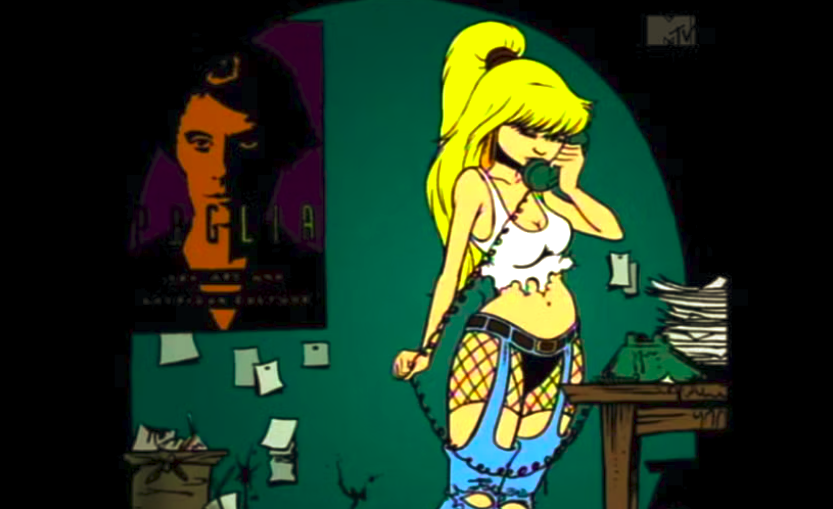 Screenshot from The Maxx animated series.
I want my MTV
As the top-selling book at the hottest publisher in the comics industry, The Maxx attracted attention from movie and television producers almost immediately, and within a year of its debut, Kieth found himself in New York meeting with top MTV executive Abby Terkuhle to discuss the possibility of a Maxx animated series. “I think it was about ’95 or so,” said Kieth. “The comic started around 1993, and two years later, it’s an animated show. I’d be drawing the comic three days a week, and the rest of the week I’m flying down to MTV and working on voice and music, then upstairs drawing key art in animation folders. Literally, ‘Here’s a stack of folders. You don’t like the way the art looks here, draw it yourself.’ So I’d redraw a few key drawings, but obviously the animators did the bulk of it. Then I’d fly back home and work on the comics, back and forth. It was probably one of my hyper-craziest times, you know? All a blur. But then again, who the hell am I to bitch about the experience, right?
“It didn’t result in increased sales. But it sure got a lot of exposure. Even on [television] at various odd hours, it got a cult following. MTV even stuck an ad for the comic in with the DVD. It’s actually better now, exposure-wise, for comics that get sucked into media outlets. You’ve got to remember, this was a TV show that didn’t even have the name Maxx in the title for TV Guide. It was part of a show called Oddities, and it was grouped with another show, The Head. You really had to hunt just to find it, or happen across it. With MTV, it always aired at a different time, all the time. Somebody would catch it at 2 a.m., and that’s the only window to see it. Like with Aeon Flux, same deal.”
The series is still fondly remembered today by Generation X, including actor Channing Tatum, whose production company Free Association optioned live-action film rights for The Maxx in 2019. The first and only season of Oddities adapted the first 11 issues of Kieth’s comic, ending the animated series on a mini-cliffhanger as Julie packed up and moved away, leaving Maxx on his own. Those fans who had already been reading the comic, though, or those who discovered it from MTV, were able to follow the story through to its eventual conclusion.
Kieth’s cousin, Dave Feiss, shared a studio with him throughout the entire MTV production, and watched as he took it all in stride, from the courtship to the eventual breakup. “Ben and Gregg Vanzo had the studio and his wife in Korea had a Rough Draft branch in Korea. All the pre-production was done in Los Angeles and all the layouts,” said Feiss. “And they were so true to Sam's style, even down to like strange frames. He didn’t do the traditional comic frames. Some of them were angular and this turned into a fantastic style that they were able to adapt for the cartoon. With early computer animation, too. They were able to take his drawings and manipulate them.
“The success at Image and then with MTV did not change him one bit. Not one bit. Sam was consistent his entire life, self-effacing, never, never talked about things like success; he didn't act as if anything was different. Sam was singular like that. That was never his goal. He made enough money and he was content.”
Oddities did not translate into higher sales for The Maxx comic book, and sales declined steadily, then sharply, as the entire comic book industry hit a slump in the mid-'90s. But those who stuck with the comic, the weirdos and the outcasts, were fiercely loyal to the fandom and to Kieth, and their clubhouse was the comics’ letters column, "Maxx Traxx." Curated and maintained primarily by Sam’s wife, Kathy, Maxx Traxx put the spotlight on the readers as they shared theories about Kieth’s characters and storylines, connected with penpals, gave recommendations, and shared fan art, including drawings from a surprising number of future comic book professionals, animators and illustrators, including Andy Ristaino (Adventure Time), Joshua Ellingson, and Dave Roman (Unicorn Boy).
“Sam Kieth’s impact on my generation of comic creators cannot be understated,” said Roman on his blog. “I had my first piece of fan art published on the back cover of the The Maxx issue #17. Sure, they got my name and hometown wrong, but for a comic-obsessed teenager this was my first taste of being a published artist. I always thought it was so generous that Sam Kieth not only included a fan art section inside each issue, he also used the back cover to spotlight emerging artists, whereas most comic book back covers were used for advertisements.
“The Maxx was one of the earliest comic books I was able to share with teachers and even my girlfriend’s parents to convince them that comics could be seen as a form of ‘literature,’” Roman continued. “In 1993, I wasn’t yet familiar with the ‘alternative comics’ published by Fantagraphics, Drawn and Quarterly, and was only recently exposed to the adult-leaning Vertigo imprint. For me, The Maxx was a gateway to that whole ‘comics aren’t just for kids’ phase that was so integral to the ‘edgy’ mid-to-late 90’s. Sam Kieth seemed to be one of those artists that every other artist I’ve ever talked to cites as an influence in some way. He truly crossed genres and demographics.”
Ellingson, and award-winning visual artist, also had his first published work in Maxx Traxx. “I had a drawing of Mr. Gone with [Maxx background character] Isz tied to his face in the letters column of issue #13. It was 1995, I had just turned 18 years old and I was so excited. Sam Kieth had actually seen my drawing and then decided to put in the comic?! Impossible! The letters column of The Maxx was always great and I looked forward to it almost as much as the story itself. You’d get to read fan’s thoughts on the story and how they connected with the characters. ... I’m sure that Sam Kieth’s care and encouragement in this way meant as much to the other young artists as it did to me.”
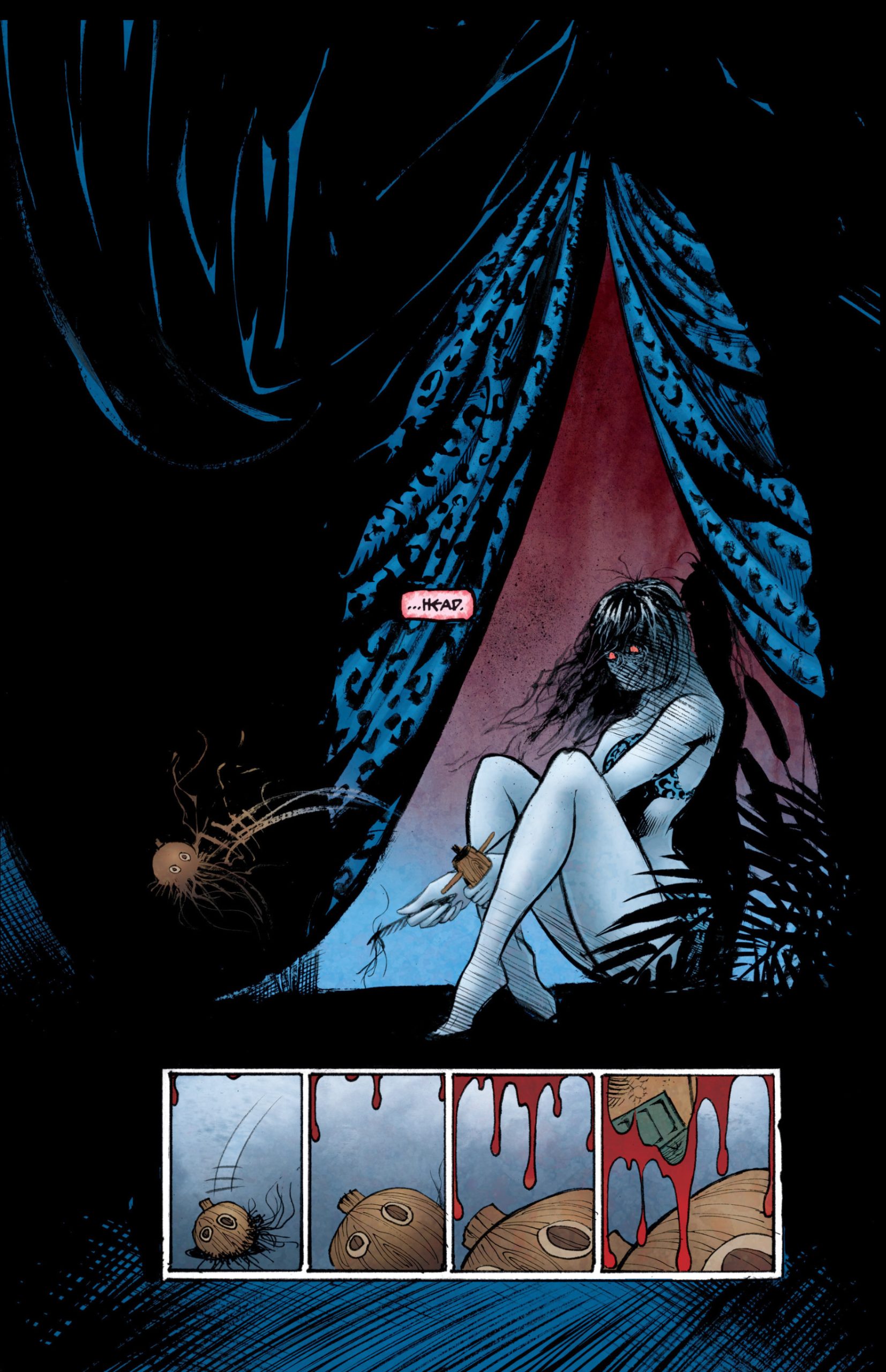 Page from The Maxx.
Comics professionals, especially those whose careers launched during the Image era, loved The Maxx, too. “Sam was the very first working comic book professional I ever met and talked with,” said J. Scott Campbell on Facebook. “It was at a small comic con held in a Holiday Inn ballroom in Denver, Colorado, with a handful of dealers, and he was the talent flown in to anchor the event. I was thrilled to go meet the up-and-coming superstar, hot off his explosion in Marvel Comics Presents, drawing Wolverine. He couldn’t have been more gracious and accommodating of a young guy like me talking his ear off about what pens he uses, what it was like drawing for Marvel Comics, and who knows what else. It was only a short year or two later that I was in the comics business myself, but early interactions like these were monumental in giving me the confidence to pursue a career in drawing comic books.”
Animator and cartoonist Scott Morse was also drawn to Kieth’s work at the outset of his professional career. “Most comics artists start out with at least a portion of their schooling the result of staring at, copying, and emulating other artists they admire,” Morse said on Instagram. “That was certainly me in the late ‘80s and early ‘90s, and Sam Kieth was one of those guys I was fascinated by. Not just his drawing and inking, but his painting, and his writing. He melded heightened shape and texture with drama and comedy, and was one of the few that seemed to understand gesture and beauty both in grotesque, hyper-idealized anatomy and soft, authentic moments.
“As I simultaneously pushed my way into both comics and animation work in the mid 90s, I jumped at the chance to do some freelance on Rough Draft’s production of The Maxx [for MTV’s Oddities]. It was one of those shining indicators that the two worlds of comics and animation could mix, and even better, on a creator-owned property. I did a few background layouts and felt like I’d hit a high point.
“In the late ‘90s, I found myself production designing [Cartoon Network’s] Cow and Chicken while simultaneously launching my first published comics work at Image and Oni. My pal Dave Feiss, the creator of Cow and Chicken, mentioned one day that his cousin did comics, and they shared a studio together. ‘Oh yeah, who’s your cousin?’ ‘Sam Kieth.’
“I think it was Dave that gave Sam my number, but phone calls started with this hero I’d never met in person who wanted to talk to ME. He wasn’t what I expected — humble, quirky, funny, self-deprecating, and able to talk for hours, at all hours, about anything. We laughed and planned projects that would never come to fruition — and eventually both got busier and drifted off the phone.”
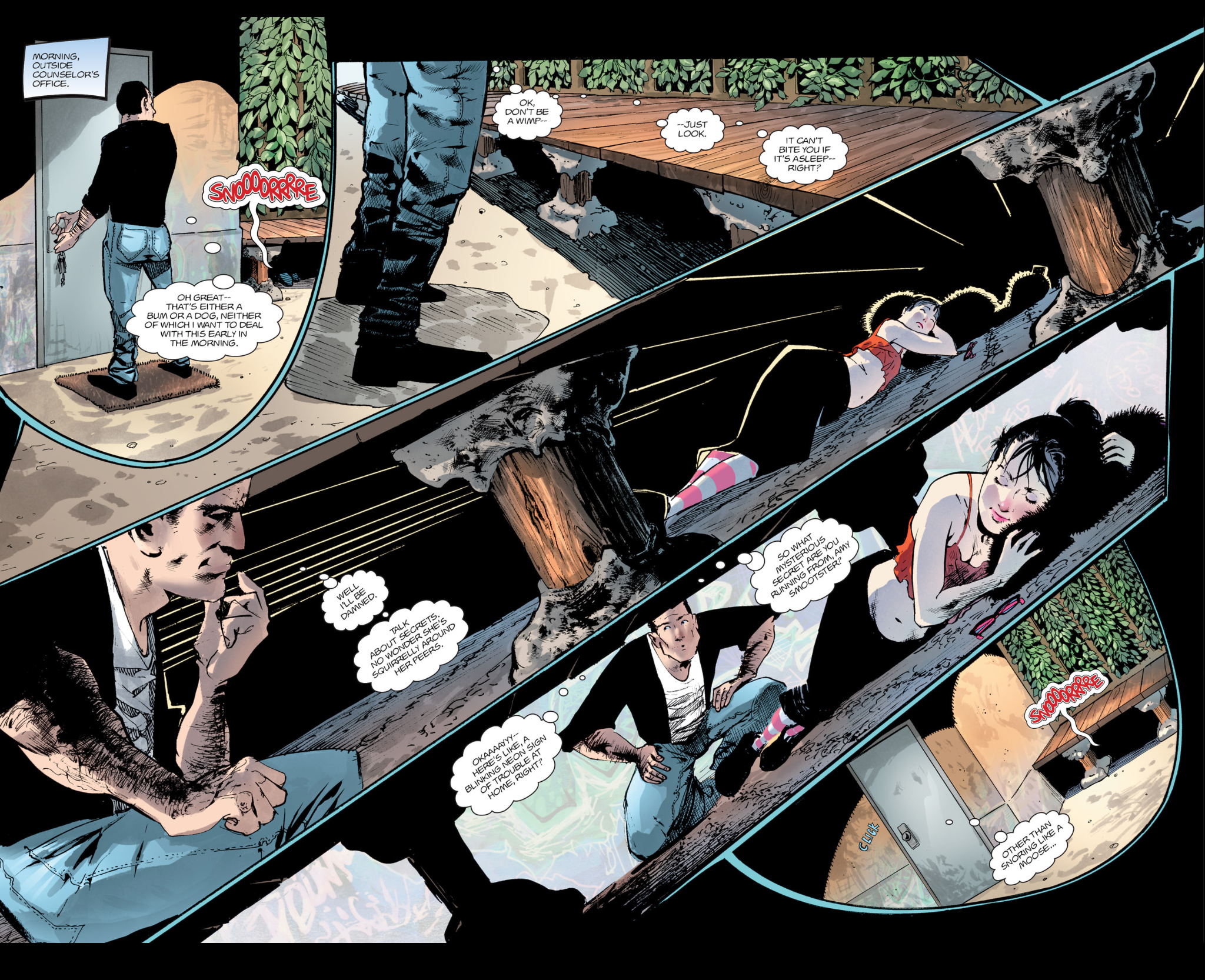 Sequence from Zero Girl.
A different track
After The Maxx, Kieth took a break from producing a monthly comic book series, alternating between personal projects like the 1999 one-shot Legs for Image Comics and illustrations for wife Kathy’s poetry magazine, Rattlesnake Review. During a two-to-three-year period of minimal comics output, he tried his hand at film, directing a feature for Roger Corman called Take it to the Limit in 2000.
“The movie, about rock climbing in national parks, never played in theaters, it went straight to video,” Dunbier said on Facebook when Corman passed in 2024. “When it was released, Sam went to his local Blockbuster and it was there on the shelves. Besides the fact it was in the shop, he was very pleased to see an emblem plastered on the cover that said it won the ‘National Forestry Gold Medal Award for Finest Nature Film’ or something like that. Sam was freaking stoked! He rushed home and excitedly telephoned Corman. He gets Corman on the phone and says, ‘Roger, we won an award!’ Corman was confused, asked Sam what he was talking about. Sam recounted going to the video shop and seeing the fancy emblem. According to Sam, Corman said, ‘Oh, we just make that shit up!’"
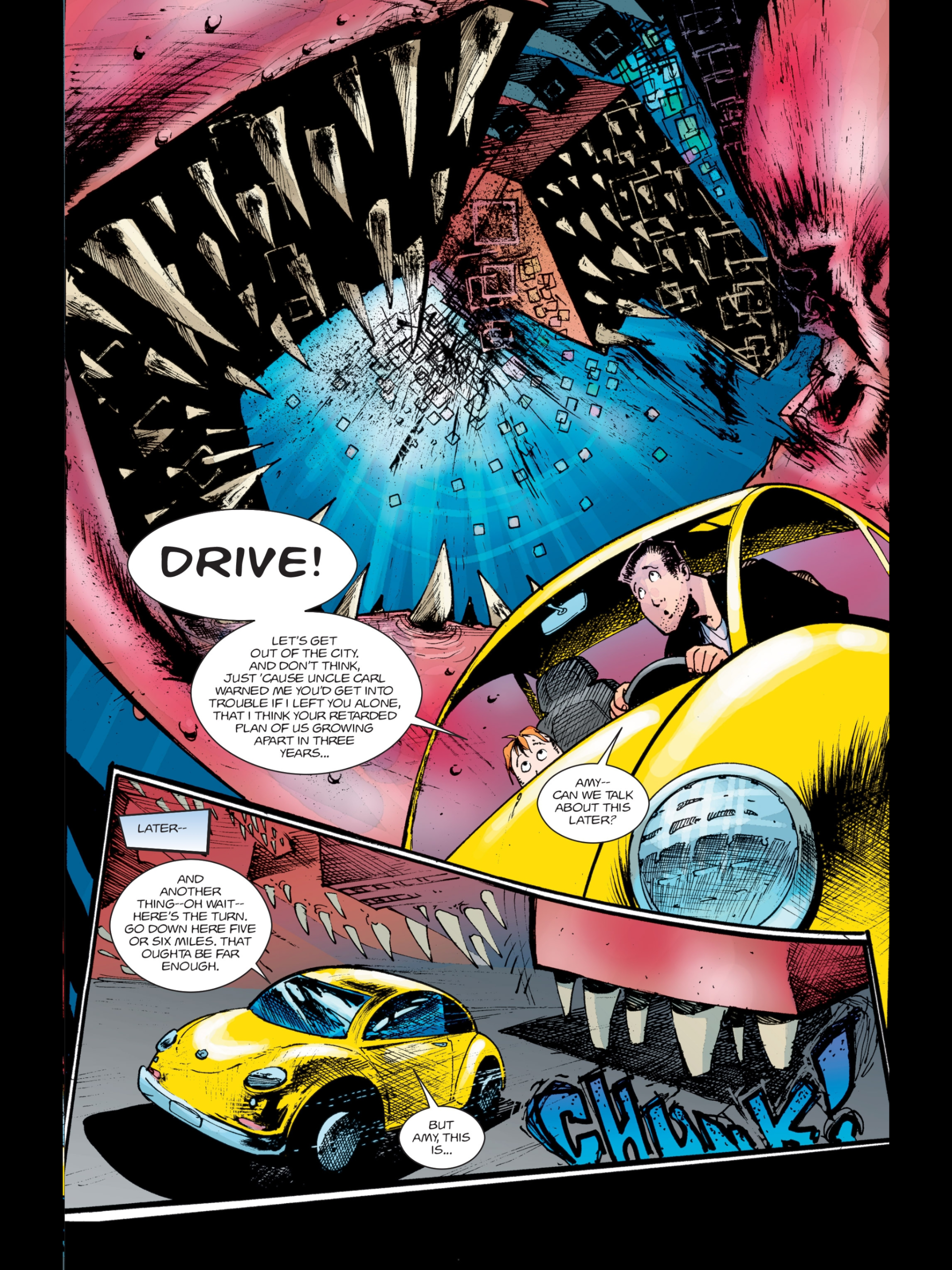 Page from Zero Girl.
After his inauspicious directorial debut, Kieth returned to comics with two Zero Girl mini-series and Four Women for Wildstorm/DC, as well as covers, pin-ups, and the occasional blatantly commercial book like a Wolverine/Hulk mini-series for Marvel or the Batman-guest-starring werewolf mini-series Scratch for DC. Some resonated with fans, some didn’t, but Kieth found something to engage and amuse himself with each new project he took on.
Zero Girl and its sequel, Zero Girl: Full Circle, told the tale of reluctant sort-of superhero, Amy Smootster, whose teleportation powers were based on circles and were powerless against squares and angular objects — an offbeat story that captured the feel and spirit of The Maxx if not the sales records. Then-Wildstorm editor Dunbier collaborated with Kieth on the two series and the psychological thriller Four Women, which was published in between the Zero Girl books. “I reached out to Sam about doing a creator-owned book," he said. "I didn't really want him to do any established characters. I didn't want him to draw [Jim Lee’s] Wildcats or something like that. So I reached out to him about doing a creator-owned book or two. And he was interested. Not a lot of people reached out to him about doing creator-owned stuff.
“He gave me a proposal for Zero Girl, which it wasn't called at first. It had the worst name ever. It was called All's Fur. Originally I wasn't going to edit it. I already had a lot on my plate. I was editing a lot of books, the Cliffhanger stuff, the Alan Moore stuff and other projects. But the editor I assigned to it, for whatever reason, wound up not editing it," he said. "I don't remember how well it did. You know, fans really liked it. I'm sure it didn't sell great, but I was able to green light a second, a follow up Zero Girl: Full Circle.
“And then after that, Sam had a very, very different idea for a story called Four Women. [It] is a very unusual comic book story, especially from a major comic book company,” Dunbier said. “You know, I guess it would fit in at a place like Vertigo. But it wouldn't have been the same because there would have been a lot of editorial changes made. And the editorial changes that I made, I made in conjunction with Sam. But we had a great time doing those three books. It's really a high point of my editorial career.”
It was a fun time for Kieth, too. “I realized that I’m totally off-base when it comes to predicting who my audience is and what they like,” Kieth said. “And thank God people are ten times more complex than I can ever guess. You can’t make this up, who’s out there, and what they’re going to embrace. And in the end, it’s all just comics. Yeah, maybe The Maxx got stranger and stranger in the end. I’d start stories and wouldn’t even finish them. But I felt it was heading toward stories that had more consequence. The apex of that was Four Women. Looking back on that book, tightly plotted as it is, it’s forced. My wife says it’s a very disciplined story, probably one of the least commercial things I’ve written, but yet it doesn’t really feel like a ‘Sam Kieth’ story. It just feels like a generic story. Like doing a comic book version of a movie. Which it was.”
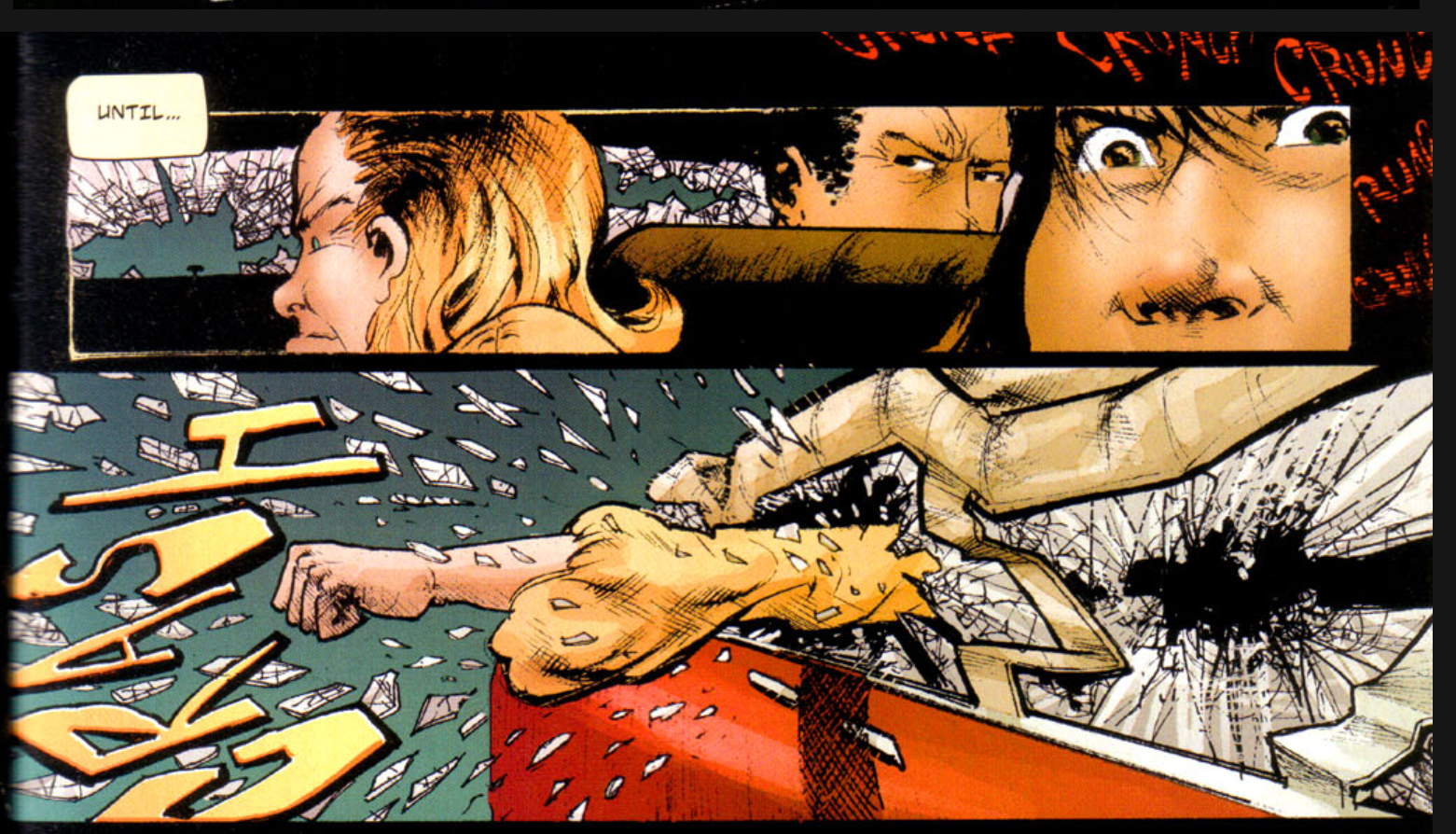 Sequence from Four Women.
Although he described his post-Maxx period as “taking a break from comics,” Kieth was very prolific from 2000-04 in terms of mainstream and semi-mainstream comics. At the midpoint of that decade, however, he realized that the time was right to scale back and make art for himself instead of focusing on sales. “If it were about the money, we’d all have gotten out of comics a long time ago,” Diana Schutz said. “And that includes Sam.” By choice, he lived in a modest home in a small town near his mother, didn’t travel or have any expensive hobbies, and realized that he had no financial or creative reasons to take on work that didn’t appeal to him. He could indulge in his paintings, sculptures, and personal stories that weren’t created with any particular purpose or publisher in mind.
While noodling around with some potential story ideas, he reached out to Oni Press, an independent comics publisher that he felt would be more receptive to his decidedly non-commercial projects than Image or Wildstorm. “I think Joe Nozemack was out of the office and Jamie S. Rich was on another line when he called,” said then-Oni editor James Lucas Jones. “So the call came through to me and he ended up chatting with me for probably 40 minutes that day, if not more. And it was awesome. I remember going home that night and telling my spouse, ‘Sam Kieth called today and I got to talk to him!’ And then, strangely enough, the next week he called back to talk to me and that continued for about six months. I would hear from Sam at least once, if not twice a week. And we would just talk about comics and what he was working on.
“You knew that when you saw Sam's number on caller ID, that it was not going to be a short conversation. It was best to clear your afternoon, if you had the ability to. It went on for about six months. And then, and finally I had to tell him, ‘Sam, you gotta do something for us. I'm an editor and I'm spending like five or six hours a week at the office talking with you.’”
Through his conversations with Jones, Kieth developed a pair of comics, Ojo and My Inner Bimbo, stories that were, for those who cared about such things, part of the same fictional universe, with thematic elements connecting them, including a Mysterious Trout around which Kieth had developed a mythology. The first, Ojo, was a supernatural story where Kieth collaborated with Northern California artists Chris Wisnia and Alex Pardee. The second, My Inner Bimbo, explored masculinity and feminism and featured semi-autobiographical elements, too, as Bimbo’s protagonist, Lo, like Kieth, was married to a woman 17 years his senior and was prone to deep introspection and self-analysis.
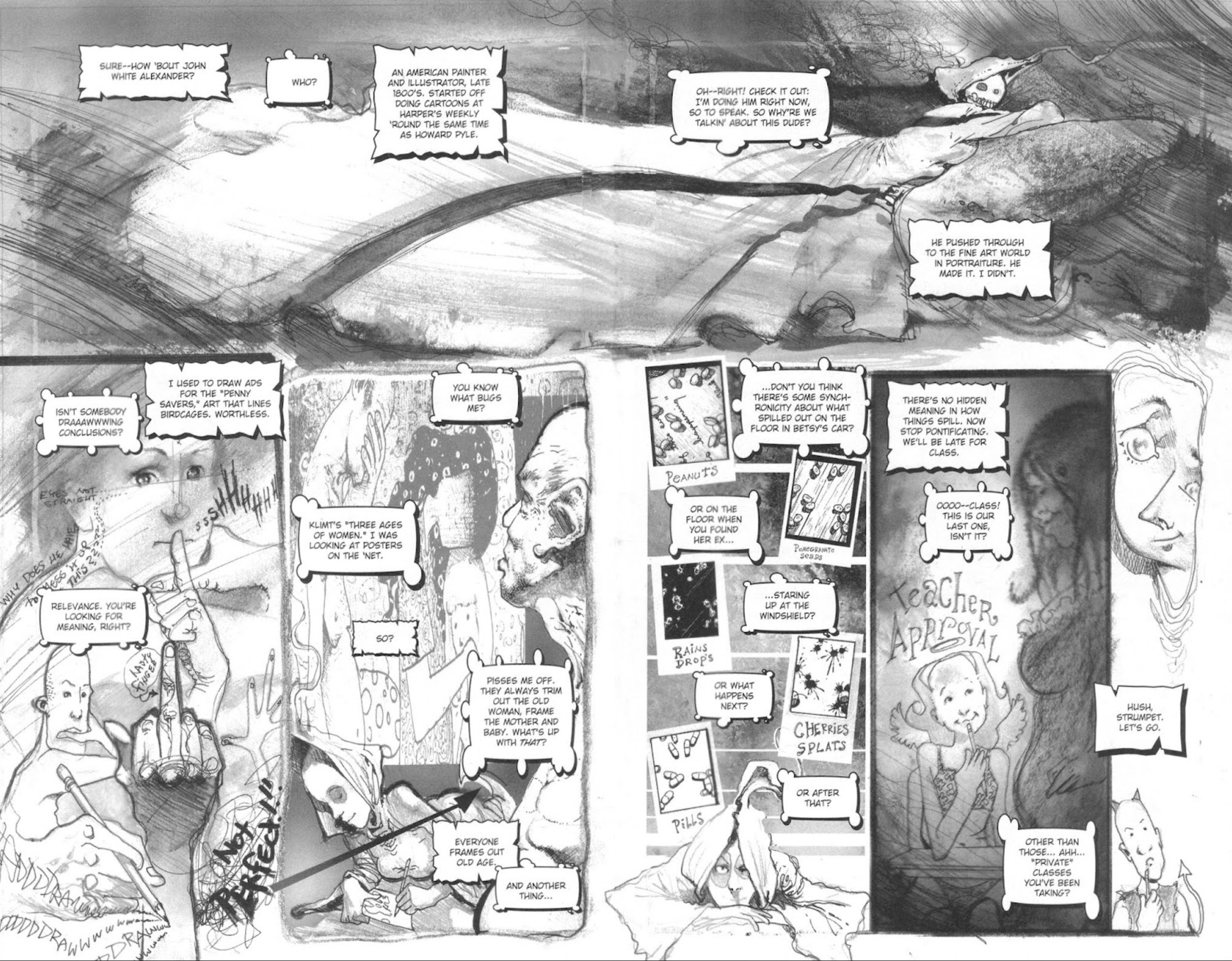 From My Inner Bimbo.
“My Inner Bimbo was a whole tortuous production process, and was even more traumatic than the end of The Maxx," Kieth said. "I have many readers who'll sit down and analyze that book. It took five years to finish one mini-series. I did an issue, and a year would go by before I could somehow push myself to do another issue.
“It was probably one of the most personal things I did up to that time, and I while don’t think the whole thing works as a creative whole, if I had to mention a handful things from my whole career I'm least ashamed of, I’d say My Inner Bimbo, The Maxx, Zero Girl, the Nola and Dana books (including Ojo and my ‘Trout-a-Verse" stories) and my Enso art books. That's about it. Between the Dana/Nola books and the art books, I may have shot my wad. But flawed as it is, if you wanna understand the guy who created the Maxx, you should at least try wading through My Inner Bimbo.”
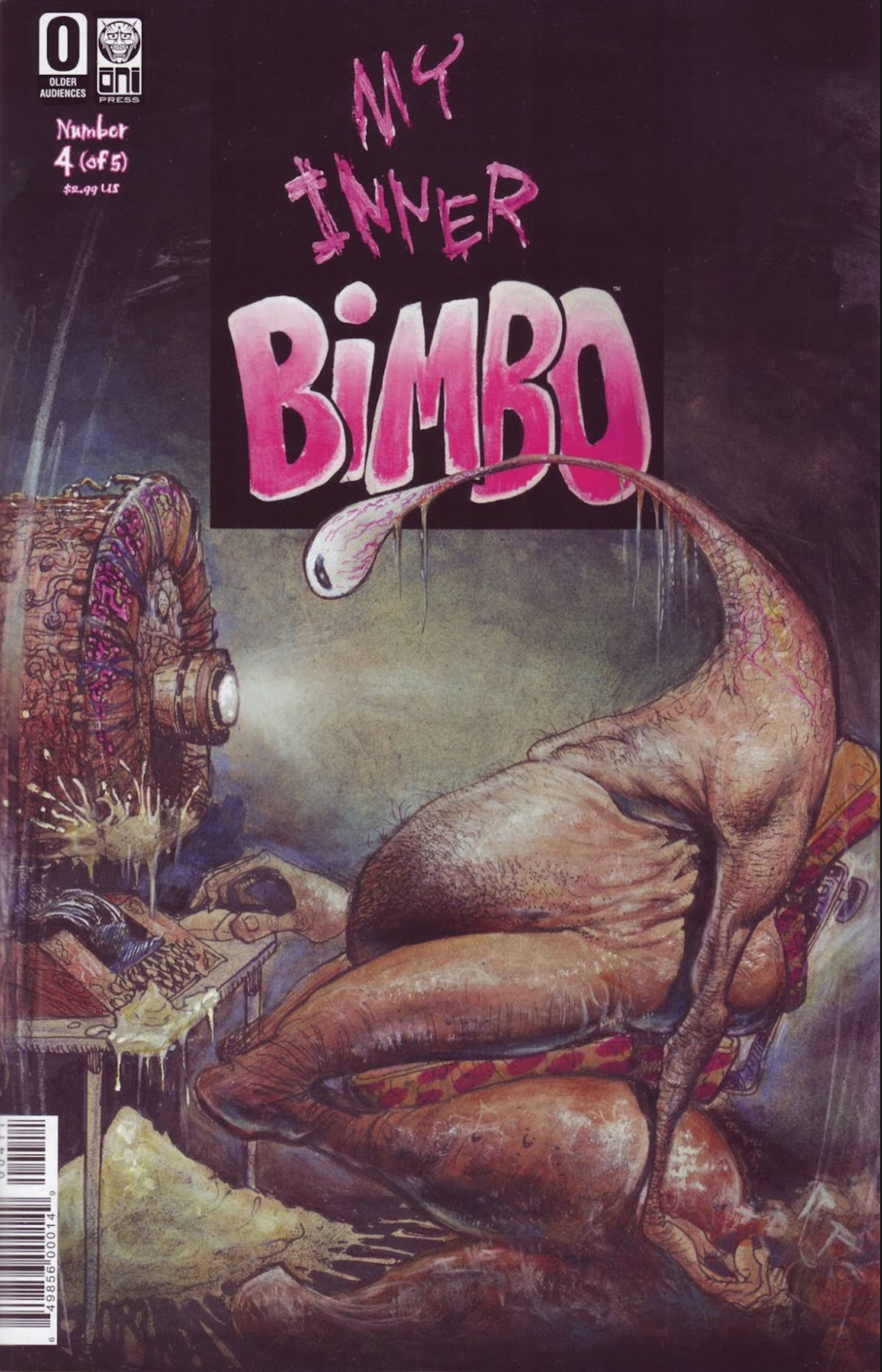 The Trout-a-Verse was challenging for both creator and audience, but represented some of Kieth’s favorite and most personal work in his career. “My worry was that My Inner Bimbo might seem pretentious because of all the philosophy and feminist texts, possibly too tightly or self-consciously packed in," he said. "I think that's a valid criticism of it. I tried to sprinkle them in, because I loathe that attitude … as if I'm name-dropping some of this stuff. ...
“Also, the reason I usually don't mention classical or literary themes in my comics too much is, first of all, I’m no expert in them. But secondly, you run the risk of seeming condescending to the reader, or making a pretentious ass of yourself, or doing both! But if nobody tried to mention this stuff eventually, Vertigo wouldn't have drawn in the many diverse readers it did in the first place.
“Bimbo was a dense, claustrophobic book about a guy who thinks too much, chasing his lost youth, and facing a midlife crisis. Ojo, on the other hand, is about a little girl who lost her mom. Hers is no less complex a world, yet she's using different tools and a more limited vocabulary to deal. Even in Maxx they'd sometimes argue about Camille Paglia. But I try not to litter the story with too many outside references. ...
“Yeah, it can come off pretentious once they're dead, and dead artists often get sucked up into the literary world of collectors and art dealers. If they’re lucky. But for me, mistaking context for content in any art … street art vs. lowbrow vs. a high-art context … it's obviously all the same art in most of our minds. It's all fabric patches making up one giant creative quilt.
“Now that sounds incredibly pretentious, doesn't it?”
Whatever Kieth’s opinion, he had a dedicated following who would check out everything he did, and his editors always loved him. “For Sam, it was always about the character work,” James Lucas Jones said. “For Sam, those characters and those relationships were always completely their own thing while also being a reflection of the relationships that he had in his life and with his partner, with his mom, and with the industry and with other comics artists. It was really thoughtful and real. The Trout books were almost therapy on a certain level.
“They were the kinds of projects where nobody was ever going to do anything like that, except for Sam. They were so uniquely him, born of his very special worldview and vision. There just really is not anything like them."
For Maxx-imum effect
Not long after his friend and editor Scott Dunbier joined IDW, he reached out to Kieth about bringing The Maxx back into print with new collected editions, nearly 20 years after the series had first launched with Image. Kieth agreed, and took the opportunity to create new, fully-painted covers for the single-issue reprints of his original comics and to re-color the series to take full advantage of advances in printing technology. Colorist Ronda Pattison, who had made a name for herself at IDW on the strength of her work on the Teenage Mutant Ninja Turtles monthly comic, was tapped by Dunbier and Kieth to color the re-released issues under the title The Maxx: Maxximized.
“I’m deeply embarrassed to admit that the first time Sam Kieth reached out to me about working on The Maxx: Maximized, I did not know who he was,” said Pattinson. “Sam, being the most humble and self-effacing person I have ever known, hadn’t even expected me to! But I very quickly learned what so many comics fans and professionals already knew: that he was a truly one of a kind artist, that The Maxx looked like no other comic I had ever read, and it was deeply important to so many people. And I was being asked to be a part of it.
“Sam knew what he wanted, and we worked closely on that project for three years, exchanging hundreds and hundreds of emails, but what I remember most are the phone calls. We occasionally had calls that lasted for hours. Once the business was handled they quickly turned to mostly monologues on Sam’s part, but I was more than happy to settle in for the wild and wonderful ride. So many thoughts, ideas, stories and anecdotes poured out of that endlessly creative mind that I would come away a little overwhelmed, a little awed, and desperately wishing I could recall every detail.
“Sadly, I can’t, but what I can remember clearly is what a truly good human Sam was. Unfailingly kind, generous, and thoughtful. A friend. He always treated me with the utmost respect and appreciation, even if I scarcely felt qualified to be considered his peer. We went on to work together again on Eleanor and the Egret and Batman vs. The Maxx: Arkham Dreams, and I will forever be grateful for his faith in me to help bring his visions to life. He was genuinely a one of a kind talent and person, and I will always treasure having been in his orbit for a while.”
In the midst of this mini-revival, Kieth took a well-earned victory lap, conceiving and creating several high-end art books with Dunbier at IDW including two sketchbook collections, a high-end art book called Worlds of Sam Kieth, and an Artists Edition presenting his original artwork from The Maxx at full size. In 2013, he co-curated an exhibition of his fine art and comics for a 30-year career retrospective entitled Sam Kieth: Samplings and Dabblings at the Cartoon Art Museum in San Francisco, and he was a special guest that year at the San Diego Comic-Con, where he was presented with Comic-Con International’s prestigious Inkpot Award at his spotlight panel.
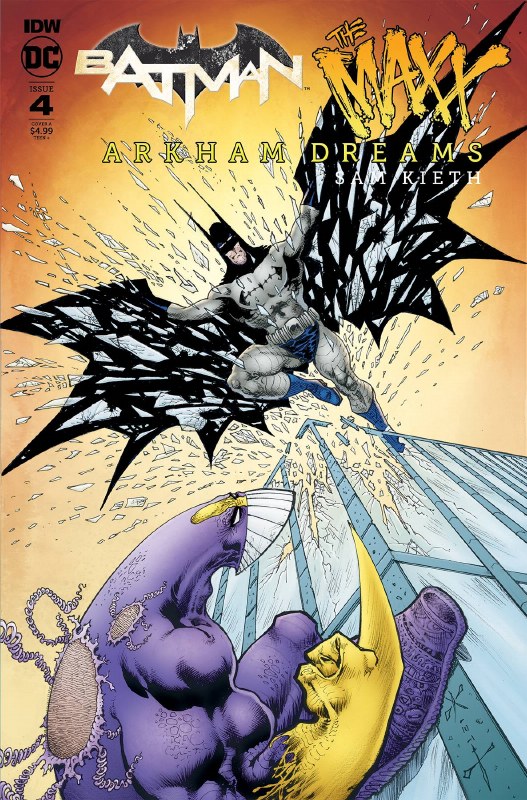 The aforementioned Arkham Dreams marked Kieth’s first new Maxx story since the original series' conclusion twenty years earlier. Surprisingly to Scott Dunbier, it was not a hard sell. “The last major thing I did with Sam was the Batman/Maxx crossover. I was at IDW, and we were talking about potential crossovers, and I threw that out. People said sure, and surprisingly, DC said okay. And Sam said okay. And it's really great, crazy stuff. It took him a long time to finish it. That was sort of right in the period when he was diagnosed, which he didn't tell me about," Dunbier said. “So I didn't know that was, I guess, one of the reasons he took so long to finish it. It started in 2018 and didn't end until 2020. But he did really nice work.
“And then the last stuff I did with him was a couple years after. During COVID, a bunch of people got laid off from IDW. I reached out to some friends of mine, including Sam. And they did drawings that I put on eBay and auctioned off and gave the money to the people who were the most impacted by them. Sam gave me two or three drawings. Really nice, fun little drawings of Batman and The Maxx. That was during the period when he wasn't doing so well. But he stepped up all the same.”
Chris Ryall, who served as Editor-in-Chief during Kieth’s tenure at IDW, was a longtime fan whose admiration for the creator only grew over the course of their collaborations. “After I worked with Sam Kieth on a graphic novel called The Hollows, I thought I had an even better sense of the kinds of stories that suited his sensibilities,” Ryall said. “It wasn’t just the years I spent reading his more personal works like The Maxx, Four Women, My Inner Bimbo, Ojo, or his other lovely, idiosyncratic works that revealed who he was and what he wanted out of a story. No, it was the hours and hours of phone conversations we had over the years we worked together.
“When you worked with Sam, a truly individual and independent creator not driven by any of the usual market forces, you realized that he didn’t need to work with you. He could in fact produce a much more Sam-like, and therefore better, story without an outside writer. But, as good as he was at those stories, he also chose to work with other people over the years, and I was the beneficiary of that," he continued. "We ended up crafting a Mars Attacks story like no other, an insular, sad, quiet story about obsession and loneliness and abandonment, where a massive Martian invasion of Earth took place fully off-panel. There was no chaotic violence (okay, there was a little. But it was cartoonishly drawn). We didn’t offer anything that Mars Attacks fans might have wanted from a Mars Attacks story, and yet it all worked because of Sam.”
“He reacted to people on a very human level. And that's truly one of the great things about Sam," Dunbier said. “Sam loved geeks. He loved outsiders. He loved people who were different. And I have no doubt that's because he was all those things."
That outsider status resonated with fans from his earliest comics through The Maxx and beyond. “He was scared to do The Maxx,” Dunbier recalled. “He was afraid that Marvel wouldn't hire him, you know, after it failed miserably. ... I tried to convince him that not only would it not fail, it would be a huge success, but Marvel would openly welcome him back if he ever decided to go back. And luckily he finally decided to take the plunge and do that.
“He was true to himself. That’s one thing I could always say about Sam. He was true to himself," he said.
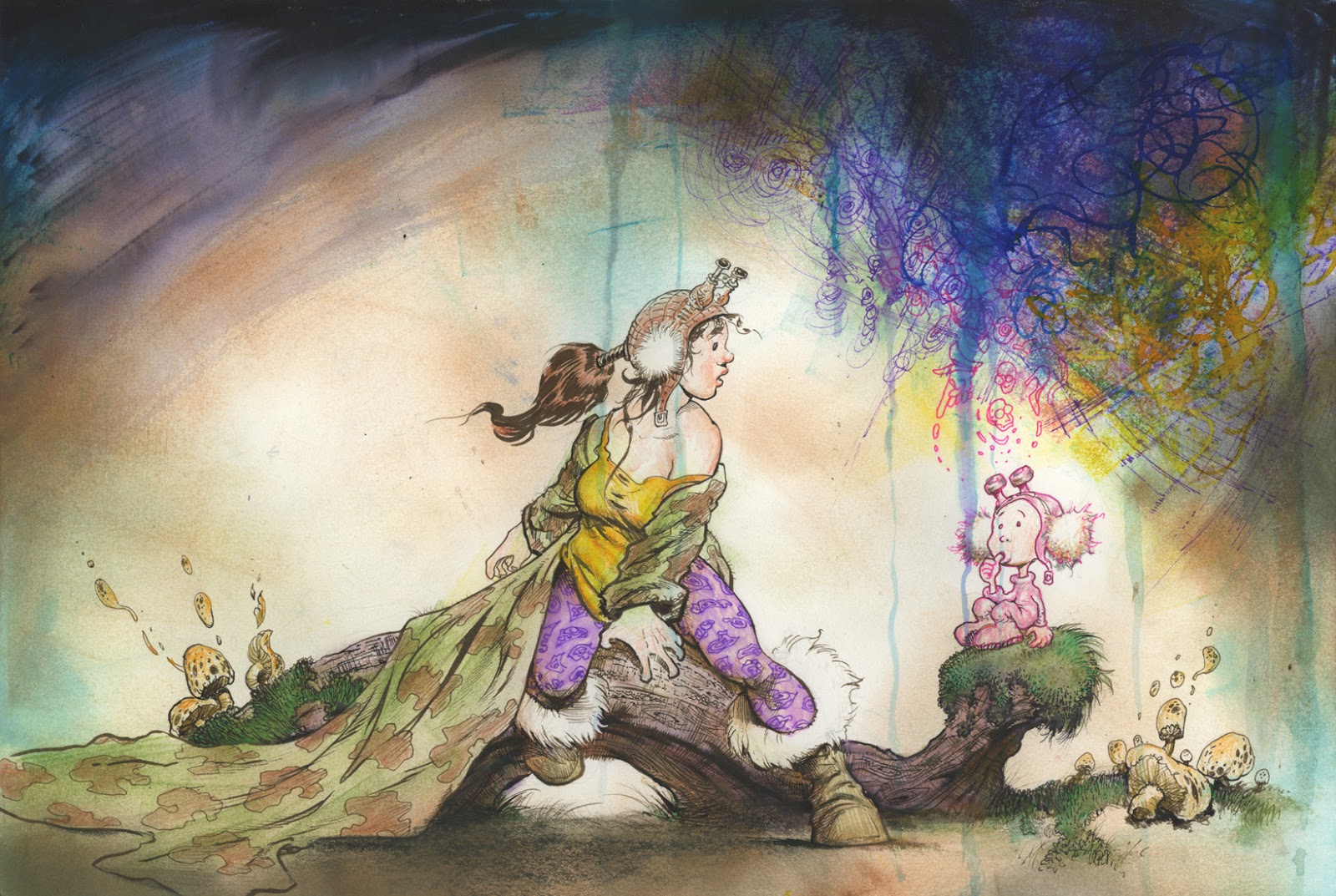 Dana and Popette by Sam Kieth.
Until we meet again
Upon receiving his diagnosis of Lewy Body Dementia, Kieth quietly wrapped up his contractual obligations and his relationships with phone friends and colleagues, gently letting them know that he might not be calling as often anymore, if at all. Friends chalked it up to his private nature. During the Covid era, no one thought it out of the ordinary that Kieth rarely invited people to his home and politely refused invitations to catch up with friends in person. Per his wishes, only his immediate family knew of his illness. In true Sam Kieth fashion, he didn’t want to feel like he was troubling anyone.
His diagnosis was made public on Kathy Kieth’s blog, Medusa’s Kitchen, on Jan. 10, shortly after the couple’s 43rd wedding anniversary, although the announcement seemed to fly under the radar of comics creators and press.
“For the last seven years or so, my husband, Sam the Snake Man, has suffered from Lewy Body Dementia, a degenerative disease that’s kind of a combination of Alzheimer's and Parkinson’s, with a lot of other nastiness thrown in,” Kathy Kieth wrote. “For a while, I was his sole caregiver, but finally, his mother and our local hospice stepped in — plus, we hired some private caregivers, since Sam is now bedridden. So his care is no longer something I have to do alone, and I am very grateful for that.”
Over the course of his forty year career in comics, Sam Kieth went from total obscurity to literal MTV superstardom back down to “comic book famous,” but as Dunbier said, he remained true to himself every step of the way.
“If you can’t be better than you were, I’d rather fail while trying to find a voice and being different, than by trying to play a young man’s game my whole career," he said once. “Looking back on my body of work, it’s all one story. Everything’s one story; you’re just chopping it up, like a Chinese dragon. Someone says, ‘I really like the back legs of this Chinese dragon.’ That’s The Maxx. ‘Why can’t this dragon just have a bunch of back legs? Everything can look like the back legs.’ I’m sorry. Wish I could, but I’m not that guy anymore. Now we’re dealing with the tail. You can either like the tail, or go find someone else who’s doing back legs, but I can’t give you that anymore. And most people, at least the people who stick around, will take what I can give. They won’t ask you to be in high school again. And the people who don’t, I can’t help.
“I’d be different if I could, but they don’t really want me to be different. They want to be who they were when they were reading my work for the first time. If you’re not careful, you wind up like those guys who say, ‘All the bands suck now.’ The eighties suck, or the seventies suck, or the nineties suck. And it’s ‘whatever I grew up on is great, and stuff after is crap now.’
“Sometimes I think maybe they’re right. But what a terrible place to live in your mind. I’d rather listen to the last five albums that David Bowie did than fixate on Hunky Dory or "Spiders from Mars" over and over again. There are some things I can’t even hear anymore, since I’ve heard them so much. It’s like the same brain cells turn over in my head and nothing’s new. When I find something new, it’s like my brain is telling me, “Thank God you’re not trying to do the same old thing again.’
“I’m a guy who lucked into some high-profile gigs, got more and more interested in storytelling, and it’s not that the audience is shrinking, they’re getting more and more selective. Which is code for ‘They’re shrinking.’ But the good news is that if you have an audience of five or ten thousand people, that’s really all you need to survive as an artist. I think I’ve always had that, even going back to the Marvel Comics Presents days. Most were Wolverine fans, but there were people who wanted to check out whatever else I was going to do. Some of them are ‘lifers,’ diehard fans who will follow me deep into the bowels of wherever I go, God bless ’em.”









 English (US) ·